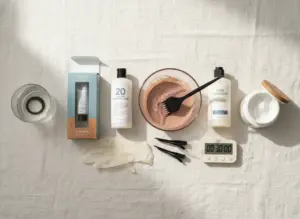
The Correct Order to Apply Hair Products (Most People Get It Wrong)
Nearly 72% of people report using three or more hair products daily — yet most have never been taught the correct sequence to apply them. [8] That single gap in knowledge is quietly sabotaging wash days, wasting expensive products, and leaving hair looking far less healthy than it could. If your hair feels weighed down, frizzy, or just never quite right despite a cabinet full of products, the answer probably isn’t a new product — it’s the order you’re using them.
Understanding The Correct Order to Apply Hair Products (Most People Get It Wrong) can genuinely transform your results without spending an extra cent. This guide breaks down the full sequence — from the shower to the finishing spray — with clear reasoning for every step.
Key Takeaways
- 🧴 Product order matters more than product quality — applying in the wrong sequence blocks absorption and reduces effectiveness.
- 💧 Lightest to heaviest is the golden rule for styling products applied after washing.
- 🔥 Heat protectant always goes before heat tools — no exceptions.
- 🌀 Hair type changes the details but not the core sequence — curly, straight, fine, and thick hair all follow the same foundational logic.
- ✅ Sealing with an oil or cream last locks in moisture and prevents frizz for hours.
- Try our Free Interactive app: Master Your Wash Day: Find Your Ideal Hair Product Application Order
Disclosure: This post contains affiliate links. As an Amazon Associate, we earn from qualifying purchases, and at no extra cost to you.
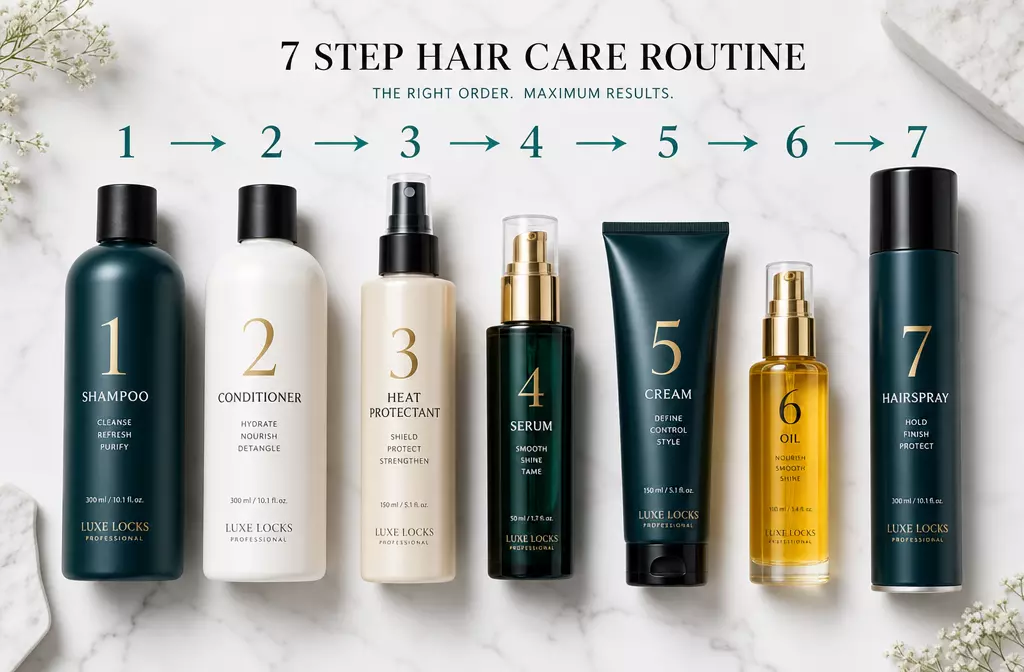
Why the Order You Apply Hair Products Actually Matters
Let me tell you about a moment that changed how I think about hair care. A friend of mine — a licensed cosmetologist with 12 years of experience — watched me apply my leave-in conditioner after my styling cream and physically winced. “You just sealed the conditioner out,” she said. I had no idea that was even possible.
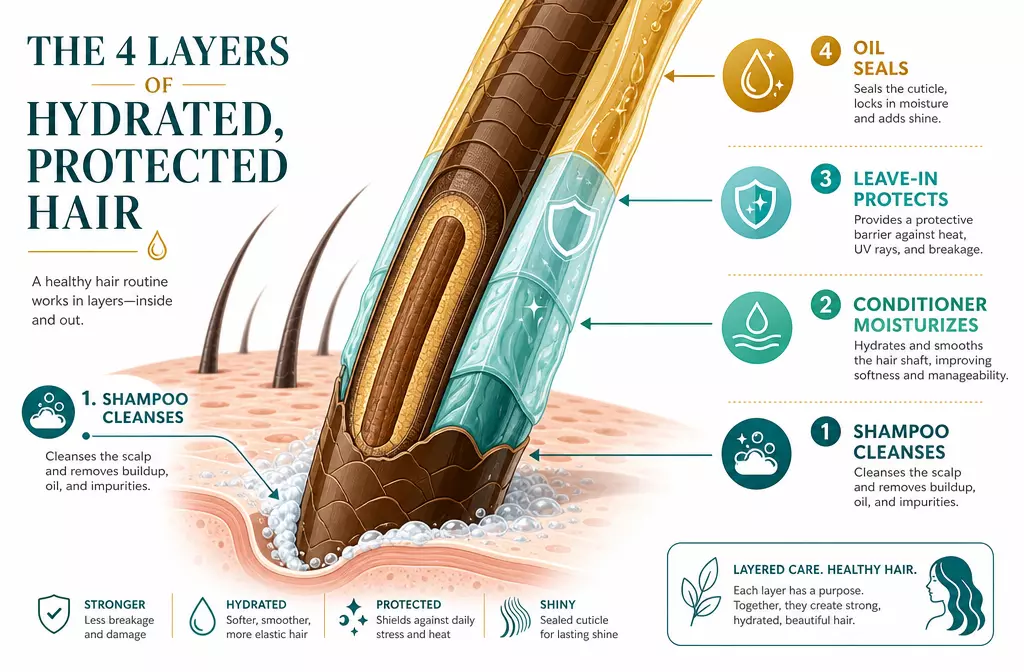
Here’s the science behind it: hair products are formulated to work in layers. [2] Each product has a specific molecular weight and function. When you apply a heavier product first, it creates a barrier that prevents lighter, more penetrating products from reaching the hair shaft. It’s like painting a wall — you prime first, then paint, then seal. Doing it backwards wastes every layer.
“The most common mistake I see is applying oil before a leave-in conditioner. The oil acts as a sealant, which means the conditioner never actually penetrates the hair.” — Professional stylist insight via Wella [2]
The hair cuticle — the outermost layer of each strand — opens when wet and closes as it dries. This is your window of opportunity. Products applied while hair is wet and the cuticle is open absorb far more effectively. Products applied in the wrong order during this window either sit on top of the hair or get blocked entirely. [1]
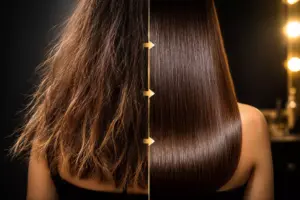
The result of getting it wrong:
- Product buildup and residue
- Limp, weighed-down hair
- Frizz that won’t quit
- Wasted product (and money)
- Styles that don’t hold
The result of getting it right:
- Maximum moisture retention
- Defined, frizz-free texture
- Styles that last all day
- Healthier hair over time
The Correct Order to Apply Hair Products (Most People Get It Wrong): The Complete Wash-Day Sequence
This is the full sequence, from step one in the shower to the final finishing touch. Think of this as your master roadmap. [1] [8]
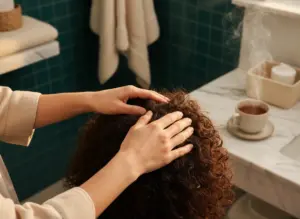
Step 1: Pre-Shampoo Treatment (Optional but Powerful)
What it is: A pre-poo oil, mask, or treatment applied to dry hair before washing.
Why it comes first: Shampooing strips natural oils. Applying a nourishing oil — like coconut or argan — before washing creates a protective barrier that reduces moisture loss during cleansing. This step is especially beneficial for dry, color-treated, or highly porous hair. [2]
Best for: Dry hair, color-treated hair, coily/kinky textures.
Step 2: Shampoo (Cleanse the Scalp)
What it is: Your primary cleanser.
Why this order: Shampoo is designed to remove buildup, excess oil, and residue from the scalp. It should always be the first active product in your wet routine. If you use a lot of styling products, a double shampoo (applying twice) is often recommended — the first wash breaks down buildup, the second actually cleanses. [8]
Pro tip: Focus shampoo on the scalp, not the ends. The rinse-off process cleanses the lengths naturally.
Step 3: Conditioner or Hair Mask
What it is: A moisturizing treatment applied after shampooing.
Why this order: Shampoo opens the cuticle slightly; conditioner smooths it back down and deposits moisture. Applying conditioner after shampoo (never before) ensures it can do its job properly. [1]
| Type | How Long to Leave On | Best For |
|---|---|---|
| Rinse-out conditioner | 2–5 minutes | All hair types, regular use |
| Deep conditioning mask | 10–30 minutes | Dry, damaged, or color-treated hair |
| Protein treatment | 5–20 minutes | Weak, brittle, or over-processed hair |
Focus conditioner on the mid-lengths and ends — applying it to the scalp can cause buildup and greasiness.
Step 4: Leave-In Conditioner
What it is: A lightweight conditioner that stays in the hair (not rinsed out).
Why this order: Applied to damp (not soaking wet) hair immediately after towel blotting, leave-in conditioner is the first layer of your styling routine. It provides a moisture base that all subsequent products build upon. [2]
💡 Key distinction: Damp hair, not dripping wet. Blot gently with a microfiber towel first.
Step 5: Protein Treatment or Scalp Serum (If Using)
What it is: A targeted treatment for specific concerns — strength, scalp health, growth.
Why this order: Serums and treatments need direct contact with the hair or scalp. They go on before heavier styling products to ensure absorption. [9]
Step 6: Styling Products (Lightest to Heaviest) 🌟
This is where most people go wrong. The rule is simple: apply styling products from lightest to heaviest texture.
Here’s the typical order within this category:
- Mousse or foam (lightest — mostly water and air)
- Curl cream or detangling spray
- Gel or defining cream
- Pomade or wax (heavier, used sparingly)
Why this matters: A heavy wax applied before a gel will prevent the gel from reaching the hair shaft. The gel ends up sitting on top of the wax, doing very little. [1] [2]
Step 7: Heat Protectant (Before Any Heat Styling)
What it is: A spray, cream, or serum that shields hair from thermal damage.
Why this order: This is non-negotiable. Heat protectant must go on before blow dryers, flat irons, or curling wands — never after. It works by forming a protective film over the cuticle before heat is applied. Applying it after heat has already been used is completely ineffective. [8]
Temperatures to know:
- Blow dryer: 300–400°F
- Flat iron: 300–450°F
- Curling wand: 300–450°F
Most heat protectants are effective up to 450°F, but always check the label.
Step 8: Blow Dry or Air Dry
What it is: The drying phase.
Why this order: You’ve applied all your wet-hair products. Now you dry — either with a diffuser (curly hair), a round brush blow-out (straight styles), or simply air drying. Drying locks in the product layers you’ve built. [6]
Step 9: Finishing Products (Dry Hair Only)
What it is: Products applied to completely dry hair for shine, hold, or definition.
Why this order: These products are designed for dry hair. Applying them to wet hair dilutes them and changes their performance. [1]
Common finishing products:
- Hair oil (for shine and frizz control)
- Hairspray (for hold)
- Dry shampoo (for volume at the roots)
- Shine spray
The Correct Order to Apply Hair Products (Most People Get It Wrong): Hair-Type Variations
The core sequence above applies universally, but hair type changes which products you use and how much. [8]
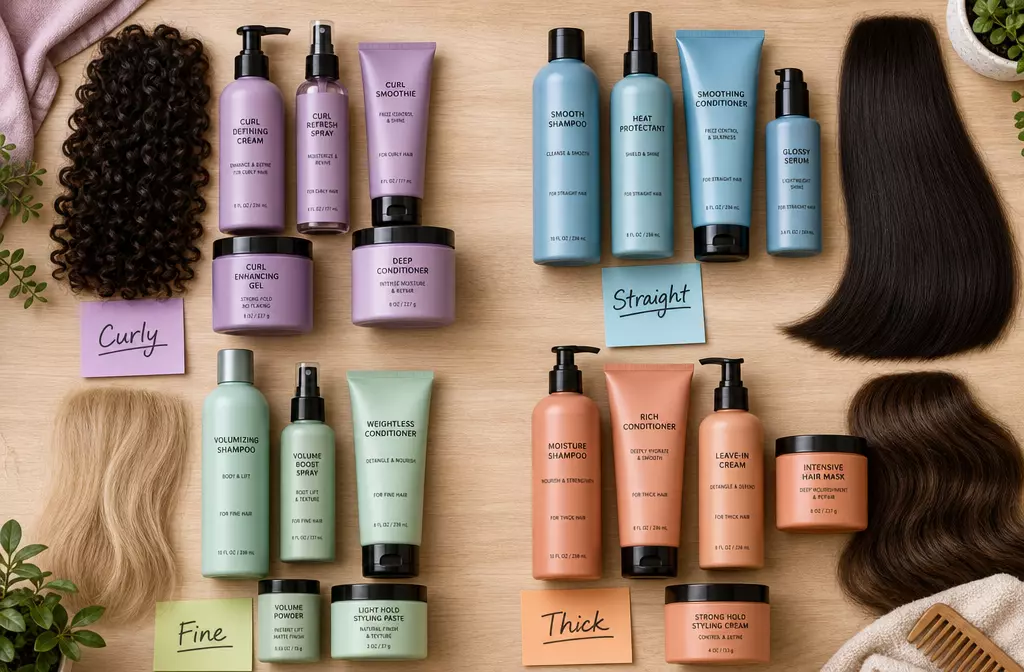
Curly and Coily Hair 🌀
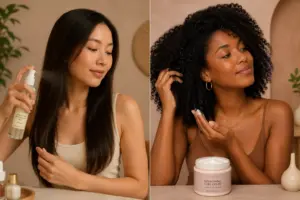
Curly hair tends to be drier because natural scalp oils have a harder time traveling down the spiral shaft. The LOC method (Liquid, Oil, Cream) or LCO method (Liquid, Cream, Oil) is widely used:
- LOC: Leave-in → Oil → Cream (better for very dry, coily hair)
- LCO: Leave-in → Cream → Oil (better for fine curly hair that gets weighed down)
The difference? In LOC, oil seals the leave-in before the cream adds definition. In LCO, cream provides definition first, and oil seals everything. Experiment to find what works for your curl pattern. [2]
Fine and Straight Hair
Fine hair gets weighed down easily. The priority is:
- Use less product overall
- Skip heavy creams and oils on the lengths
- Focus styling products at the roots for volume
- Use lightweight mousses over heavy gels
Thick and Coarse Hair
Thick hair can handle and often needs richer products. Focus on:
- Deep conditioning masks over rinse-out conditioners
- Heavier creams for moisture and control
- Sealing with a nourishing oil
Common Mistakes That Ruin Your Hair Routine
Even with the right products, these errors will undermine your results. [1] [8]
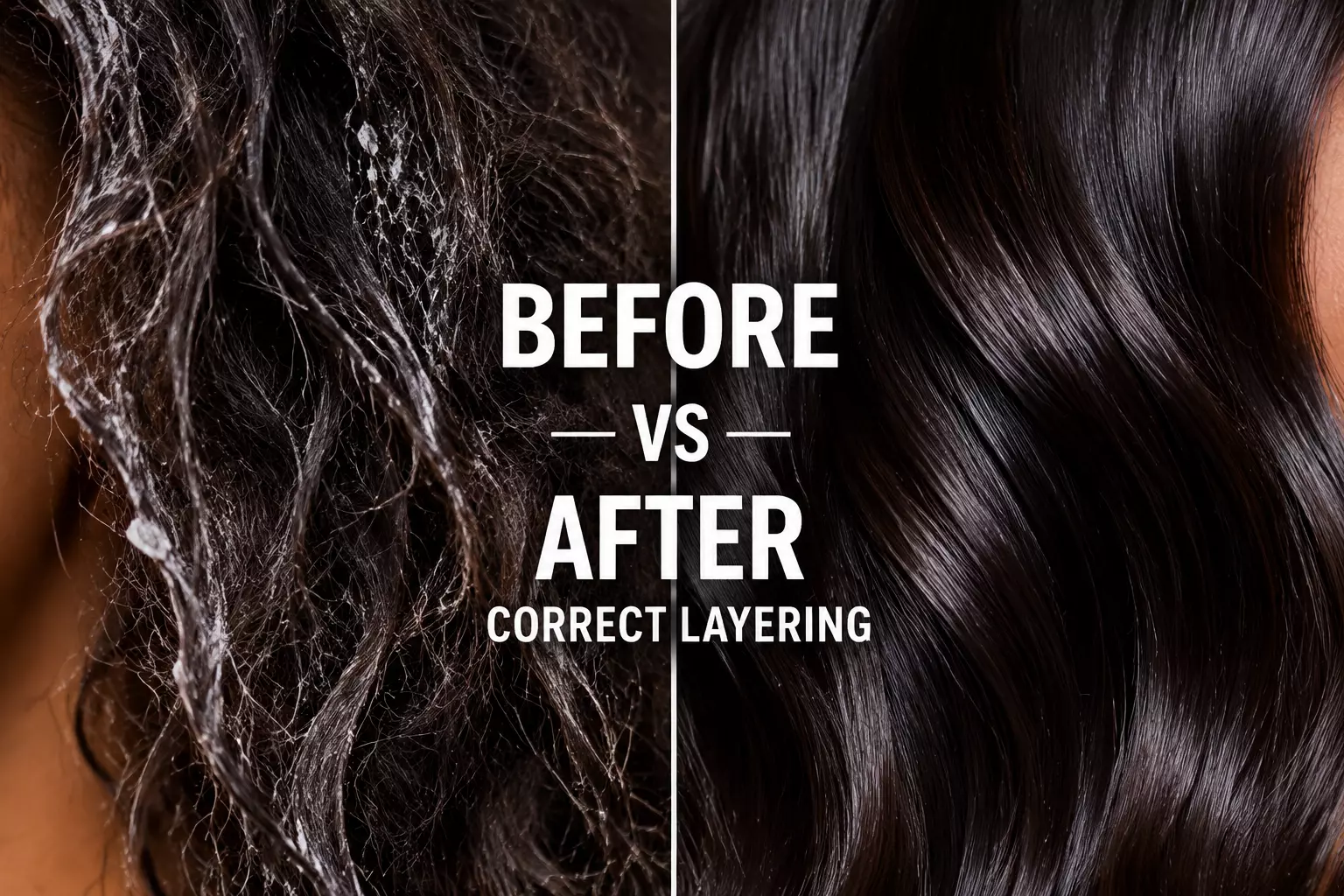
❌ Mistake 1: Applying Oil Before Leave-In Conditioner
Oil is a sealant. Once it’s on, water-based products (like leave-in conditioners) can’t penetrate. Always apply water-based products first, oil last.
❌ Mistake 2: Using Too Much Product
More product doesn’t mean better results. Start with a small amount — the size of a dime to a quarter — and add more if needed. Overloading leads to buildup and limp hair.
❌ Mistake 3: Applying Styling Products to Soaking Wet Hair
Soaking wet hair dilutes products significantly. Blot with a microfiber towel until hair is damp but not dripping before applying leave-in and styling products.
❌ Mistake 4: Skipping Heat Protectant
This one costs people years of hair health. Even a single heat styling session without protection causes measurable cuticle damage. [8]
❌ Mistake 5: Applying Dry-Hair Products to Wet Hair
Hairspray, dry shampoo, and finishing oils are formulated for dry hair. Using them on wet hair changes their chemistry and reduces effectiveness.
Quick Reference: The Master Product Order Chart
Here’s the complete sequence in one easy-to-scan table:
| Step | Product | Hair State | Notes |
|---|---|---|---|
| 1 | Pre-poo treatment | Dry | Optional; great for dry/damaged hair |
| 2 | Shampoo | Wet | Double shampoo if heavy product user |
| 3 | Conditioner/Mask | Wet | Mid-lengths to ends only |
| 4 | Leave-in conditioner | Damp | First styling layer |
| 5 | Serum/Treatment | Damp | Targeted concerns |
| 6 | Mousse/Foam | Damp | Lightest styling product |
| 7 | Gel/Cream | Damp | Medium-weight styler |
| 8 | Heat protectant | Damp | Before ANY heat tool |
| 9 | Blow dry/Air dry | — | Lock in layers |
| 10 | Oil/Hairspray | Dry | Finishing and sealing |
The Science of “Wet to Dry, Light to Heavy”
The two rules that govern everything in The Correct Order to Apply Hair Products (Most People Get It Wrong) are:
- Wet to dry: Apply products while hair is in the appropriate moisture state for each product.
- Light to heavy: Within each phase, go from lightest to heaviest texture.
These rules exist because of how hair’s cuticle works. [2] The cuticle is made of overlapping scales, like roof shingles. When wet, these scales lift slightly, allowing products to penetrate. As hair dries, they close. Heavy products applied early seal the cuticle shut, preventing lighter products from getting in. [9]
Hair care in 2026 has seen a significant shift toward ingredient-conscious formulations — consumers are increasingly aware of how ingredients like silicones, proteins, and humectants interact with each other in layered routines. [9] This makes understanding application order even more important, because modern products are often more concentrated and reactive than older formulations.
“Think of your hair routine like skincare — you wouldn’t apply moisturizer before your serum. The same logic applies to hair.” [1]
How Long to Wait Between Products?
A question I hear constantly: Do I need to wait between applying each product?
Generally, no — you don’t need to wait between products in the same phase (e.g., between leave-in and gel). However:
- ✅ Do let rinse-out conditioner sit for 2–5 minutes before rinsing
- ✅ Do blot hair before applying leave-in (don’t apply to dripping hair)
- ✅ Do ensure hair is fully dry before applying finishing products
- ❌ Don’t rush the drying phase — applying finishing products to damp hair reduces their effectiveness
Building Your Routine: A Practical Starting Point
Not everyone needs all ten steps. Here’s how to build a routine based on your hair’s actual needs:
Minimal routine (5 steps):
Shampoo → Conditioner → Leave-in → Heat protectant → Style/dry
Moderate routine (7 steps):
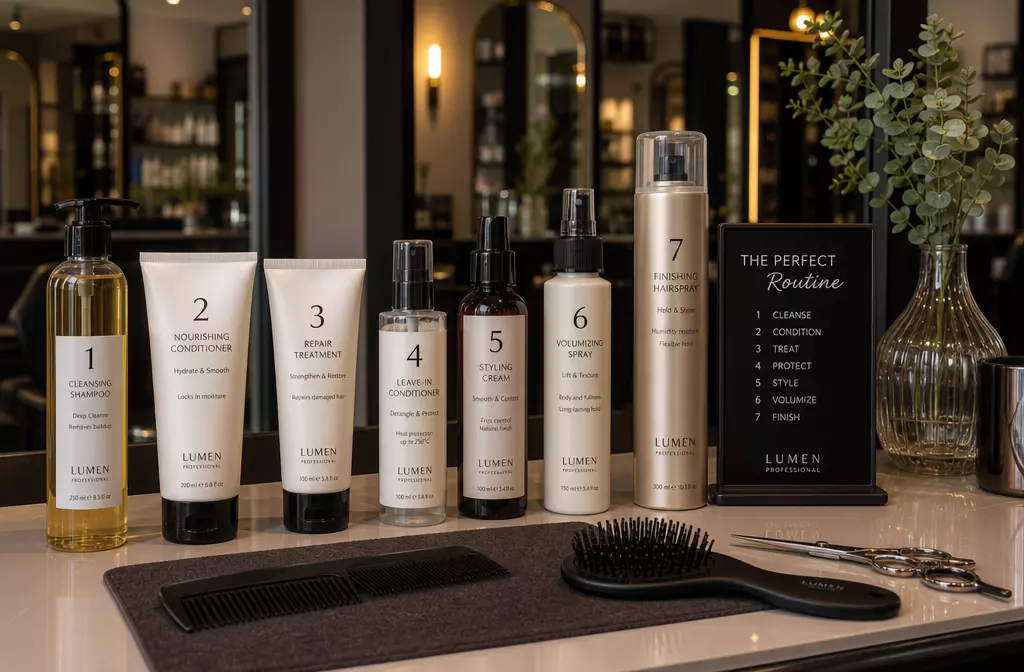
Shampoo → Conditioner → Leave-in → Serum → Styler → Heat protectant → Dry → Finishing oil
Full routine (10 steps):
Pre-poo → Shampoo → Mask → Leave-in → Treatment → Mousse → Gel → Heat protectant → Dry → Oil/Spray
Start minimal and add steps only when you have a specific concern that isn’t being addressed. More steps aren’t always better — the right steps in the right order are what matter. [8]
Styling for Longevity: Making Your Routine Last
Getting the order right is step one. Making your results last all day is step two. [6]
Tips to extend your style:
- 🌙 Sleep on a silk or satin pillowcase — cotton creates friction that breaks down your style and causes frizz overnight.
- 🧣 Pineapple your hair (for curly types) — gather hair loosely at the top of your head before sleeping to preserve curl pattern.
- 💨 Avoid over-touching — running fingers through styled hair introduces oils and disrupts product layers.
- 🚿 Refresh, don’t re-wash — on day 2 or 3, use a small amount of water and leave-in to revive your style without starting over.
- 🧴 Dry shampoo at the roots — absorbs oil and adds volume without disturbing the rest of your style.
Conclusion: Start With Order, Not New Products
The most transformative thing you can do for your hair in 2026 doesn’t cost a single dollar — it’s simply applying what you already own in the right sequence. The Correct Order to Apply Hair Products (Most People Get It Wrong) isn’t a complicated concept once you understand the two core rules: wet to dry, and lightest to heaviest.
Here’s your action plan:
- Audit your current routine — write down what you use and in what order.
- Compare it to the master sequence in this article.
- Identify the first mistake and fix just that one thing this week.
- Use the interactive tool above to get a sequence tailored to your hair type.
- Give it 3–4 wash days before judging results — your hair needs time to adjust.
The products in your cabinet are probably fine. The order you use them in might not be. Fix the sequence, and you may be surprised how dramatically your results improve — without buying a single new thing.
References
[1] Order To Apply Hair Care Products – https://www.thezoereport.com/beauty/order-to-apply-hair-care-products
[2] Layer Hair Products – https://www.wella.com/professional/en-US/blog/hair-care/layer-hair-products
[6] Watch – https://www.youtube.com/watch?v=V37GG13ZAyQ&vl=en-US
[8] Order To Apply Hair Products – https://www.realsimple.com/beauty-fashion/hair/hair-care/order-to-apply-hair-products
[9] Hair Care In 2026 The New Standards Reshaping The Category – https://www.inolex.com/learn/beautyfood/hair-care-in-2026-the-new-standards-reshaping-the-category