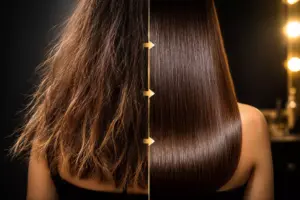
Heatless Curls Overnight: 4 Methods That Actually Work
Over 60% of women who regularly use heat styling tools report noticeable hair damage within two years — yet millions still reach for the curling iron every single morning. There’s a smarter way. Heatless curls overnight: 4 methods that actually work are not just a TikTok trend — they’re a legitimate, science-backed approach to beautiful curls that protects your hair while you sleep. Whether you have fine, thick, straight, or wavy hair, at least one of these methods will transform your morning routine in 2026.
I’ve personally tested all four of these techniques over several months, and the results genuinely surprised me. Some gave me the tightest, most defined spirals I’d ever had without a single degree of heat. Others gave me effortless, beachy waves that lasted all day. The key is knowing which method matches your hair type, your sleep style, and the look you’re going for.
Disclosure: This post contains affiliate links. As an Amazon Associate, we earn from qualifying purchases, and at no extra cost to you.
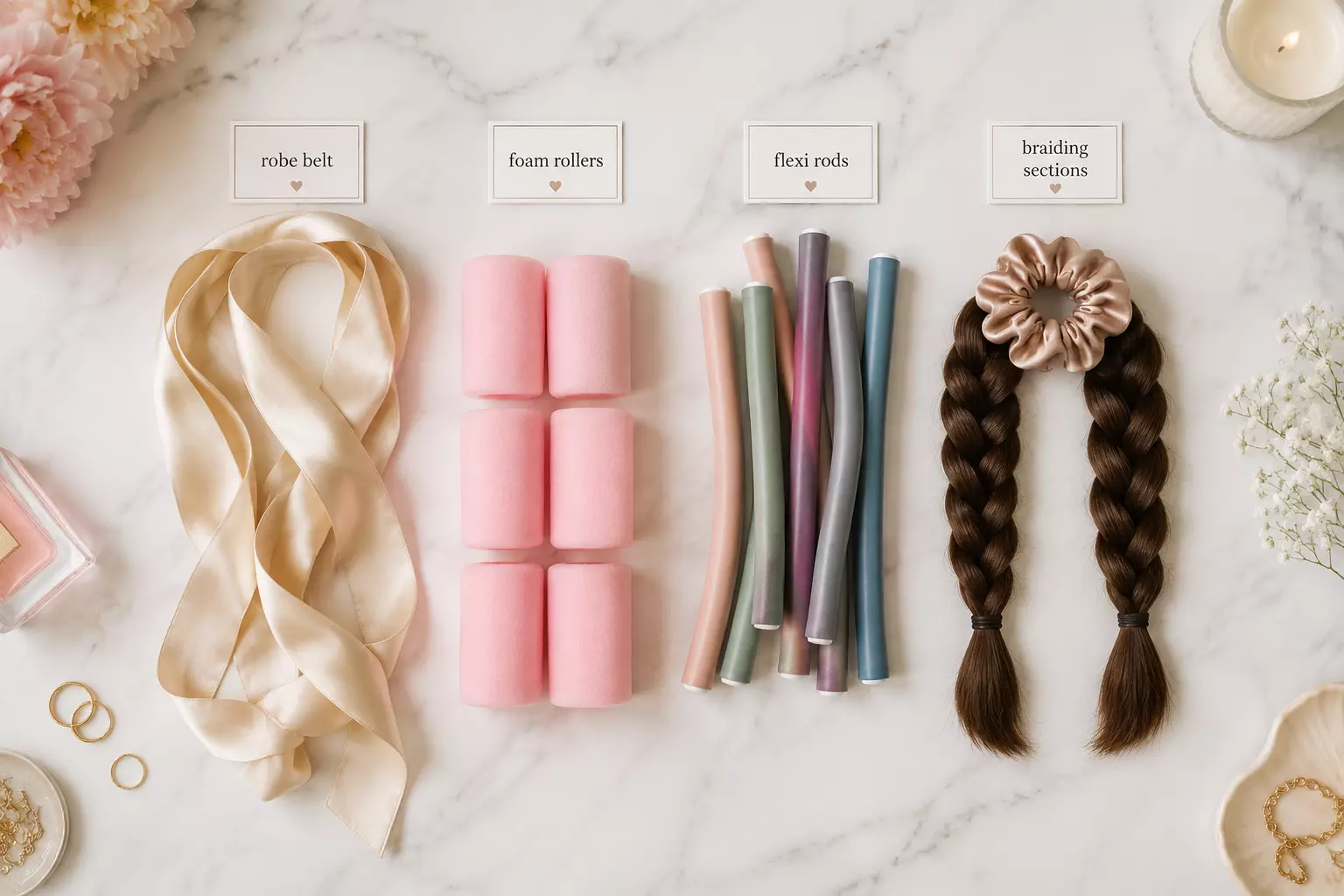
Key Takeaways 🌀
- Four proven methods — robe belt/ribbon, flexi rods, braids, and buns — all produce real curls overnight with zero heat damage.
- Flexi rods and robe belt methods deliver the most defined, long-lasting curls; braids and buns offer softer waves with more sleep comfort [9].
- Damp (not wet) hair is the golden rule for all four methods — too wet causes frizz, too dry means weak curl formation.
- Hair type matters — fine hair benefits from lighter tools; thick or coarse hair needs more sections and stronger hold products.
- Prep and takedown technique are just as important as the method itself — rushing the morning reveal is the #1 mistake.
- Try our Free Interactive app: Find Your Perfect Heatless Curl Method: Wake Up to Gorgeous Hair
Why Heatless Curls Overnight Are Worth the Switch
Let’s be honest: heat damage is cumulative and sneaky. You don’t notice it until your hair starts breaking off at the mid-shaft or losing its natural elasticity. Curling irons and wands typically operate between 300°F and 450°F — temperatures that begin degrading the keratin protein structure of hair after repeated exposure.
Heatless methods sidestep this entirely. By using tension, moisture, and time instead of heat, you allow the hydrogen bonds in your hair’s cortex to reform around a new shape. This is the same chemistry behind a traditional wet set — a technique professional stylists have used for decades.
💬 “The best curl is the one that doesn’t cost you your hair’s health over time.”
Beyond hair health, there’s a practical upside: you do the work while you sleep. Set your hair at night, wake up, take it down, and walk out the door. No standing in front of a mirror for 45 minutes. No burning your fingers. No waiting for tools to heat up.
Community feedback on platforms like Reddit confirms this — many people with long hair have switched entirely to heatless methods and report not just healthier hair, but significantly less morning stress [5].
Understanding the Science Behind Overnight Curl Setting
Before diving into the four methods, it helps to understand why overnight setting works so well.
Hair is made up of keratin proteins held together by three types of bonds:
| Bond Type | Broken By | Reset By |
|---|---|---|
| Hydrogen bonds | Water/moisture | Drying in new shape |
| Salt bonds | pH changes | Returning to normal pH |
| Disulfide bonds | Chemical processes | Chemical processes only |
When you dampen your hair and wrap it around a tool or braid it, you’re breaking and reforming the hydrogen bonds. As the hair dries in its new shape overnight, those bonds lock in the curl pattern. This is why damp hair is so critical — dry hair won’t reform bonds effectively, and soaking wet hair takes too long to dry and can cause frizz [1].
The longer the hair stays in the set (hence overnight), the more completely the bonds reform, and the longer your curls will last throughout the day [2].
Heatless Curls Overnight: 4 Methods That Actually Work — Full Breakdown
Now let’s get into the actual techniques. I’ll cover each method in detail, including who it’s best for, what you’ll need, step-by-step instructions, and honest pros and cons.
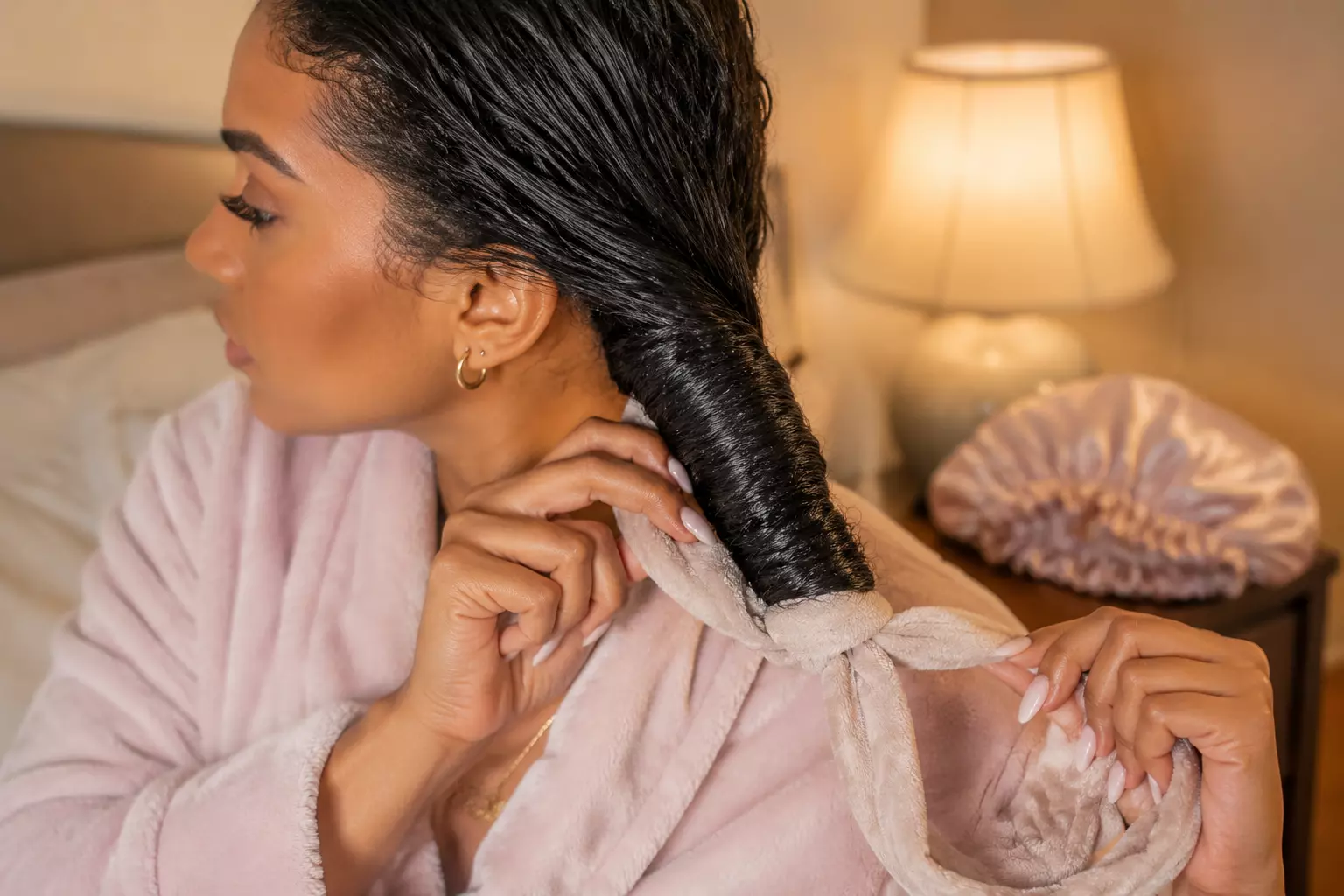
Method 1: The Robe Belt / Ribbon Method 🎀
Best for: Medium to long hair | Defined, bouncy curls | All hair textures
This is the method that went massively viral — and for good reason. A 2022 Business Insider experiment testing seven heatless curl methods found that the robe belt and ribbon style produced some of the most defined, long-lasting curls of any no-heat technique tested [9].
What you need:
- A soft robe belt, silk ribbon, or dedicated heatless curl rod (sold at most beauty retailers)
- Bobby pins or clips
- Light-hold mousse or curl cream
- A spray bottle with water
Step-by-step:
- Prep your hair — Lightly mist hair until damp (not dripping). Apply a small amount of curl cream or mousse from mid-shaft to ends.
- Position the belt — Place the robe belt or ribbon on top of your head, centered. Secure the middle with a clip or bobby pin.
- Section and wrap — Take a section of hair from one side of your part, loop it over the belt, then under, continuing down the length of the belt like a spiral.
- Repeat on the other side — Mirror the process on the opposite side.
- Secure the ends — Once you reach the end of the belt, tie or clip the remaining hair.
- Sleep and reveal — In the morning, gently unwind the hair from the belt. Do not brush — use your fingers to separate the curls.
⚡ Pro tip: Use a satin or silk robe belt rather than a cotton one to minimize frizz while you sleep. Sleeping on a satin pillowcase adds another layer of protection [2].
| Pros | Cons |
|---|---|
| Very defined curls | Can feel bulky while sleeping |
| Works on most hair types | Requires practice to wrap evenly |
| Affordable (uses items you own) | May slip if hair is very slippery |
| Long-lasting results | Not ideal for very short hair |
Method 2: Flexi Rods 🌀
Best for: All hair lengths | Tightest, most defined spirals | Natural and textured hair
Flexi rods are the professional’s choice for heatless curls. These flexible foam-covered rods bend to hold your hair in place, and they produce incredibly defined spiral curls that can rival a curling wand — without a single degree of heat [9].
What you need:
- Flexi rods (various sizes — smaller = tighter curls)
- Curl-defining cream or setting lotion
- Spray bottle with water
- Wide-tooth comb
Step-by-step:
- Section your hair — Divide hair into small, even sections (the smaller the section, the tighter the curl).
- Apply product — Work a small amount of curl cream through each section.
- Wrap around the rod — Starting at the ends, wrap the hair around the flexi rod in a spiral motion, moving upward toward the root.
- Bend to secure — Once the hair is fully wrapped, bend both ends of the rod inward to secure it.
- Repeat across all sections — This takes time but is worth it.
- Sleep and release — In the morning, carefully unbend and slide each rod out. Separate curls gently with fingers and fluff at the roots.
⚡ Pro tip: Use smaller rods at the front hairline for face-framing curls and larger rods at the back for volume. This creates a natural, dimensional look [1].
💬 “Flexi rods gave me the most salon-worthy curls I’ve ever had at home — and I woke up to them.”
| Pros | Cons |
|---|---|
| Most defined curl results | Rods can be uncomfortable to sleep on |
| Excellent for natural/textured hair | Requires purchasing rods |
| Highly customizable curl size | Time-consuming to set |
| Very long-lasting curls | Learning curve for beginners |
Method 3: Overnight Braids 🧶
Best for: All hair types | Soft, beachy waves | Maximum sleep comfort
Braids are the most sleep-friendly heatless curl method — and the most underrated. The Business Insider test confirmed that while braids produce softer, more “undone” waves rather than defined spirals, they are by far the most comfortable option for sleeping [9]. This makes them ideal for people who move around a lot at night or who prefer a more natural, effortless wave.
What you need:
- Hair ties or satin scrunchies
- Leave-in conditioner or light mousse
- Spray bottle
Step-by-step:
- Dampen and prep — Lightly mist hair and apply a small amount of leave-in conditioner or mousse.
- Choose your braid count — More braids = tighter waves. Two braids give loose waves; four to six braids give more defined crimps.
- Braid each section — Braid from root to end, keeping tension consistent. Secure with a satin scrunchie.
- Sleep — This is genuinely the most comfortable method. Most people barely notice the braids while sleeping.
- Release in the morning — Undo the braids, gently separate the waves with your fingers, and apply a light-hold hairspray if desired.
Braid variations to try:
- Two large braids → Loose, beachy waves
- Four medium braids → Medium-definition waves
- Six to eight small braids → Tighter, crimped waves
- French braids → Waves that start from the root for more volume
- Twisted braids (rope twists) → S-wave pattern with more definition
⚡ Pro tip: For extra volume, flip your head upside down when releasing the braids and scrunch gently at the roots [2].
| Pros | Cons |
|---|---|
| Most comfortable for sleeping | Softer waves, not defined curls |
| No tools required | Results vary by hair texture |
| Works on all hair lengths | May not last as long in fine hair |
| Great for beginners | Braiding skill required |
Method 4: Hair Buns (Bantu Knots or Sock Buns) 🌸
Best for: Medium to long hair | Voluminous waves | Low-effort setup
Buns are the easiest heatless curl method to set up, making them perfect for nights when you’re tired but still want great hair in the morning. Bantu knots produce tighter, more defined curls; sock buns and regular twisted buns give softer, voluminous waves.
What you need:
- Bobby pins or hair ties
- Curl cream or mousse
- Optional: a sock (for sock bun method)
Step-by-step (Bantu Knots):
- Section hair — Divide damp hair into four to eight sections depending on desired curl tightness.
- Apply product — Work curl cream through each section.
- Twist tightly — Twist each section tightly from root to end.
- Coil into a knot — Wrap the twisted section around itself in a tight coil and secure with a bobby pin or hair tie.
- Sleep and release — In the morning, carefully uncoil each knot. Separate with fingers and fluff.
Step-by-step (Sock Bun):
- Cut the toe off an old sock and roll it into a donut shape.
- Put hair in a high ponytail, thread it through the sock donut, and roll the hair around the sock down toward the base.
- Secure and sleep.
- Release in the morning for voluminous, bouncy waves.
| Pros | Cons |
|---|---|
| Very quick to set up | Buns can be uncomfortable to sleep on |
| No special tools needed | Results less consistent than other methods |
| Great for voluminous waves | Can cause creasing if not done carefully |
| Works for Bantu knot-outs on natural hair | May not suit very fine hair |
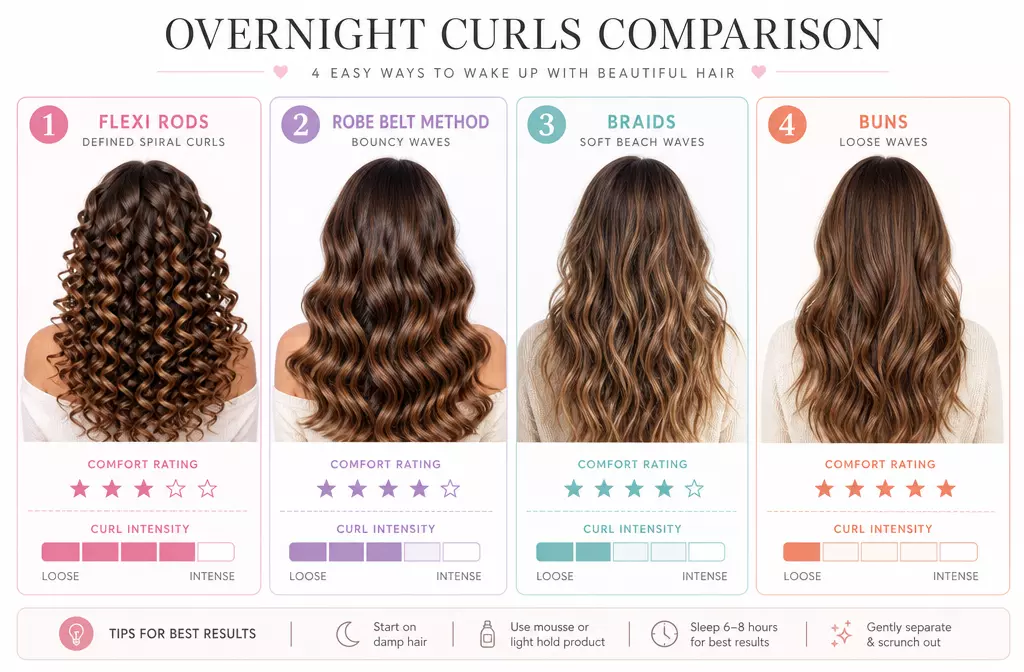
Comparing All 4 Methods at a Glance
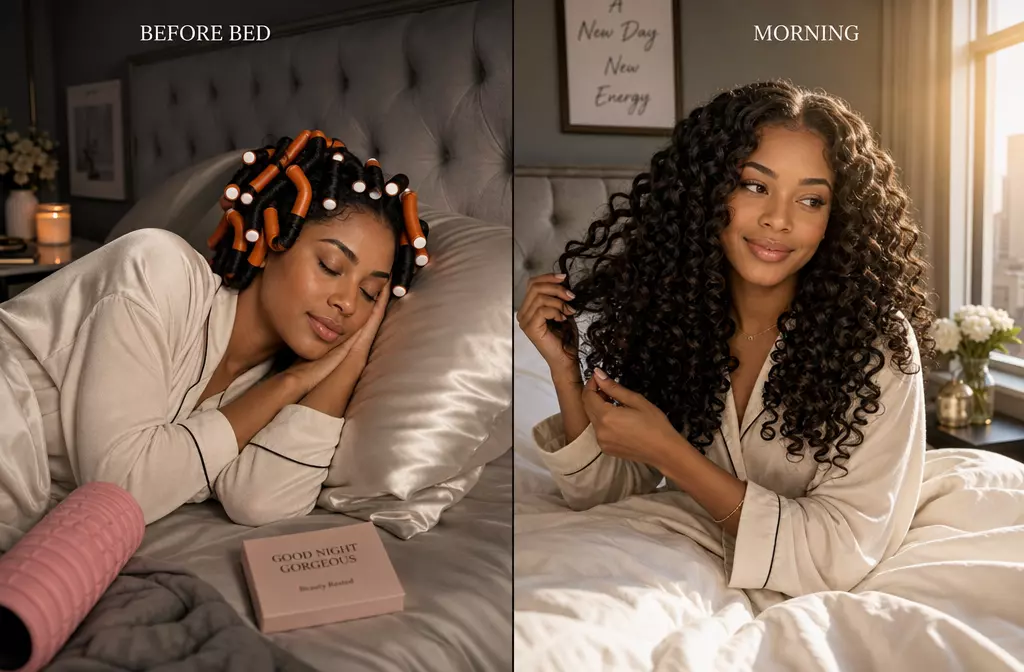
| Method | Curl Definition | Sleep Comfort | Ease of Setup | Best Hair Type | Longevity |
|---|---|---|---|---|---|
| Robe Belt/Ribbon | ⭐⭐⭐⭐⭐ | ⭐⭐⭐ | ⭐⭐⭐ | Most types | All day |
| Flexi Rods | ⭐⭐⭐⭐⭐ | ⭐⭐ | ⭐⭐ | Natural/textured | 1-2 days |
| Braids | ⭐⭐⭐ | ⭐⭐⭐⭐⭐ | ⭐⭐⭐⭐ | All types | Half day |
| Buns | ⭐⭐⭐ | ⭐⭐⭐ | ⭐⭐⭐⭐⭐ | Medium/long | Half day |
Which Method Is Right for Your Hair Type?
Not all heatless curl methods work equally well on every hair type. Here’s a quick guide:
Fine or thin hair:
- Best methods: Robe belt, braids
- Use lightweight mousse rather than heavy creams
- Fewer, smaller sections work better
- Avoid flexi rods (too heavy) or very tight buns (can cause breakage)
Thick or coarse hair:
- Best methods: Flexi rods, Bantu knots
- Use a stronger hold curl cream or setting lotion
- More sections = better definition
- Allow extra drying time — thick hair takes longer to set
Natural or textured hair (Type 3-4):
- Best methods: Flexi rods, Bantu knots
- These methods enhance natural curl patterns beautifully
- Apply a generous amount of curl-defining product
- The results can last 2-3 days with proper care [1]
Straight or resistant hair:
- Best methods: Robe belt, flexi rods
- Use a stronger hold product (mousse or setting spray)
- Make sure hair is properly damp — this is especially important for straight hair
- Consider a light-hold hairspray after releasing for longevity [2]
Essential Prep Tips for the Best Results
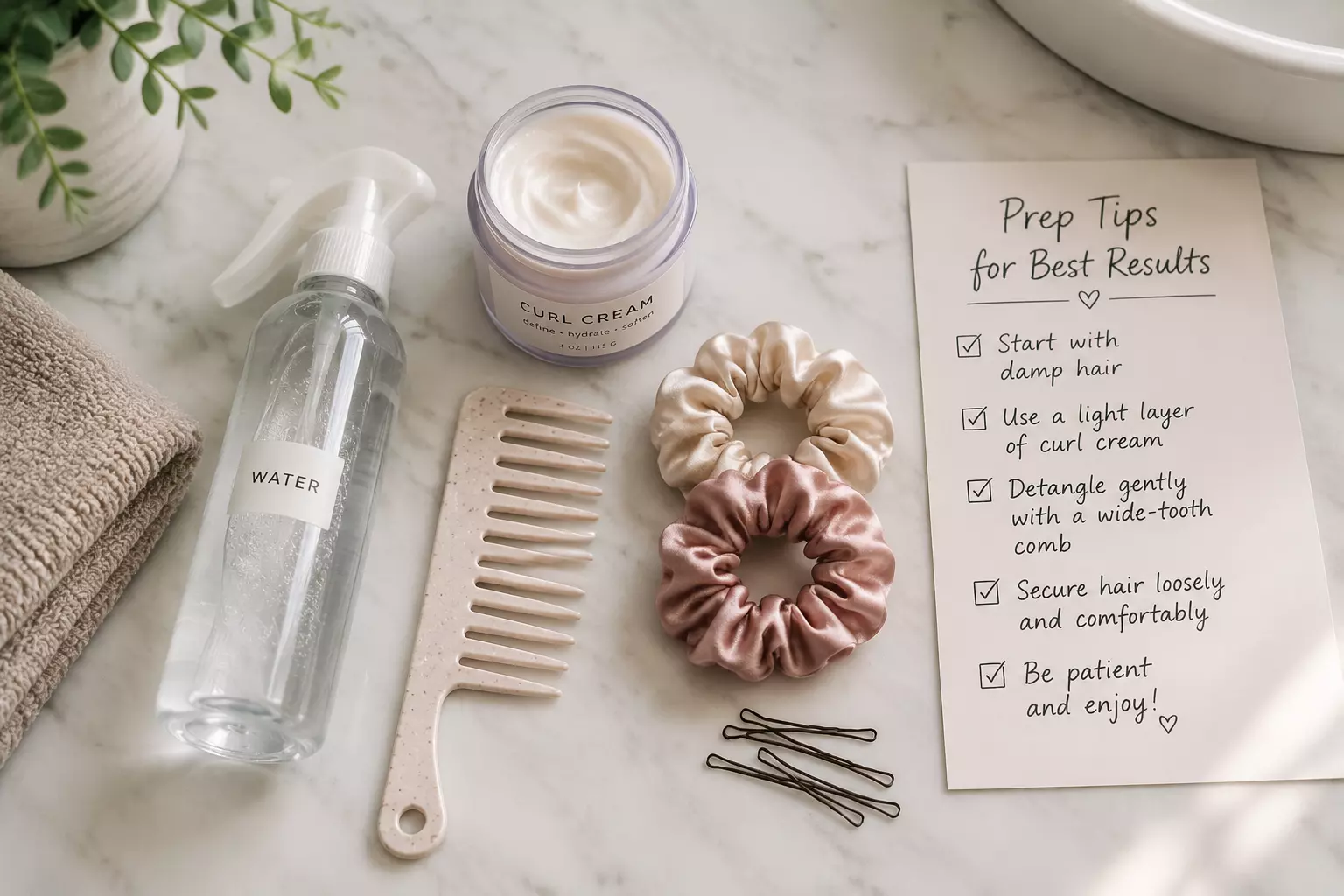
Getting the setup right is half the battle. Here are the non-negotiable prep steps that make the difference between limp waves and gorgeous curls:
🚿 Start With the Right Level of Dampness
This is the single most important factor. Hair should be damp — about 70-80% dry. Soaking wet hair won’t dry fully overnight and leads to frizz. Bone-dry hair won’t hold a curl at all. If you shower in the morning, air-dry your hair for 20-30 minutes before setting [1].
💆 Use the Right Products
- Fine hair: Lightweight mousse or curl-enhancing spray
- Medium hair: Light curl cream or leave-in conditioner
- Thick/coarse hair: Rich curl cream or setting lotion
- Natural hair: Curl-defining cream or gel
Avoid heavy oils before setting — they can prevent the hair from holding a curl shape.
🛏️ Protect Your Hair While You Sleep
- Use a satin or silk pillowcase to reduce friction and frizz
- Consider a satin sleep bonnet if you’re using flexi rods or the robe belt method
- Avoid cotton pillowcases — they absorb moisture and cause frizz [2]
✋ Master the Morning Reveal
- Never brush curls out — use fingers only
- Work from the ends up when separating
- Apply a light-hold finishing spray or a tiny amount of serum to add shine
- Fluff at the roots for volume
Common Mistakes to Avoid
Even with the right method, small errors can sabotage your results. Here are the most common pitfalls:
- Hair is too wet → Curls won’t set properly and may smell musty
- Skipping product → Curls fall flat within an hour
- Sections are uneven → Inconsistent curl pattern
- Rushing the takedown → Pulling hair out too fast causes frizz and breaks the curl
- Sleeping on a cotton pillowcase → Frizz and flattened curls by morning
- Using too much product → Crunchy, stiff curls that don’t move naturally
Heatless Curls Overnight: 4 Methods That Actually Work — Troubleshooting Guide
| Problem | Likely Cause | Fix |
|---|---|---|
| Curls fell flat by noon | Hair too dry when set / no product | Re-dampen and use mousse |
| Frizzy results | Hair too wet / cotton pillowcase | Damp (not wet) + satin pillowcase |
| Uneven curl pattern | Uneven sections | Take smaller, more consistent sections |
| Curls too tight/crimped | Too much tension / too small sections | Use larger sections, less tension |
| Curls too loose | Hair too dry / large sections | Smaller sections, damper hair |
| Uncomfortable sleep | Wrong method for sleep style | Switch to braids for comfort |
Tips for Making Your Heatless Curls Last All Day
Getting great curls is one thing — keeping them looking good until evening is another. Here are the most effective strategies for longevity:
🌬️ Ensure Hair Is Fully Dry Before Removing
This is the number one factor in curl longevity. If your hair is even slightly damp when you take it down, the curls will drop within an hour. If you’re not sure, leave the set in for an extra 30 minutes in the morning.
💨 Use a Diffuser (Optional)
If you’re in a hurry or your hair didn’t fully dry overnight, a diffuser on low heat for 5-10 minutes can help set the curls without causing damage. This is the one exception to the “no heat” rule.
🌿 Apply a Light Finishing Product
- Fine hair: A light-hold flexible hairspray
- Medium hair: A small amount of curl-defining serum
- Thick/coarse hair: A light oil or anti-frizz serum
🙅 Don’t Touch Your Curls
The more you touch, the more you frizz. Resist the urge to run your fingers through your curls throughout the day.
🌙 Pineapple at Night
To preserve curls for a second day, loosely gather all your hair on top of your head in a “pineapple” bun secured with a satin scrunchie before bed. In the morning, release and refresh with a light mist of water.
Conclusion: Your Best Hair Morning Starts the Night Before
The evidence is clear: heatless curls overnight: 4 methods that actually work deliver real, beautiful results — and they do it without sacrificing your hair’s health. Whether you choose the defined spirals of flexi rods, the bouncy curls of the robe belt method, the comfortable waves of overnight braids, or the effortless volume of buns, you now have everything you need to make the switch.
Your actionable next steps:
- Tonight: Choose one method based on your hair type and the comparison table above. Start with braids if you’re a beginner — they’re the most forgiving.
- This week: Try at least two different methods to find your personal favorite.
- Going forward: Invest in a satin pillowcase and a set of flexi rods — these two items will transform your results across all methods.
- Track your results: Note which method, product, and dampness level gave you the best curls. Consistency comes from knowing your hair.
The best morning hair routine is the one that happens while you sleep. Start tonight. 🌙✨
References
[1] Heatless Overnight Curls – https://www.cliphair.com/blogs/hair-blog/heatless-overnight-curls
[2] How To Achieve Heatless Curls Overnight – https://www.verbproducts.com/blogs/verb-word/how-to-achieve-heatless-curls-overnight
[5] What Are Your Fave Noheat Methods To Curl Your – https://www.reddit.com/r/longhair/comments/1faq8xf/what_are_your_fave_noheat_methods_to_curl_your/
[9] Best Heatless Curls Method 2022 9 – https://www.businessinsider.com/best-heatless-curls-method-2022-9