How to Repair Bleached Hair at Home Without Cutting It
Over 75% of people who bleach their hair report significant damage within the first three sessions — yet most stylists will tell you the only real fix is a pair of scissors. That advice, while sometimes necessary, isn’t always true. Knowing how to repair bleached hair at home without cutting it is not only possible, it’s a science-backed process that millions of people are using right now to restore their strands from the inside out. Whether your hair is snapping, feeling like straw, or losing elasticity fast, this guide will walk you through every step to bring it back to life — no salon appointment required.
Disclosure: This post contains affiliate links. As an Amazon Associate, we earn from qualifying purchases, and at no extra cost to you.
Key Takeaways 🗝️
- Bleach damage is structural, not cosmetic — repair requires rebuilding protein and moisture from within the hair shaft.
- Protein treatments and deep conditioning are the two most powerful tools for restoring bleached hair at home.
- Bond-building products (like those containing bis-aminopropyl diglycol dimaleate) can literally reconnect broken disulfide bonds in the hair.
- Consistency matters more than intensity — a steady weekly routine beats one aggressive treatment.
- Heat, over-washing, and harsh products are the biggest enemies of recovery; eliminating them accelerates results dramatically.
- Try our Free Interactive app: Transform Your Bleached Hair with a Personalized Repair Plan
Understanding Why Bleached Hair Gets Damaged
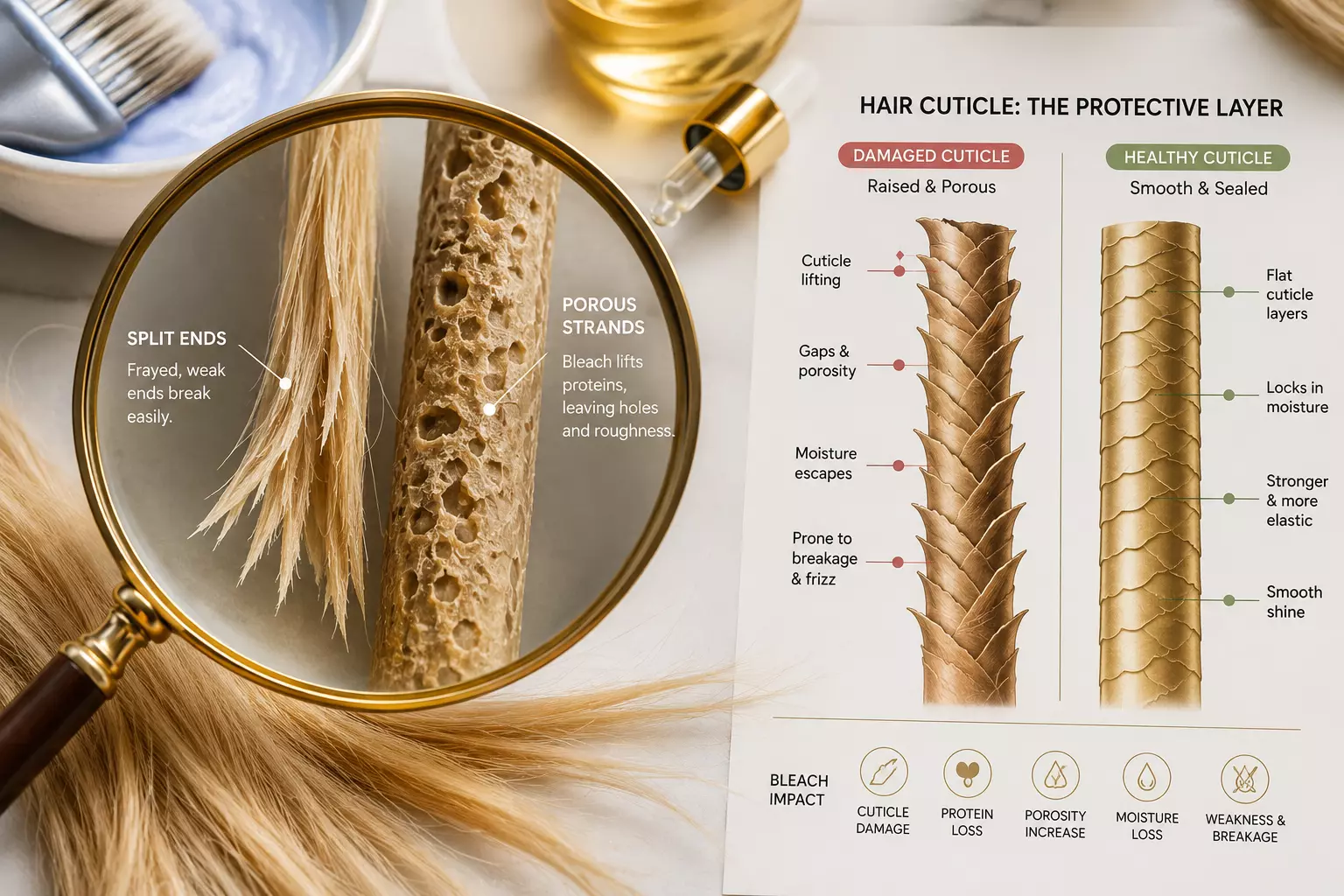
Before you can fix something, you need to understand what broke it. Bleach works by penetrating the hair’s outer layer — the cuticle — and entering the cortex, where it oxidizes and strips the melanin (color pigment). This chemical process is inherently destructive.
Here’s what bleach actually does to your hair structure:
| Hair Component | Normal State | After Bleaching |
|---|---|---|
| Cuticle | Flat, overlapping scales | Lifted, cracked, or missing |
| Cortex | Dense protein (keratin) matrix | Weakened, porous, protein-depleted |
| Disulfide bonds | Intact, providing elasticity | Broken or weakened |
| Moisture retention | High | Severely reduced |
| Porosity | Low to medium | High |
💡 Pull Quote: “Bleached hair isn’t just dry — it’s structurally compromised. The goal of repair is to rebuild what the chemistry took away.”
High porosity is the core problem. When the cuticle is lifted and damaged, your hair absorbs moisture quickly but loses it just as fast. This is why bleached hair feels dry again minutes after you condition it.
The good news? Hair is remarkably resilient. With the right approach to repairing bleached hair at home, you can restore significant strength, shine, and manageability — without touching a single inch with scissors.
The Two Pillars of Bleached Hair Repair: Protein and Moisture
Every effective bleached hair repair strategy rests on two pillars: protein and moisture. They work together, and neglecting either one will sabotage your results.
Why Protein Matters
Hair is approximately 95% keratin protein. Bleaching degrades this protein matrix, leaving the hair weak, stretchy, and prone to breakage. Protein treatments work by temporarily filling in the gaps in the hair shaft, reinforcing its structure.
Signs your hair needs protein:
- Hair stretches and doesn’t spring back (mushy feel)
- Excessive breakage even with gentle handling
- Hair feels gummy when wet
- Limp, lifeless texture with no bounce
Why Moisture Matters
Even after protein is restored, dry hair is brittle hair. Moisture — specifically, water and emollient ingredients — keeps the hair flexible and prevents snapping.
Signs your hair needs moisture:
- Hair feels rough and straw-like
- Extreme frizz and flyaways
- Hair snaps rather than stretches when pulled gently
- Dull, matte appearance
The Protein-Moisture Balance
Here’s the critical insight most people miss: too much protein makes hair brittle; too much moisture makes hair mushy. You need both in balance.
A general rule of thumb:
- Week 1: Protein treatment
- Week 2: Deep moisture treatment
- Week 3: Balanced treatment (protein + moisture)
- Repeat and adjust based on how your hair responds
How to Repair Bleached Hair at Home Without Cutting It: Step-by-Step Treatments
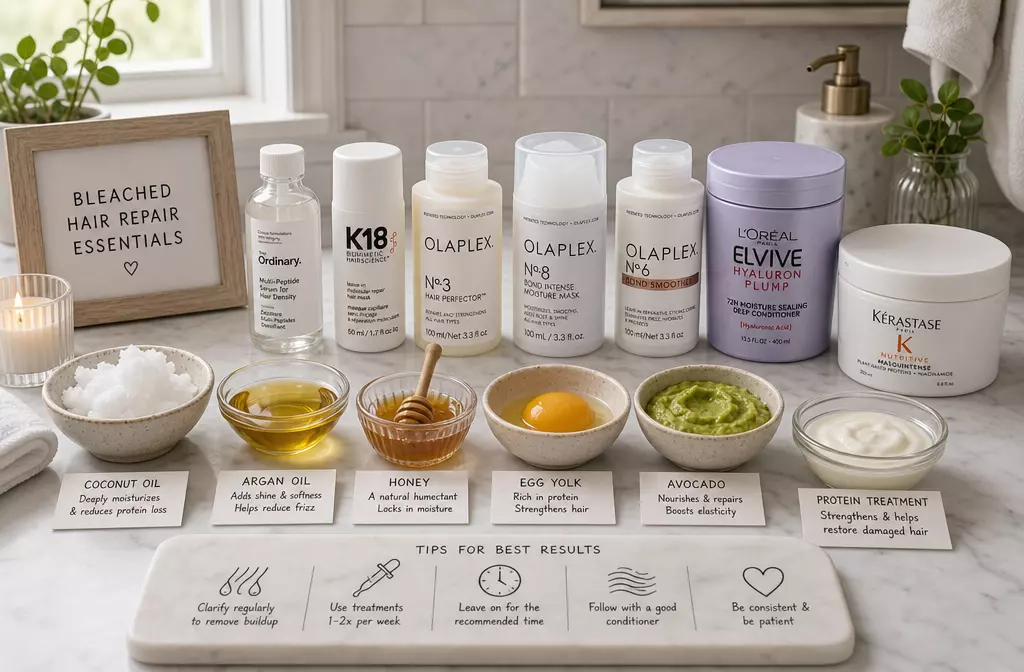
This is where the real work happens. Below are the most effective treatments you can do at home, ranked from most to least impactful.
1. 🧪 Bond-Building Treatments (The Gold Standard)
Bond-building treatments are the closest thing to a miracle product for bleached hair. They work at the molecular level to reconnect the disulfide bonds that bleach breaks apart.
Top ingredients to look for:
- Bis-aminopropyl diglycol dimaleate (Olaplex’s active ingredient)
- Maleic acid
- Glyoxylic acid
How to use:
- Apply to clean, damp hair before or during any chemical service, or as a standalone treatment.
- Leave on for 10–30 minutes.
- Rinse thoroughly and follow with conditioner.
- Use once a week for the first month, then bi-weekly for maintenance.
My experience: After one particularly aggressive bleaching session that left my hair snapping at the roots, I used a bond-building treatment every wash day for six weeks. The difference in elasticity was noticeable by week three — my hair stopped breaking when I detangled it.
2. 🥚 DIY Protein Treatments
You don’t need expensive products to get protein into your hair. Some of the most effective protein sources are already in your kitchen.
Egg and Olive Oil Mask:
- 2 whole eggs (protein + fat)
- 2 tablespoons olive oil (emollient)
- 1 tablespoon honey (humectant)
Mix well, apply to damp hair, cover with a shower cap, and leave for 20–30 minutes. Rinse with cool water (warm water will cook the egg in your hair — not ideal).
Greek Yogurt Mask:
- ½ cup plain Greek yogurt
- 1 tablespoon coconut oil
- 5 drops of argan oil
Apply from mid-length to ends. Leave for 20 minutes, then rinse and shampoo lightly.
⚠️ Important: Don’t use protein treatments more than once a week. Protein overload is a real problem that makes hair stiff and more prone to breakage.
3. 💧 Deep Conditioning Treatments
Deep conditioners penetrate the hair shaft to restore moisture and flexibility. This is non-negotiable for bleached hair repair.
What to look for in a deep conditioner:
- Ceramides — help seal the cuticle
- Panthenol (Vitamin B5) — penetrates and moisturizes
- Shea butter — seals moisture in
- Aloe vera — lightweight hydration
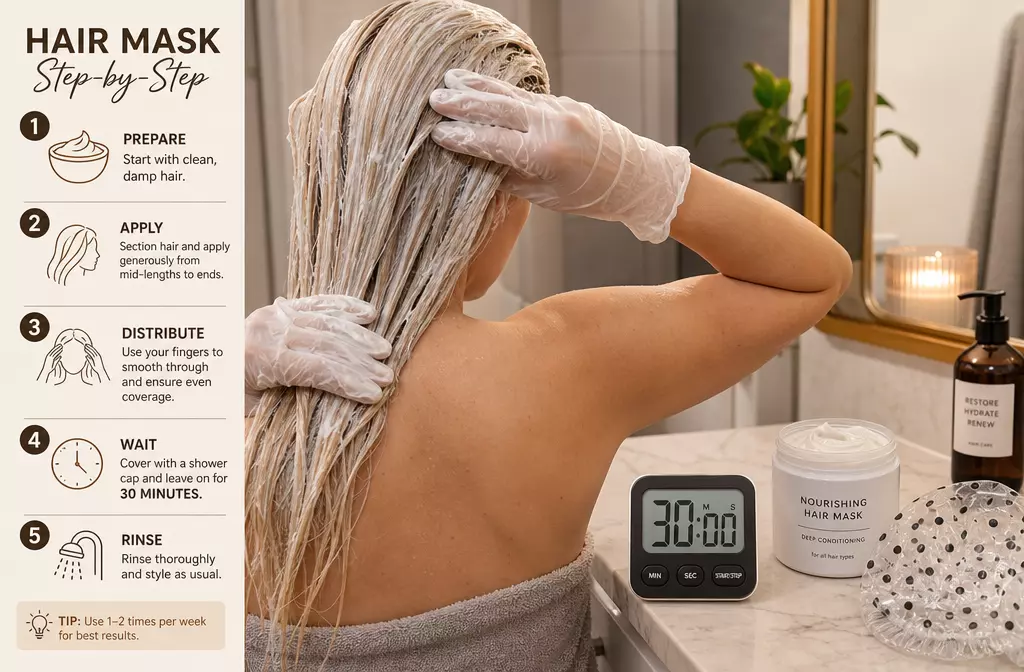
How to maximize your deep conditioning:
- Apply generously to freshly shampooed, damp hair.
- Use a wide-tooth comb to distribute evenly.
- Cover with a shower cap, then wrap in a warm towel or use a heated cap.
- Leave on for 30–45 minutes (heat helps the product penetrate deeper).
- Rinse with cool water to help seal the cuticle.
4. 🥥 Oil Treatments for Sealing and Shine
Oils don’t repair damage, but they seal the cuticle and lock in moisture after your treatments. Think of them as the finishing coat.
| Oil | Best For | How to Use |
|---|---|---|
| Coconut oil | Pre-wash protein protection | Apply 30 min before washing |
| Argan oil | Shine and frizz control | Apply to damp hair post-wash |
| Jojoba oil | Scalp health + ends | Scalp massage + ends |
| Castor oil | Thickness and growth | Mix with lighter oil, apply to scalp |
Pro tip: Apply a small amount of argan or jojoba oil to your ends while your hair is still damp, right after your leave-in conditioner. This seals the moisture in before it can evaporate.
Building Your Weekly Bleached Hair Repair Routine
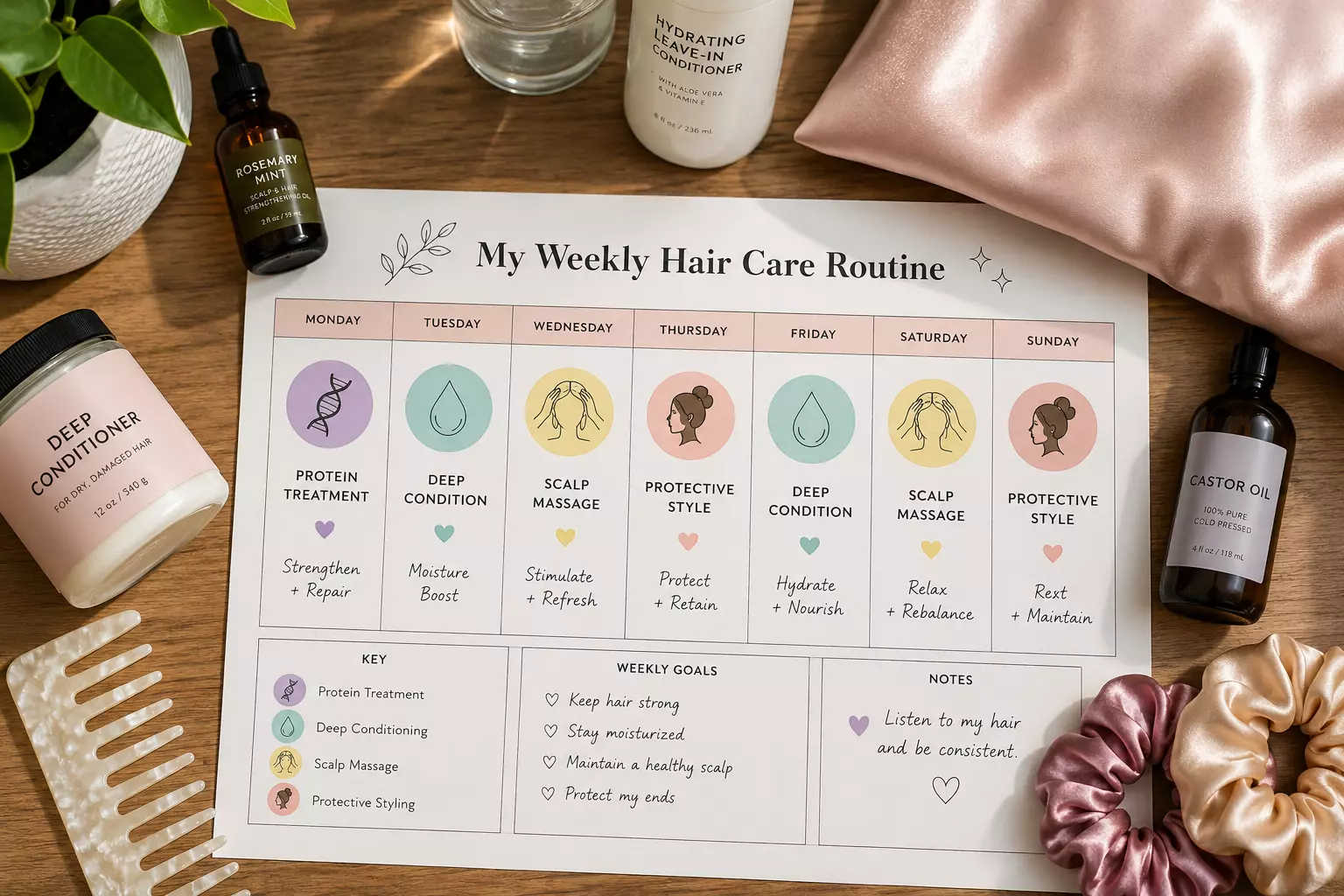
Knowing what treatments to use is only half the battle. The other half is consistency and sequencing. Here’s a weekly routine that actually works for learning how to repair bleached hair at home without cutting it:
🗓️ Sample Weekly Routine
Day 1 (Wash Day):
- Pre-poo with coconut oil (30 minutes before washing)
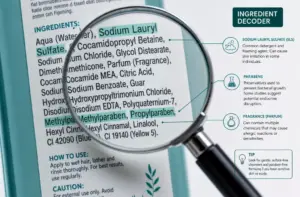
- Shampoo with a sulfate-free, gentle cleanser — harsh sulfates strip already-depleted moisture
- Apply protein treatment OR deep conditioner (alternate weekly)
- Rinse, apply leave-in conditioner
- Seal with a light oil
- Air dry or use a diffuser on low heat
Day 3–4:
- Apply a light leave-in conditioner or water-based moisturizer to refresh moisture
- Seal with oil
- Protective style if needed (braid, bun, or loose twist)
Day 6–7:
- Scalp massage with jojoba or castor oil (5–10 minutes)
- This stimulates circulation and supports healthy growth from the root
Wash Day Frequency: Bleached hair should be washed no more than 2–3 times per week. Over-washing strips the hair of its already-limited natural oils.
What to STOP Doing Immediately 🚫
Repairing bleached hair isn’t just about what you add — it’s also about what you eliminate:
- ❌ Heat styling daily — flat irons and curling wands cause additional protein breakdown
- ❌ Brushing dry hair — always detangle when damp with a wide-tooth comb
- ❌ Tight hairstyles — ponytails and tight buns cause mechanical breakage at already-weak points
- ❌ Sulfate shampoos — too stripping for compromised hair
- ❌ Bleaching again too soon — wait at least 8–10 weeks between sessions
Lifestyle and Environmental Factors That Affect Bleached Hair Recovery
Your in-shower routine matters enormously, but what you do outside the shower matters just as much.
Sleep Smart 🛌
Cotton pillowcases create friction that roughens the cuticle and causes breakage overnight. Switch to a silk or satin pillowcase — it’s one of the cheapest, most impactful changes you can make. Alternatively, wrap your hair in a satin scarf before bed.
Water Quality
Hard water (high in minerals like calcium and magnesium) deposits buildup on the hair shaft, making it feel rough and preventing moisture from penetrating. If you live in a hard water area:
- Use a shower filter
- Do a chelating shampoo treatment once a month to remove mineral buildup
- Finish rinses with diluted apple cider vinegar (1 tablespoon per cup of water) to help close the cuticle
Nutrition and Hydration
Hair grows from the inside out. If your body is nutrient-deficient, your hair will reflect that — especially when it’s already stressed from bleaching.
Key nutrients for hair repair:
- Biotin — supports keratin production
- Zinc — involved in hair tissue growth and repair
- Vitamin C — needed for collagen synthesis
- Omega-3 fatty acids — support scalp health and shine
- Protein — hair is protein; if you’re not eating enough, your body won’t prioritize hair repair
Drink at least 8 glasses of water daily. Dehydration shows up in your hair faster than almost anywhere else.
Sun and Environmental Protection ☀️
UV rays break down the keratin in hair, accelerating damage in bleached strands. When spending time outdoors:
- Use a UV-protectant hair spray or serum
- Wear a hat or scarf
- Rinse hair after swimming in chlorinated or salt water (both are highly damaging to bleached hair)
How to Repair Bleached Hair at Home Without Cutting It: Tracking Your Progress
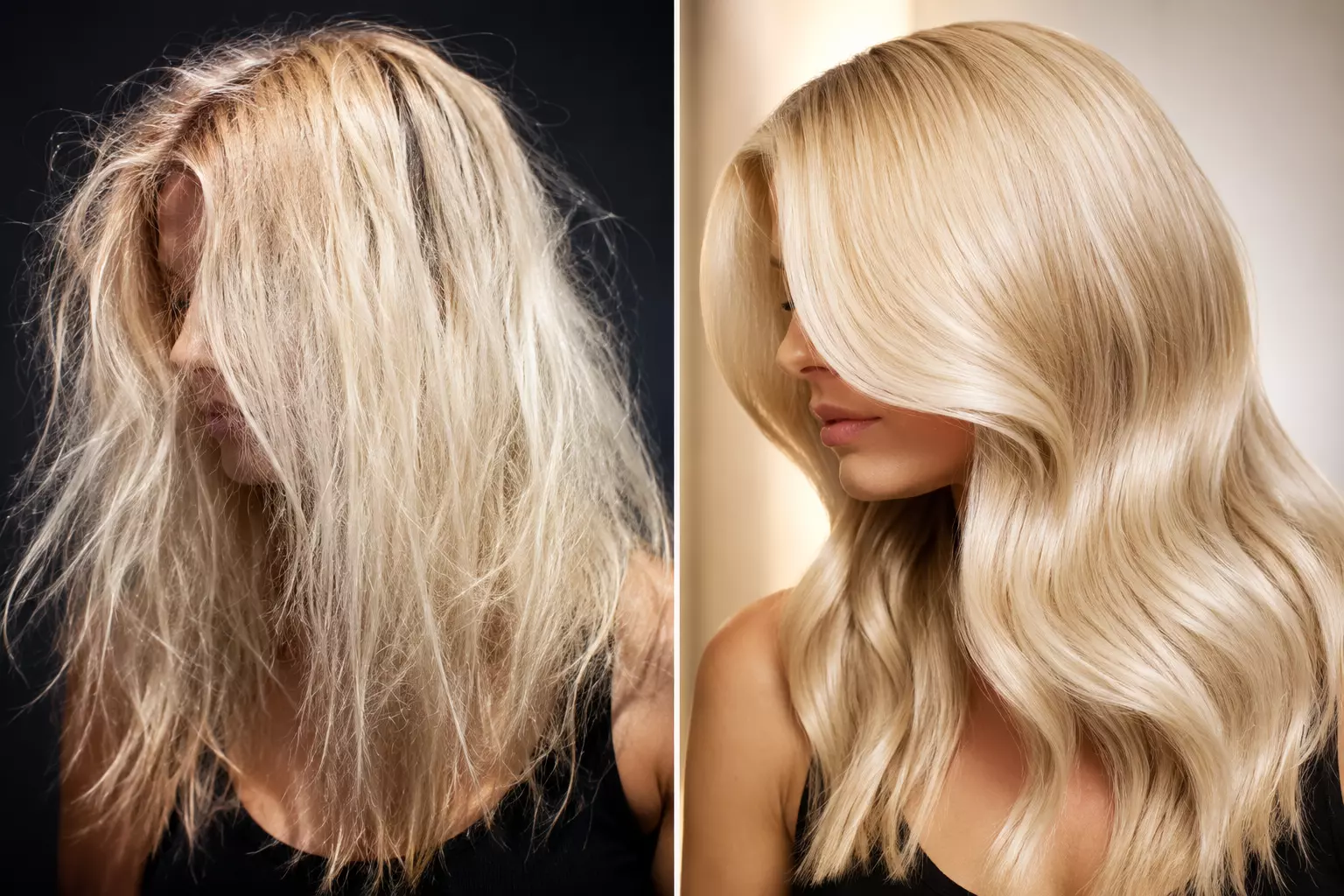
One of the most frustrating parts of hair repair is that progress is slow and easy to miss. Here’s how to track it objectively:
The Strand Test
Every two weeks, perform a simple strand test:
- Pull out a single strand of hair.
- Hold it between two fingers and gently stretch it.
- Healthy hair stretches 30–50% before snapping and returns to its original length.
- Damaged hair either snaps immediately (needs protein) or stretches without returning (needs protein + less moisture).
The Porosity Test
Fill a glass with room-temperature water and drop a clean strand of hair in:
- Floats on top = low porosity (healthy cuticle, hard to penetrate)
- Sinks slowly = medium porosity (ideal)
- Sinks immediately = high porosity (damaged cuticle, bleached hair territory)
As your hair repairs, you’ll notice it sinks more slowly over time — a tangible sign of cuticle improvement.
Progress Milestones to Watch For
| Timeline | What You Should Notice |
|---|---|
| Week 2–3 | Less breakage during detangling |
| Week 4–6 | Improved elasticity on strand test |
| Week 6–8 | Noticeably smoother texture, less frizz |
| Week 10–12 | Restored shine, improved moisture retention |
| Month 4–6 | Significant reduction in porosity |
💡 Pull Quote: “Hair repair is a marathon, not a sprint. The people who see the most dramatic results are the ones who commit to the routine for months, not weeks.”
When to Consider a Trim (Even If You Want to Avoid It)
I know this article is about avoiding cuts, but I’d be doing you a disservice if I didn’t mention this: if your ends are splitting and the splits are traveling up the shaft, a small trim (even ¼ inch) will actually help your hair grow longer in the long run. Split ends don’t heal — they only spread. A strategic micro-trim is not defeat; it’s smart strategy.
Conclusion: Your Roadmap to Healthier Bleached Hair
Knowing how to repair bleached hair at home without cutting it comes down to three things: understanding the damage, applying the right treatments consistently, and protecting your hair from further stress. This isn’t a quick fix — it’s a commitment to a new relationship with your hair.
Here are your actionable next steps:
- This week: Do the strand test and porosity test to assess where your hair currently stands.
- Days 1–7: Start with a bond-building treatment or DIY egg protein mask, followed by a deep conditioner.
- Immediately: Swap your pillowcase for silk or satin, and stop using heat styling tools daily.
- Ongoing: Follow the weekly routine outlined above, alternating protein and moisture treatments.
- Monthly: Reassess your hair’s porosity and elasticity. Adjust your routine based on what you observe.
Your hair has been through a chemical process that fundamentally altered its structure. But structure can be rebuilt — gradually, methodically, and without a single snip of the scissors. Commit to the process, trust the science, and your strands will reward you. 💛