How to Stimulate Hair Growth Naturally: A Step-by-Step Routine
Nearly 50% of women and 85% of men experience noticeable hair thinning by the time they reach age 50 — yet the global hair care industry continues to sell the same chemical-laden “solutions” that often make the problem worse. The truth is, the most effective path to thicker, healthier hair may already be sitting in your kitchen or garden.
This guide on How to Stimulate Hair Growth Naturally: A Step-by-Step Routine breaks down exactly what science and centuries of traditional wisdom tell us about growing hair faster, stronger, and more sustainably — without harsh chemicals, expensive prescriptions, or empty promises.
Whether you’re dealing with postpartum shedding, stress-related hair loss, or simply want to accelerate growth, this step-by-step routine gives you a clear, actionable framework to follow starting today.
Key Takeaways 🌿
- Scalp health is the foundation — stimulating blood flow to hair follicles is the single most impactful thing you can do for growth.
- Nutrition matters deeply — deficiencies in iron, biotin, zinc, and vitamin D are leading causes of hair thinning.
- Consistency beats intensity — a simple daily routine practiced consistently outperforms aggressive treatments done sporadically.
- Stress and sleep are hidden saboteurs — managing both is non-negotiable for a healthy hair growth cycle.
- Natural ingredients like rosemary oil and castor oil have real, research-backed benefits for stimulating follicle activity.
Disclosure: This post contains affiliate links. As an Amazon Associate, we earn from qualifying purchases, and at no extra cost to you.
Understanding the Hair Growth Cycle Before You Begin
Before diving into the routine itself, it helps to understand why hair grows — and why it sometimes stops.
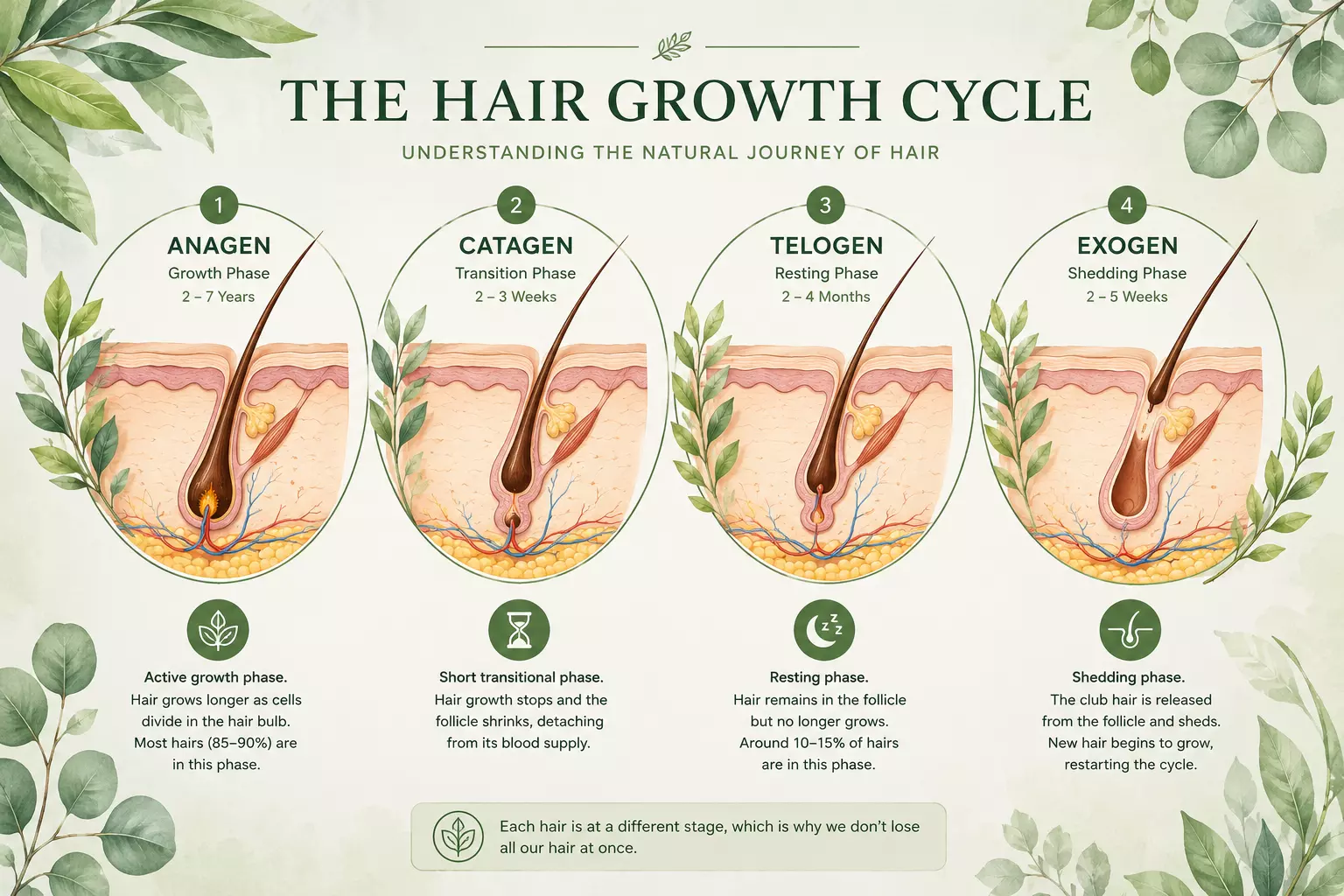
Your hair goes through four distinct phases:
| Phase | Name | Duration | What Happens |
|---|---|---|---|
| 1 | Anagen (Growth) | 2–7 years | Active hair growth from the follicle |
| 2 | Catagen (Transition) | 2–3 weeks | Hair detaches from blood supply |
| 3 | Telogen (Resting) | 3 months | Hair rests before shedding |
| 4 | Exogen (Shedding) | Ongoing | Old hair falls, new hair begins |
At any given time, about 85–90% of your hairs are in the anagen phase. When that percentage drops — due to stress, poor nutrition, hormonal changes, or scalp issues — you’ll notice thinning and excessive shedding.
The goal of a natural hair growth routine is to extend the anagen phase and create the ideal environment for follicles to thrive.
💡 Pull Quote: “You can’t grow a garden in concrete. Healthy hair starts with a healthy scalp — everything else is secondary.”

Step 1: Build a Scalp Health Foundation
Why the Scalp Comes First
Think of your scalp as the soil for your hair. Clogged follicles, poor circulation, and inflammation are the equivalent of compacted, nutrient-depleted earth. No amount of expensive shampoo will fix hair that’s struggling at the root — literally.
Daily Scalp Massage 🖐️
One of the most well-supported natural techniques for stimulating hair growth is scalp massage. A 2016 study published in ePlasty found that standardized scalp massages led to increased hair thickness after just 24 weeks.
How to do it:
- Use your fingertips (not nails) to apply gentle circular pressure.
- Start at the temples and work toward the crown.
- Spend 4–5 minutes each day — ideally in the morning or before bed.
- You can do this on dry hair or while applying oil.
Rosemary Oil: Nature’s Minoxidil 🌿
Rosemary oil has become one of the most talked-about natural remedies for hair growth — and for good reason. A 2015 comparative study found rosemary oil to be as effective as 2% minoxidil for treating androgenetic alopecia after six months, with fewer scalp-itch side effects.
How to use it:
- Mix 5 drops of rosemary essential oil with 1 tablespoon of carrier oil (jojoba or coconut oil).
- Massage into the scalp 2–3 times per week.
- Leave on for at least 30 minutes (or overnight for deeper penetration).
- Rinse thoroughly.
Scalp Exfoliation (Weekly)
A buildup of dead skin cells, product residue, and sebum can block hair follicles. A gentle weekly scalp scrub removes this barrier.
DIY Scalp Scrub:
- 2 tablespoons brown sugar
- 1 tablespoon coconut oil
- 3 drops tea tree essential oil
Apply to the scalp, massage gently for 2 minutes, then rinse before shampooing.
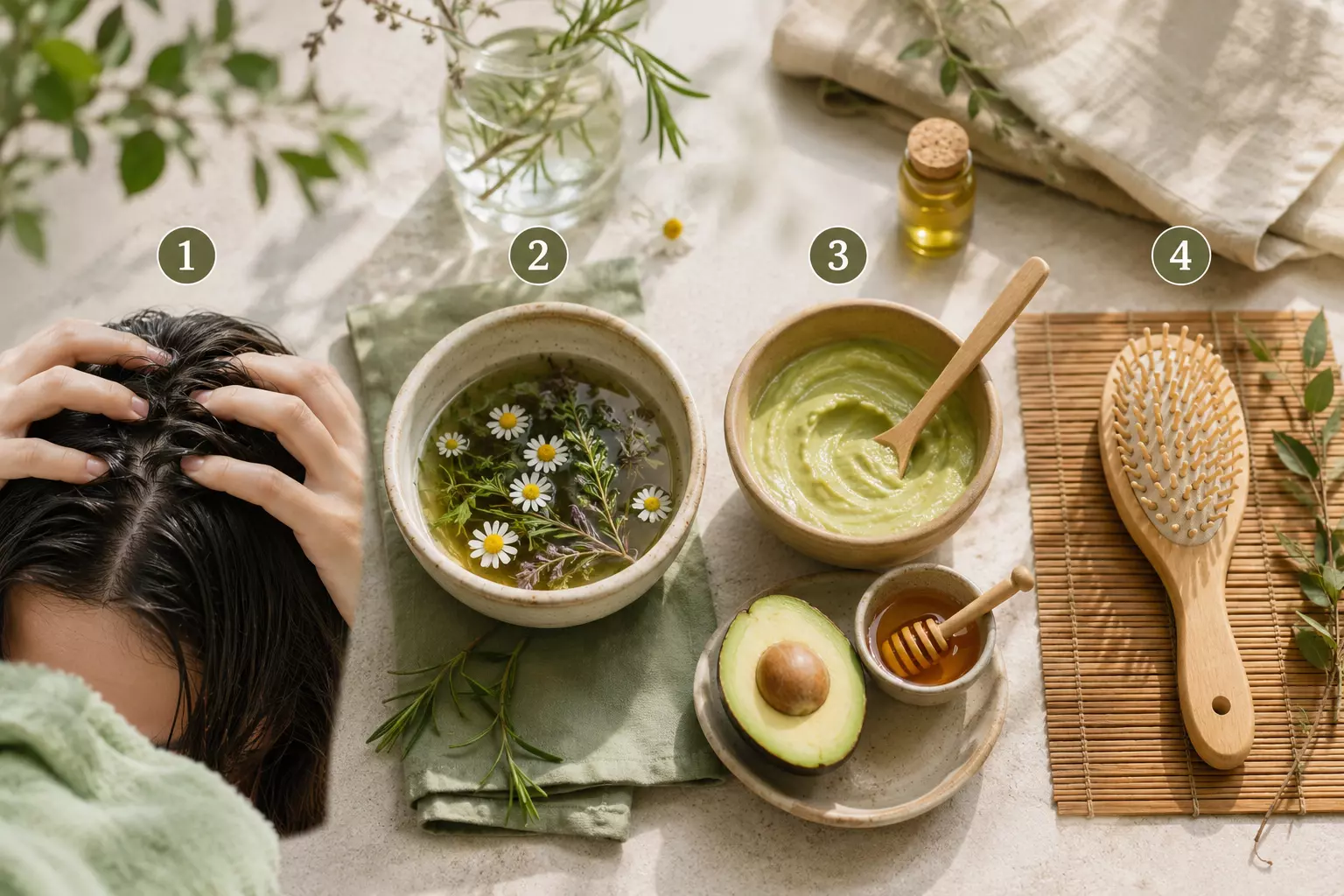
Step 2: Follow a How to Stimulate Hair Growth Naturally Step-by-Step Routine for Washing and Conditioning
Choose the Right Shampoo
Most commercial shampoos contain sulfates (like sodium lauryl sulfate) that strip the scalp of its natural oils, triggering overproduction of sebum and potential follicle inflammation. Switching to a sulfate-free, low-poo, or co-wash formula can make a significant difference within weeks.
Look for shampoos containing:
- ✅ Biotin
- ✅ Caffeine (shown to stimulate follicles)
- ✅ Saw palmetto (a natural DHT blocker)
- ✅ Peppermint extract
Avoid formulas with:
- ❌ Sodium lauryl sulfate (SLS)
- ❌ Parabens
- ❌ Synthetic fragrances
- ❌ Silicones (in leave-in products)
Washing Frequency
Over-washing strips the scalp; under-washing leads to buildup. For most hair types, washing 2–3 times per week strikes the right balance.
Deep Conditioning with Natural Masks
A weekly deep conditioning treatment replenishes moisture and strengthens the hair shaft, reducing breakage — which is just as important as stimulating new growth.
Egg and Olive Oil Mask (my personal go-to):
- Whisk 2 eggs with 2 tablespoons of olive oil.
- Apply to damp hair from roots to ends.
- Cover with a shower cap and leave for 30 minutes.
- Rinse with cool water (warm water cooks the egg!).
- Follow with a gentle shampoo.
Eggs are rich in protein and biotin, while olive oil delivers oleic acid that penetrates the hair shaft to reduce breakage.
Castor Oil Treatments 🫙
Castor oil is thick, rich in ricinoleic acid, and has been used for centuries to promote hair density. While it doesn’t directly stimulate follicles, it improves scalp circulation and creates a protective barrier that reduces shedding.
How to apply:
- Warm 1 tablespoon of castor oil between your palms.
- Apply directly to the scalp and massage in circular motions.
- Leave overnight with a silk cap.
- Wash out in the morning.
- Use once per week.
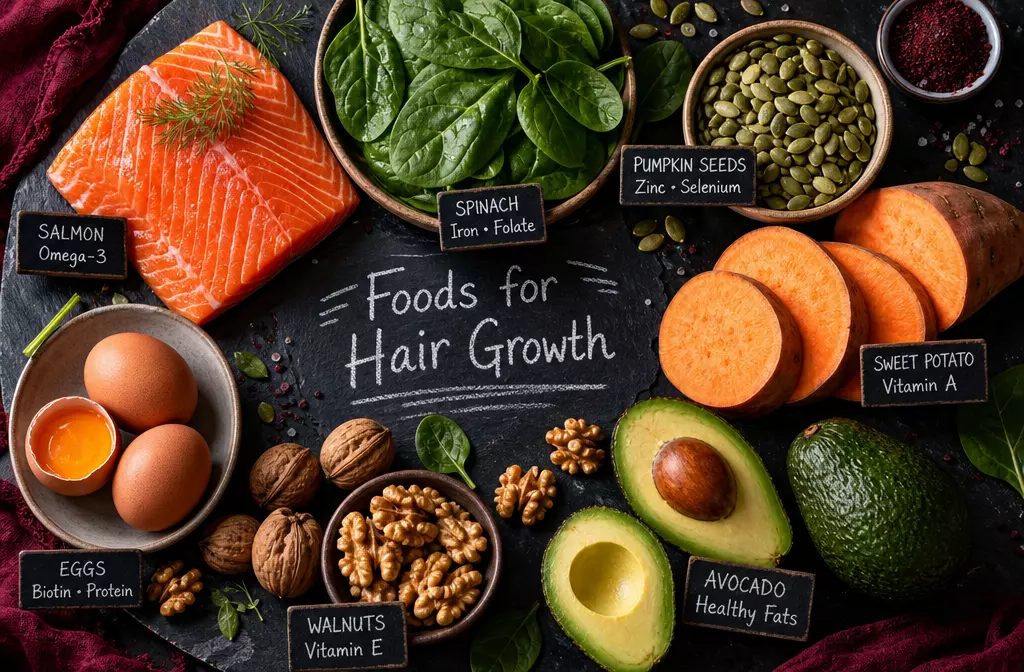
Step 3: Feed Your Hair From the Inside Out
The Nutrition-Hair Connection
Here’s something most hair care brands don’t want you to focus on: you cannot out-treat a poor diet. Hair follicles are among the most metabolically active cells in the body. They need a constant supply of nutrients to function optimally.
Key Nutrients for Hair Growth
| Nutrient | Role in Hair Growth | Best Food Sources |
|---|---|---|
| Biotin (B7) | Keratin production | Eggs, almonds, sweet potato |
| Iron | Carries oxygen to follicles | Spinach, lentils, red meat |
| Zinc | Follicle repair and growth | Pumpkin seeds, chickpeas, beef |
| Vitamin D | Activates hair follicles | Salmon, egg yolks, sunlight |
| Omega-3 Fatty Acids | Reduces scalp inflammation | Walnuts, flaxseed, fatty fish |
| Protein | Building block of keratin | Chicken, Greek yogurt, legumes |
| Vitamin C | Iron absorption + collagen | Bell peppers, citrus, strawberries |
A Sample Hair-Growth Day of Eating 🍳
- Breakfast: Scrambled eggs with spinach + a glass of orange juice
- Lunch: Grilled salmon over a quinoa and kale salad with pumpkin seeds
- Snack: A small handful of walnuts and almonds
- Dinner: Lentil soup with sweet potato and turmeric
This isn’t a strict diet — it’s a template. The goal is to consistently include these nutrients rather than obsess over perfection.
Should You Supplement?
If your diet is lacking, targeted supplements can help. The most evidence-supported options for hair growth include:
- Biotin (2,500–5,000 mcg/day)
- Iron (only if deficient — get tested first)
- Vitamin D3 (1,000–2,000 IU/day)
- Collagen peptides (5–10g/day)
⚠️ Important: Always consult a healthcare provider before starting iron supplements. Too much iron can be harmful.

Step 4: Address the Hidden Saboteurs — Stress, Sleep, and Lifestyle
The Stress-Hair Loss Connection
I’ll be honest — this is the step most people skip, and it’s often the most impactful one.
When your body is under chronic stress, it floods your system with cortisol, which can push hair follicles prematurely into the telogen (resting) phase. This condition, called telogen effluvium, can cause dramatic shedding that begins 2–3 months after a stressful event.
I experienced this firsthand after a particularly brutal work period in my late twenties. Despite using every oil and mask I could find, my hair kept thinning — until I addressed the stress at the root (pun intended).
Natural stress management strategies:
- 🧘 Meditation: Even 10 minutes daily lowers cortisol measurably.
- 🚶 Daily walks: Light exercise improves circulation and reduces stress hormones.
- 📵 Digital detox: Reducing screen time before bed improves sleep quality.
- 🌿 Adaptogenic herbs: Ashwagandha and rhodiola have evidence for lowering cortisol.
Prioritize Sleep for Cellular Repair
Hair growth happens primarily during sleep, when human growth hormone (HGH) is released and cellular repair kicks into high gear. Consistently getting less than 7 hours per night disrupts this process.
Tips for better sleep:
- Keep a consistent sleep schedule (even on weekends).
- Keep your bedroom cool and dark.
- Avoid caffeine after 2 PM.
- Use a silk pillowcase — it reduces friction and breakage while you sleep.
Reduce Heat and Mechanical Damage
Even the best natural routine can be undermined by daily heat styling. High temperatures (above 375°F/190°C) break down the protein bonds in hair, leading to brittleness and breakage.
Practical swaps:
- Air dry whenever possible.
- Use a heat protectant spray before any heat styling.
- Opt for loose hairstyles that don’t pull on the scalp.
- Avoid tight ponytails and braids worn daily (these can cause traction alopecia over time).
Step 5: Build Your Weekly How to Stimulate Hair Growth Naturally Routine
Consistency is everything. Here’s a simple weekly schedule that incorporates everything covered above:
📅 Weekly Natural Hair Growth Routine
| Day | Morning | Evening |
|---|---|---|
| Monday | Scalp massage (5 min) | Rosemary oil treatment |
| Tuesday | Wash with sulfate-free shampoo | Silk pillowcase, 8 hrs sleep |
| Wednesday | Scalp massage (5 min) | Castor oil scalp treatment |
| Thursday | Deep condition (egg mask) | Stress-relief meditation |
| Friday | Scalp massage (5 min) | Rosemary oil treatment |
| Saturday | Scalp exfoliation scrub | Rest and recovery |
| Sunday | Wash and air dry | Meal prep hair-growth foods |
Track Your Progress 📊
Hair grows an average of ½ inch (1.25 cm) per month. Don’t expect overnight miracles. Take a photo of your hairline and part width every 4 weeks to objectively track progress. Most people see noticeable improvement within 3–6 months of consistent practice.
Common Mistakes That Slow Natural Hair Growth
Even with the best intentions, certain habits can quietly undermine your efforts:
- Washing with hot water: Hot water opens the cuticle and causes protein loss. Use lukewarm or cool water to rinse.
- Skipping protein: Hair is made of keratin (a protein). Low-protein diets directly impact strand strength.
- Over-brushing: Brushing wet hair aggressively causes significant breakage. Use a wide-tooth comb on damp hair.
- Expecting fast results: Impatience leads people to abandon routines before they work. Commit to at least 90 days.
- Ignoring underlying health issues: Thyroid disorders, PCOS, and autoimmune conditions can cause hair loss that no topical treatment will fix. If you’re experiencing sudden or severe hair loss, see a dermatologist or trichologist.
Conclusion: Your Natural Hair Growth Journey Starts Now
Growing healthier, thicker hair naturally isn’t about finding a magic oil or a miracle supplement. It’s about building a consistent, holistic routine that addresses the root causes of hair loss — from scalp health and nutrition to stress management and sleep.
The How to Stimulate Hair Growth Naturally: A Step-by-Step Routine outlined in this guide gives you everything you need to get started. Here’s your action plan for the next 7 days:
- ✅ Today: Order rosemary essential oil and a sulfate-free shampoo.
- ✅ Day 2: Start your 5-minute daily scalp massage routine.
- ✅ Day 3: Overhaul one meal to include more hair-growth nutrients.
- ✅ Day 4: Try your first egg and olive oil deep conditioning mask.
- ✅ Day 5: Set a consistent sleep schedule and switch to a silk pillowcase.
- ✅ Day 6: Do your first scalp exfoliation scrub.
- ✅ Day 7: Take your “before” photos and commit to 90 days.
Your hair is a reflection of your overall health. Treat it — and yourself — with the care and consistency it deserves. 🌱