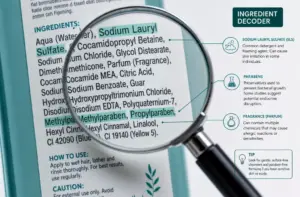
How to Get Rid of Dandruff Permanently: A Dermatologist-Approved Guide
Nearly 50% of the global adult population deals with dandruff at some point in their lives — yet most people spend years cycling through shampoos that only mask the problem instead of solving it. I know this frustration firsthand. After struggling with persistent flakes and an itchy scalp for most of my twenties, I finally sat down with a dermatologist who changed my entire approach. What I learned was both surprising and actionable.
This guide — How to Get Rid of Dandruff Permanently: A Dermatologist-Approved Guide — cuts through the noise. Whether you’ve tried every drugstore shampoo on the shelf or you’re just starting to tackle the problem, you’ll find science-backed strategies here that actually work.
Key Takeaways 🗝️
- Dandruff is caused by a yeast called Malassezia, not poor hygiene — understanding the root cause changes everything about how you treat it.
- Medicated shampoos with proven active ingredients (like ketoconazole, zinc pyrithione, or selenium sulfide) are the gold standard for treatment.
- Natural remedies can support — but rarely replace — clinical treatments for moderate to severe dandruff.
- Lifestyle factors including diet, stress, and sleep quality directly influence scalp health.
- Permanent control is achievable, but it requires a consistent, long-term routine rather than a one-time fix.
- Try our Free Interactive app: Find Your Perfect Dandruff Solution: A Personalized Treatment Finder
Disclosure: This post contains affiliate links. As an Amazon Associate, we earn from qualifying purchases, and at no extra cost to you.
What Actually Causes Dandruff? (It’s Not What You Think)
Before diving into solutions, let’s talk about the real culprit — because most people get this wrong.
Dandruff is not caused by a dry scalp, and it’s not a sign of poor hygiene. This is one of the most persistent myths in scalp care, and believing it leads people to over-wash, under-moisturize, or feel unnecessarily embarrassed.
The Real Science Behind Flakes
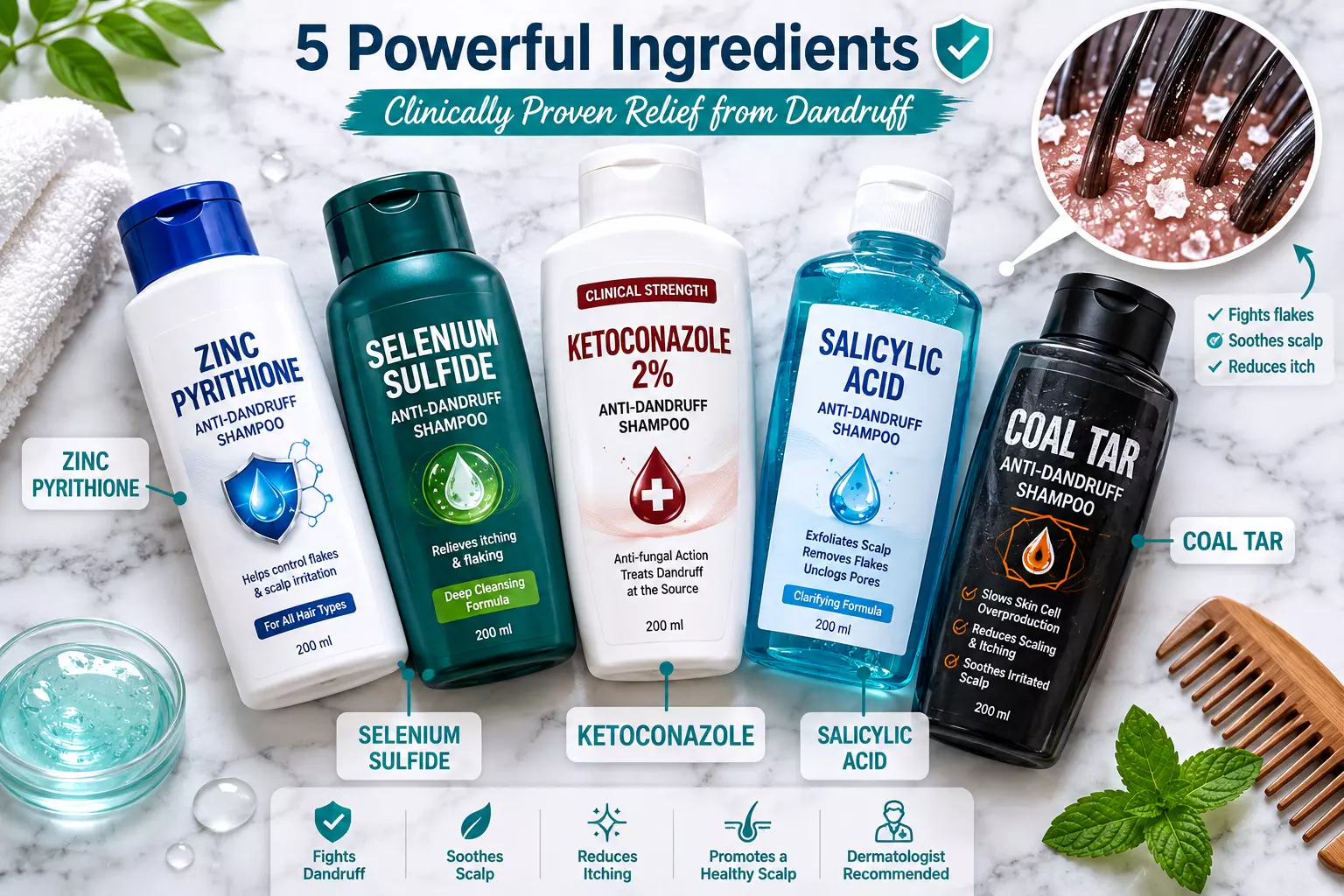
The primary driver of dandruff is a naturally occurring yeast called Malassezia globosa. This fungus lives on everyone’s scalp, feeding on the natural oils (sebum) your skin produces. In some people, this process triggers an inflammatory response that speeds up the skin cell turnover cycle — normally about 28 days — to just 7 to 14 days. The result? Dead skin cells shed faster than they can be cleared, clumping together into the visible white or yellowish flakes we call dandruff.
Several factors can make this worse:
| Trigger | Why It Matters |
|---|---|
| Excess sebum production | Feeds Malassezia growth |
| Stress | Disrupts immune response and skin barrier |
| Hormonal changes | Increase oil production |
| Cold, dry weather | Weakens the scalp’s protective barrier |
| Certain hair products | Can irritate or feed fungal growth |
| Weakened immune system | Reduces ability to control yeast overgrowth |
💡 Pull Quote: “Dandruff is fundamentally an inflammatory condition triggered by yeast — treating it like a cleanliness issue will never get you to the root of the problem.”
Dandruff vs. Dry Scalp vs. Seborrheic Dermatitis
These three conditions are often confused, but they’re distinct:
- Dry scalp: Small, white flakes; scalp feels tight or itchy; caused by lack of moisture
- Dandruff: Larger, oilier flakes; scalp may appear greasy; caused by Malassezia
- Seborrheic dermatitis: A more severe form of dandruff with redness, thick scaling, and possible spread to the face or ears — requires stronger treatment
Knowing which condition you have shapes the treatment approach. When in doubt, a dermatologist can diagnose you in minutes.
Dermatologist-Approved Treatments: The Clinical Approach in This Guide
This section is the heart of How to Get Rid of Dandruff Permanently: A Dermatologist-Approved Guide. Let’s talk about what actually works — with evidence behind it.
1. Medicated Shampoos: Your First Line of Defense
Medicated shampoos are the most effective over-the-counter treatment for dandruff. The key is knowing which active ingredient to look for and how to use them correctly.
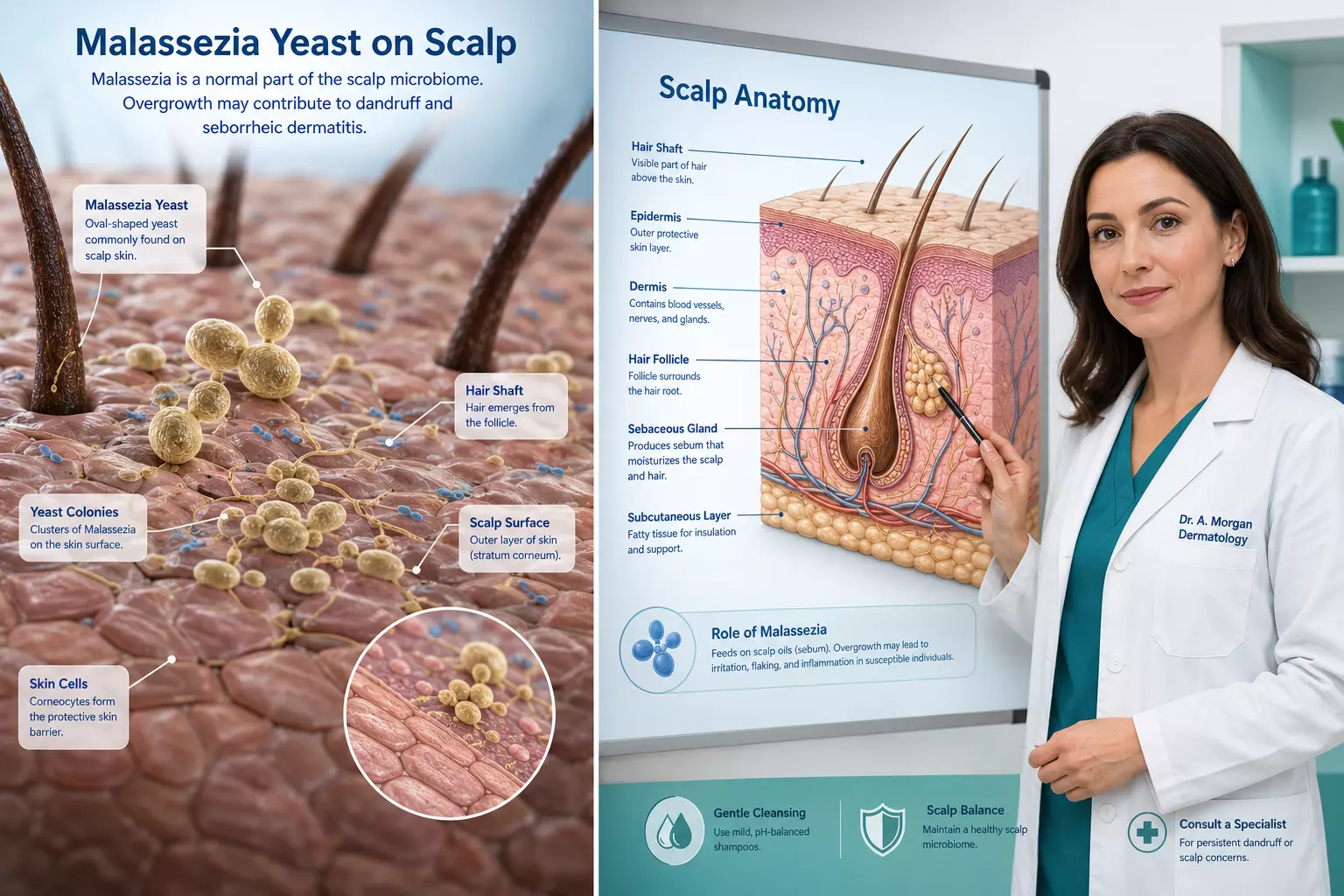
✅ The Big Five Active Ingredients
🔵 Zinc Pyrithione (ZPT)
- Found in: Head & Shoulders, Selsun Blue (some formulas)
- How it works: Antifungal and antibacterial; reduces Malassezia population
- Best for: Mild to moderate dandruff; safe for daily use
- Usage tip: Leave on scalp for 2–3 minutes before rinsing
🔵 Ketoconazole (1% or 2%)
- Found in: Nizoral (1% OTC; 2% prescription)
- How it works: Powerful antifungal that disrupts the yeast’s cell membrane
- Best for: Moderate to severe dandruff; seborrheic dermatitis
- Usage tip: Use 2–3 times per week; not for daily use
🔵 Selenium Sulfide
- Found in: Selsun Blue (2.5%), Head & Shoulders Clinical Strength
- How it works: Slows skin cell turnover; antifungal properties
- Best for: Stubborn, persistent dandruff
- Usage tip: Avoid contact with colored or chemically treated hair (can cause discoloration)
🔵 Coal Tar
- Found in: Neutrogena T/Gel, DHS Tar Shampoo
- How it works: Slows the rate of skin cell shedding; anti-inflammatory
- Best for: Scalp psoriasis and severe seborrheic dermatitis
- Usage tip: Strong smell; use 2–3 times weekly; avoid sun exposure after use
🔵 Salicylic Acid
- Found in: Neutrogena T/Sal, Jason Dandruff Relief
- How it works: Exfoliates dead skin cells; clears buildup
- Best for: Scalp with heavy flaking and buildup
- Usage tip: Pair with a moisturizing conditioner to prevent dryness
🔄 Rotating Shampoos: A Pro Tip
Dermatologists often recommend rotating between two different active ingredients every few weeks. Over time, Malassezia can become less responsive to a single treatment — switching prevents this resistance from building up.
Example rotation:
- Weeks 1–4: Zinc pyrithione shampoo
- Weeks 5–8: Ketoconazole shampoo
- Repeat cycle
2. Prescription Treatments
If OTC shampoos aren’t cutting it after 4–6 weeks, a dermatologist may prescribe:
- Ketoconazole 2% shampoo (stronger than OTC)
- Topical corticosteroids (for inflammation and itch)
- Ciclopirox shampoo (antifungal with anti-inflammatory properties)
- Tacrolimus or pimecrolimus (for immune-mediated scalp conditions)
Don’t skip the dermatologist visit if symptoms are severe. Persistent, untreated seborrheic dermatitis can cause temporary hair thinning in affected areas.
Natural Remedies That Actually Have Evidence Behind Them
I’ll be honest with you: most “natural cures” for dandruff are overhyped. But a handful of natural ingredients have genuine research supporting their use — either as standalone treatments for mild dandruff or as complementary approaches alongside clinical treatments.
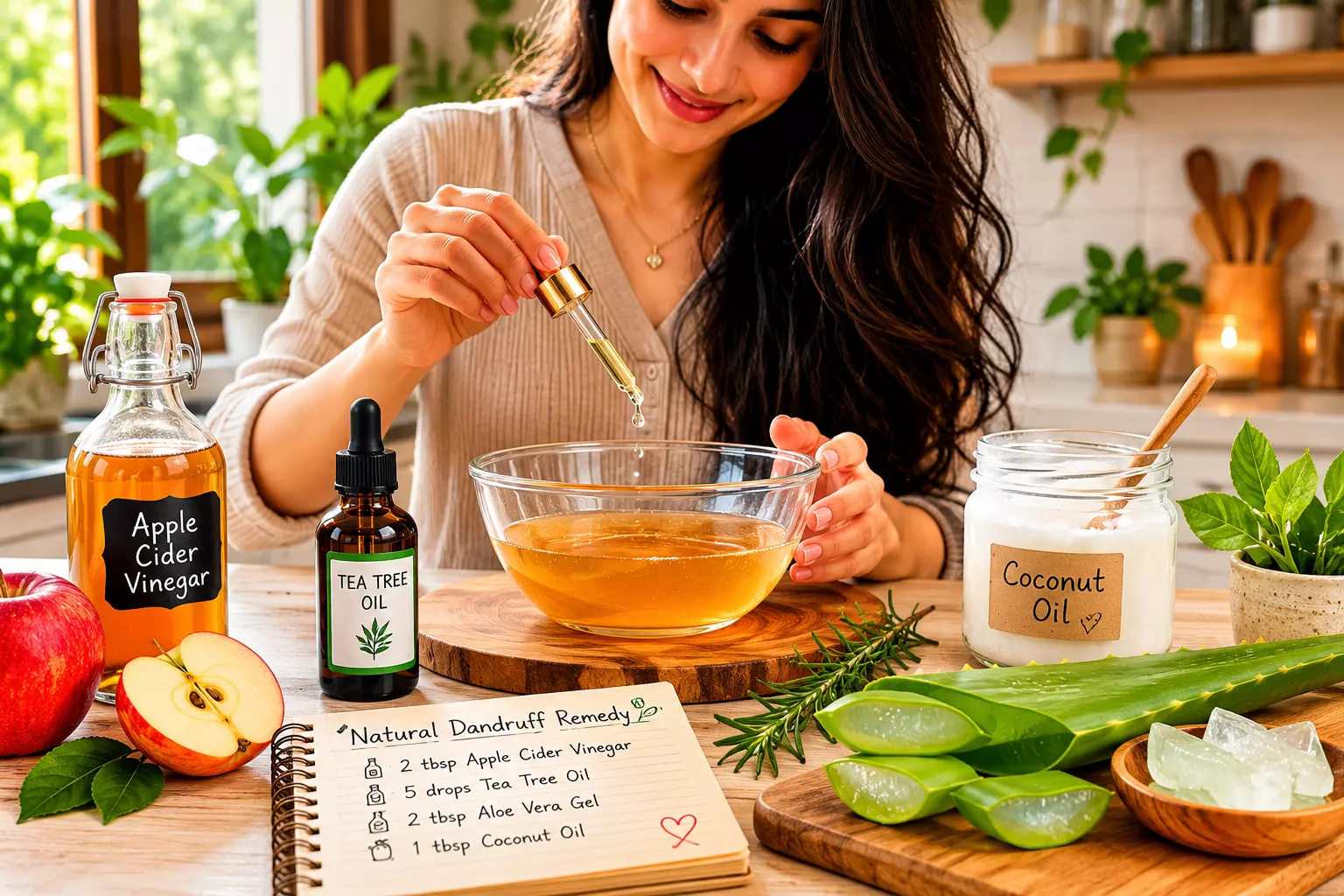
🌿 Tea Tree Oil
Tea tree oil has demonstrated antifungal properties in multiple studies. A shampoo containing 5% tea tree oil has been shown to significantly reduce dandruff severity.
How to use:
- Add 5–10 drops to your regular shampoo
- Or look for shampoos with tea tree oil already formulated in
⚠️ Caution: Always dilute tea tree oil — applying it undiluted can cause scalp irritation or contact dermatitis.
🍎 Apple Cider Vinegar (ACV)
ACV’s acidity (pH around 3) may help restore the scalp’s natural pH balance and create an environment less hospitable to Malassezia.
How to use:
- Mix equal parts ACV and water
- Apply to scalp, leave for 5–10 minutes, rinse thoroughly
- Use 1–2 times per week
⚠️ Note: Avoid if you have open sores or cuts on the scalp.
🥥 Coconut Oil
Coconut oil has antifungal properties and helps moisturize the scalp — making it useful for dandruff that overlaps with dryness.
How to use:
- Warm 2–3 tablespoons and massage into scalp
- Leave for 30–60 minutes (or overnight)
- Wash out thoroughly with shampoo
⚠️ Caution: Coconut oil is comedogenic — it can clog pores and worsen dandruff in people with very oily scalps. Use sparingly if your scalp is already oily.
🌱 Aloe Vera
Aloe vera’s anti-inflammatory and antifungal properties make it a solid soothing agent for an irritated, flaky scalp.
How to use:
- Apply pure aloe vera gel directly to the scalp
- Leave for 20–30 minutes before washing
Quick Comparison Table: Natural vs. Clinical Treatments
| Treatment | Effectiveness | Best For | Time to Results |
|---|---|---|---|
| Zinc pyrithione shampoo | ⭐⭐⭐⭐⭐ | Mild–moderate dandruff | 2–4 weeks |
| Ketoconazole shampoo | ⭐⭐⭐⭐⭐ | Moderate–severe | 2–4 weeks |
| Tea tree oil | ⭐⭐⭐ | Mild dandruff | 4–6 weeks |
| Apple cider vinegar | ⭐⭐ | Mild dandruff | 4–8 weeks |
| Coconut oil | ⭐⭐ | Dry scalp overlap | 4–8 weeks |
| Aloe vera | ⭐⭐ | Soothing irritation | Supportive only |
Lifestyle Changes That Support Long-Term Scalp Health
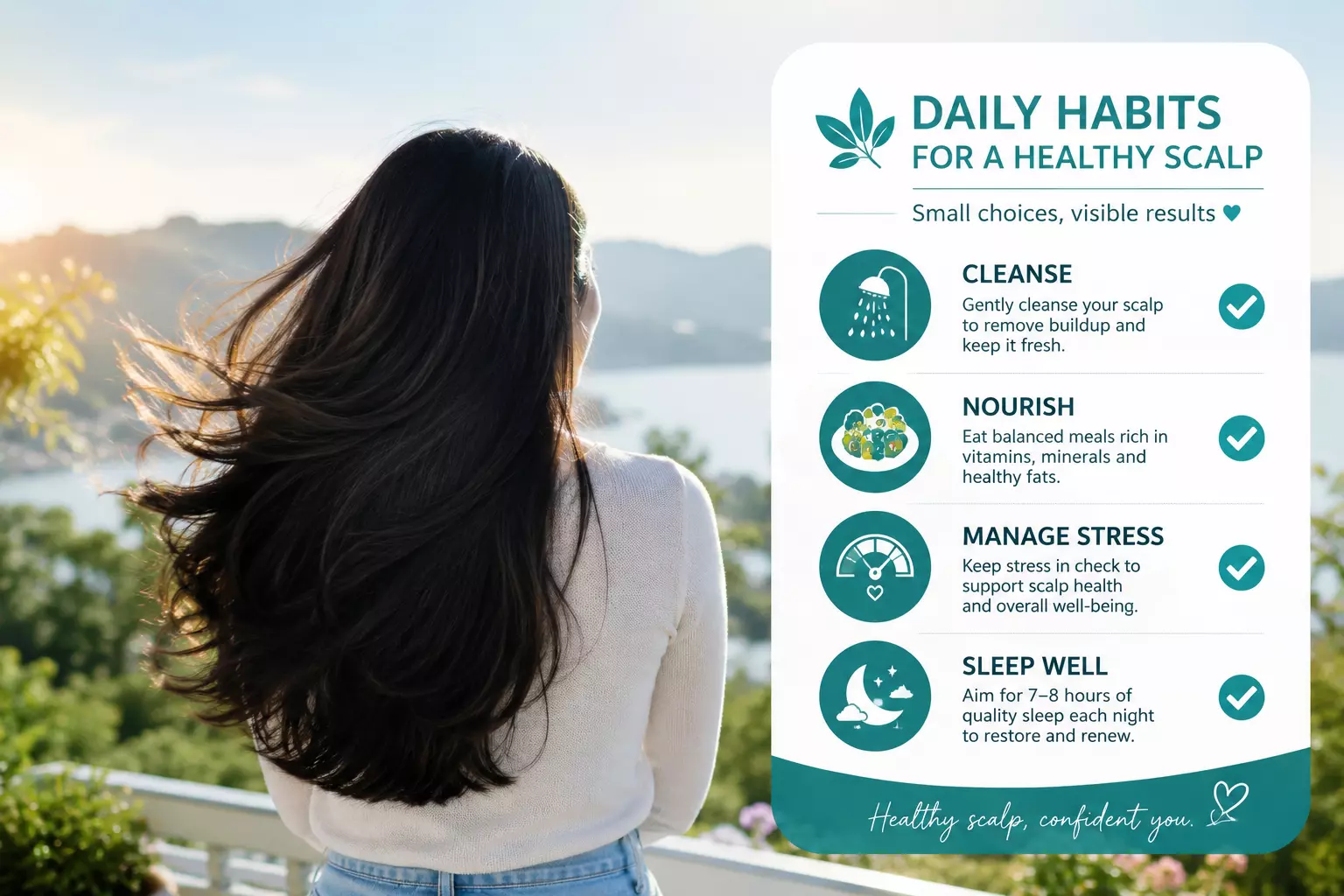
Here’s something most dandruff guides skip entirely: what you do outside the shower matters just as much as what shampoo you use. This is where permanent dandruff control is really won or lost.
🥗 Diet and Nutrition
Your scalp is skin — and skin health is deeply connected to what you eat.
Foods to reduce:
- Refined sugars and processed carbohydrates — These feed yeast growth throughout the body, including Malassezia on the scalp
- Dairy — Some people find that reducing dairy decreases scalp oiliness and inflammation
- Alcohol — Can trigger inflammatory responses and worsen seborrheic dermatitis
Foods to increase:
- Zinc-rich foods: Pumpkin seeds, chickpeas, beef — zinc has antifungal properties
- Omega-3 fatty acids: Fatty fish (salmon, sardines), flaxseed, walnuts — reduce scalp inflammation
- Probiotics: Yogurt, kefir, kimchi — support a healthy gut-skin axis
- Vitamin B: Whole grains, eggs, leafy greens — support healthy skin cell turnover
😴 Sleep and Stress Management
Stress is a major dandruff trigger that’s rarely discussed enough. Chronic stress elevates cortisol levels, which:
- Increases sebum (oil) production
- Weakens the immune system’s ability to control Malassezia
- Disrupts the skin barrier
Practical stress management strategies:
- Aim for 7–9 hours of sleep per night
- Practice mindfulness or meditation (even 10 minutes daily helps)
- Regular physical exercise — reduces cortisol and improves circulation to the scalp
☀️ Sun Exposure
Moderate sun exposure can actually improve seborrheic dermatitis. UV light has natural antifungal properties and reduces the inflammatory response in the skin. This is why many people notice their dandruff improves in summer and worsens in winter.
Tip: Aim for 15–20 minutes of direct sunlight on your scalp a few times a week. Just don’t skip sunscreen on the rest of your skin.
💆 Scalp Massage
Regular scalp massage (5–10 minutes daily) improves blood circulation to hair follicles, helps distribute natural oils, and can reduce the buildup of dead skin cells. Use your fingertips — not your nails — in gentle circular motions.
Hair Product Audit
Some hair products actively worsen dandruff:
- Avoid: Heavy waxes, pomades, dry shampoos (used excessively), products with alcohol
- Choose: Lightweight, non-comedogenic styling products; fragrance-free formulas if you have a sensitive scalp
When to See a Dermatologist: Recognizing the Signs You Need Professional Help
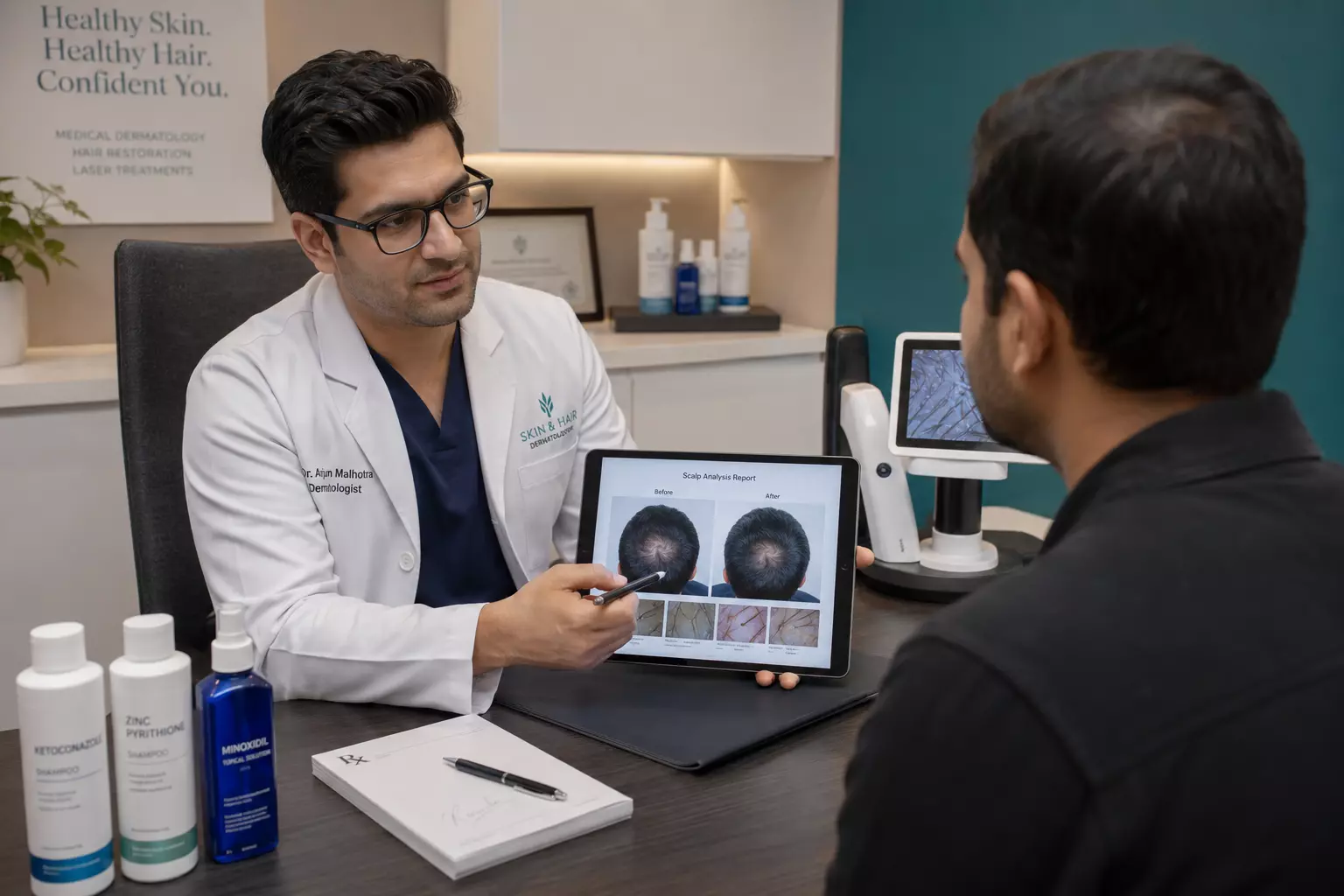
Following How to Get Rid of Dandruff Permanently: A Dermatologist-Approved Guide means knowing the limits of self-treatment. Some scalp conditions look like dandruff but require professional diagnosis and prescription care.
🚨 See a Dermatologist If You Experience:
- No improvement after 4–6 weeks of consistent OTC treatment
- Redness, swelling, or oozing on the scalp
- Significant hair loss in affected areas
- Flaking that spreads to eyebrows, ears, nose, or chest
- Intense burning or pain alongside itching
- Thick, silvery scales (may indicate scalp psoriasis, not dandruff)
What a Dermatologist Will Do
A dermatologist will typically:
- Examine the scalp — often with a dermoscope (magnifying device)
- Identify the specific condition — dandruff, seborrheic dermatitis, psoriasis, eczema, or fungal infection
- Prescribe targeted treatment — stronger antifungals, corticosteroids, or immunomodulators
- Create a long-term management plan — because for many people, dandruff is a chronic condition requiring ongoing care
💡 Pull Quote: “Dandruff doesn’t have to be a life sentence. With the right diagnosis and consistent treatment, most people can achieve clear, comfortable scalps — permanently.”
The Truth About “Permanent” Dandruff Removal
I want to be transparent here: for most people, dandruff is a chronic condition that requires ongoing management rather than a single cure. The good news is that with the right routine, you can keep it completely controlled — to the point where it’s functionally “gone” from your daily life.
Think of it like managing high blood pressure or seasonal allergies: the right approach keeps it invisible, even if the underlying tendency remains.
The permanent control formula:
- ✅ Identify your specific condition
- ✅ Use the right medicated shampoo consistently
- ✅ Support treatment with lifestyle changes
- ✅ Rotate treatments to prevent resistance
- ✅ See a dermatologist if needed
- ✅ Maintain the routine — don’t stop when symptoms clear
Conclusion: Your Action Plan for a Flake-Free Scalp 🎯
Getting rid of dandruff permanently isn’t about finding a magic shampoo — it’s about understanding the root cause and building a consistent, science-backed routine. Here’s your clear action plan:
This week:
- Identify whether you have dandruff, dry scalp, or seborrheic dermatitis
- Start with a zinc pyrithione or ketoconazole shampoo, used 3x per week
- Leave the shampoo on for 2–3 minutes before rinsing (most people rinse too fast)
This month:
- Audit your diet — reduce sugar and increase zinc and omega-3 intake
- Add a stress management practice to your daily routine
- Assess your hair products for potential irritants
Ongoing:
- Rotate between two medicated shampoos every 4–6 weeks
- Get 15–20 minutes of sun exposure a few times per week
- Book a dermatologist appointment if symptoms persist beyond 6 weeks
Dandruff is incredibly common, but it doesn’t have to be your permanent reality. With the right knowledge — the kind this How to Get Rid of Dandruff Permanently: A Dermatologist-Approved Guide has laid out — you have everything you need to take back control of your scalp health starting today. 💪