How to Build a Haircare Routine Based on Your Hair Type
Nearly 70% of people report using the wrong products for their hair type, according to beauty industry surveys — and most don’t realize it until they’ve spent years fighting frizz, dryness, or grease they never needed to deal with [4]. The truth is, a one-size-fits-all approach to haircare simply doesn’t work. Learning how to build a haircare routine based on your hair type is one of the most impactful things you can do for the health and appearance of your hair — and it doesn’t have to be complicated.
I learned this the hard way. For years, I used a thick, moisturizing shampoo designed for dry hair on my naturally oily scalp. The result? Limp, heavy hair that looked greasy by noon. Once I switched to a routine built around my specific hair type and scalp needs, everything changed.
This guide will walk you through exactly how to identify your hair type, choose the right products, and build a personalized routine that actually works.
Key Takeaways 📌
- Know your hair type first — straight, wavy, curly, or coily — before buying a single product.
- Your scalp and your hair shaft have different needs; treat them separately.
- Wash frequency varies widely by hair type — oily/fine hair may need daily washing while coily hair may only need weekly.
- Layering products in the right order is just as important as choosing the right products.
- A personalized routine doesn’t have to be expensive — consistency beats luxury every time.
- Try our Free Interactive app: Discover Your Perfect Hair Routine with Our Interactive Hair Type & Routine Finder
Disclosure: This post contains affiliate links. As an Amazon Associate, we earn from qualifying purchases, and at no extra cost to you.
Step 1 — Know Your Hair Type Before Building Any Routine
Before you can learn how to build a haircare routine based on your hair type, you need to actually know what your hair type is. This sounds obvious, but many people misidentify their hair — especially when it’s been damaged, color-treated, or weighed down by the wrong products.
The Four Main Hair Type Categories
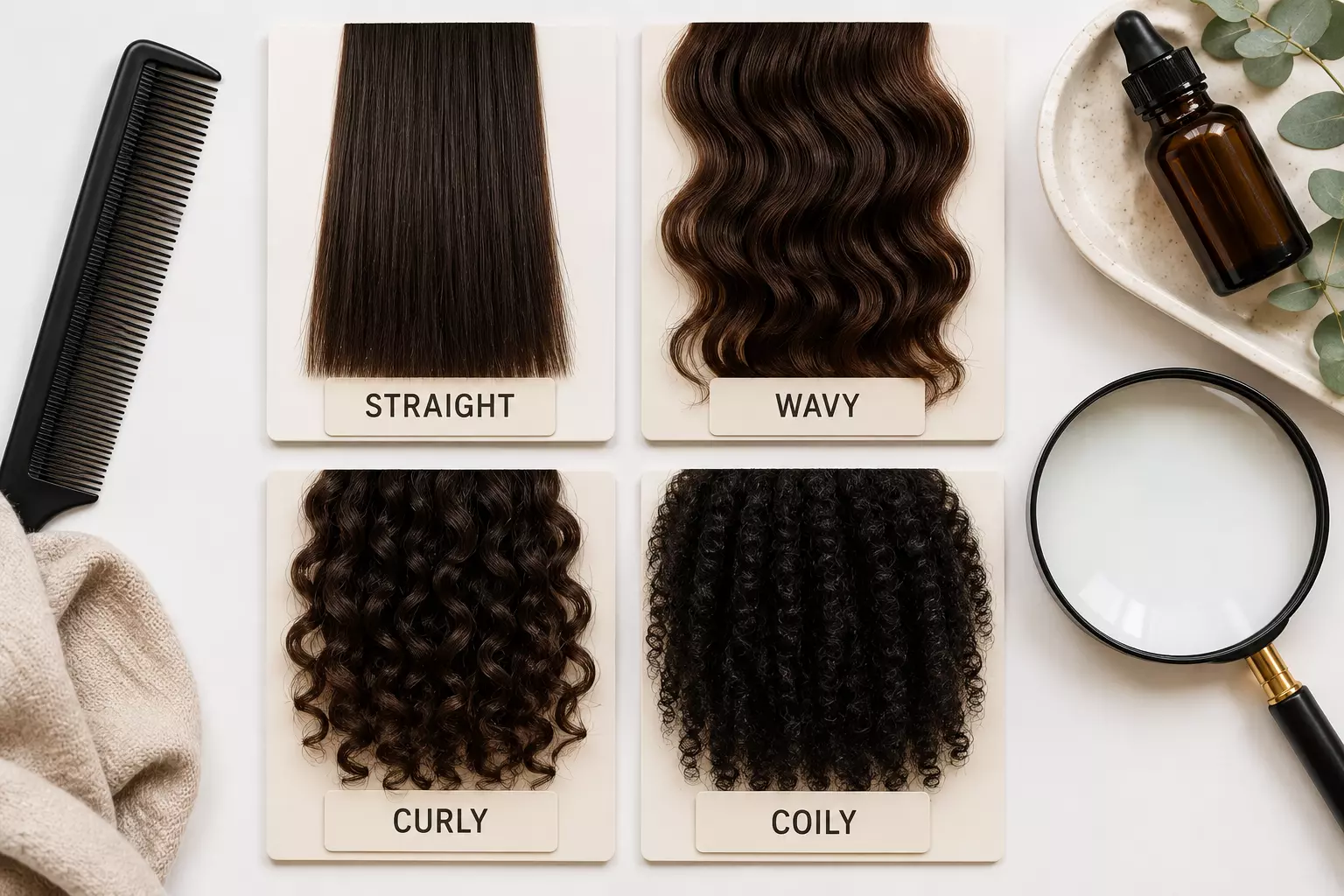
The most widely used classification system — often called the Andre Walker Hair Typing System — breaks hair into four main types [3]:
| Hair Type | Description | Key Characteristics |
|---|---|---|
| Type 1 | Straight | No natural curl, tends toward oiliness |
| Type 2 | Wavy | S-shaped waves, prone to frizz |
| Type 3 | Curly | Defined curls, springy texture |
| Type 4 | Coily/Kinky | Tight coils or zigzag patterns, very dry |
Each type is further divided into subtypes (A, B, C) based on the tightness of the curl or wave pattern.
Beyond Curl Pattern: Porosity and Density
Your curl pattern is just one piece of the puzzle. Two other factors matter enormously [7]:
- Porosity: How well your hair absorbs and retains moisture. Low porosity hair repels moisture; high porosity hair absorbs it quickly but loses it just as fast.
- Density: How many hair strands you have per square inch — thin, medium, or thick.
💡 Quick Porosity Test: Drop a clean hair strand into a glass of water. If it sinks quickly, you have high porosity. If it floats, you have low porosity.
Understanding these factors lets you make smarter product choices — not just based on curl pattern, but on how your hair actually behaves [10].
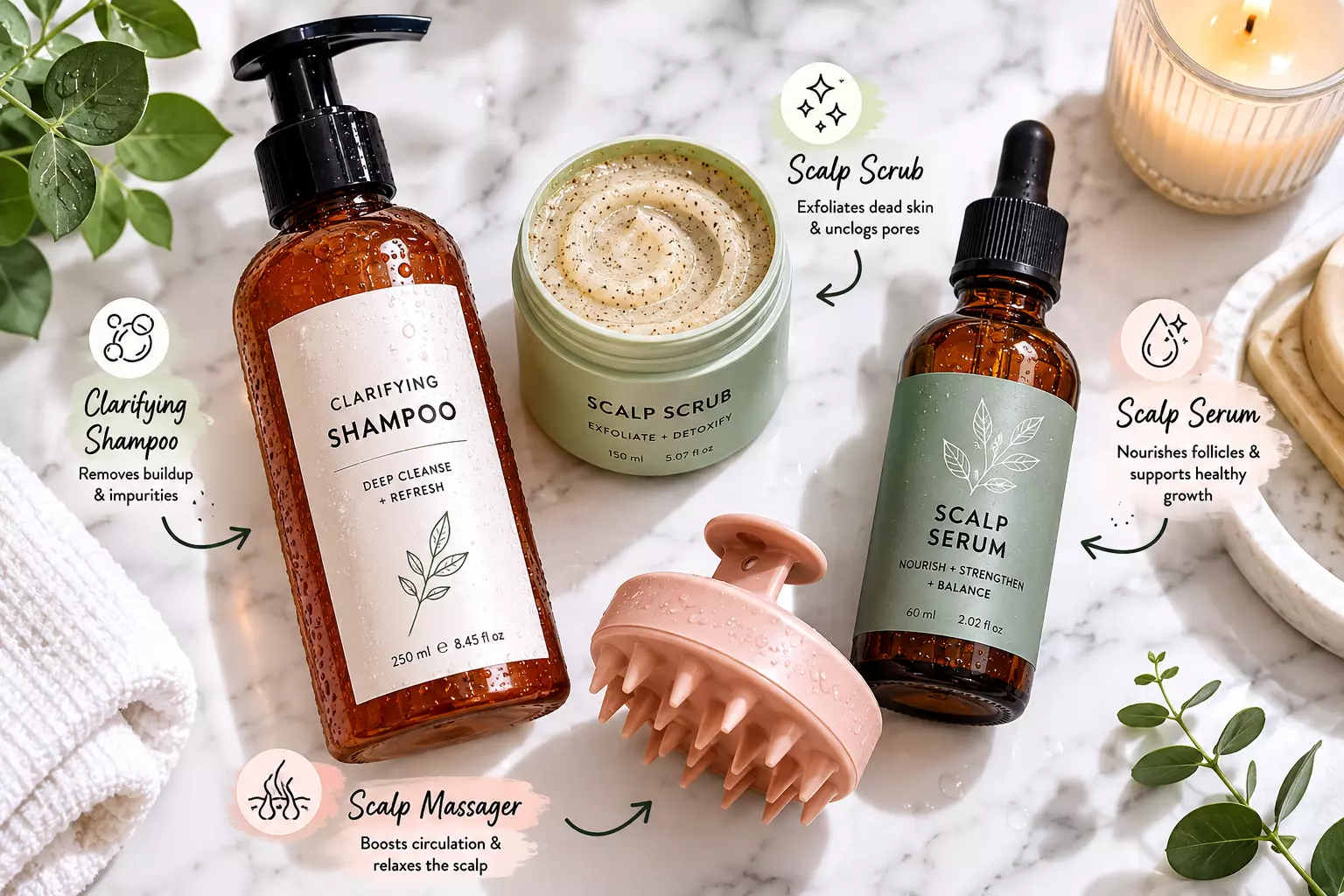
Step 2 — Start With Your Scalp, Not Your Strands
One of the most common mistakes people make when building a haircare routine is treating the scalp and the hair shaft as one unit. They’re not. The scalp is skin — it has its own oil production, pH balance, and microbiome. Your hair shaft, on the other hand, is essentially dead protein that needs moisture and protection [4].
The modern approach to haircare is scalp-first: choose your shampoo based on your scalp’s needs, and your conditioner based on your hair shaft’s needs [6].
Choosing the Right Shampoo for Your Scalp
| Scalp Type | What to Look For | What to Avoid |
|---|---|---|
| Oily scalp | Clarifying or balancing shampoos | Heavy, moisturizing formulas |
| Dry/flaky scalp | Hydrating shampoos, zinc pyrithione | Sulfate-heavy formulas |
| Sensitive scalp | Fragrance-free, gentle cleansers | Alcohol, artificial dyes |
| Normal scalp | Balanced pH shampoos | Overuse of clarifying shampoos |
How Often Should You Wash?
Wash frequency is one of the most type-dependent aspects of any haircare routine [9]:
- Type 1 (Straight/Fine): Daily or every other day — sebum travels quickly down smooth strands
- Type 2 (Wavy): Every 2–3 days — some natural oil is beneficial for wave definition
- Type 3 (Curly): 1–2 times per week — curls need moisture retention
- Type 4 (Coily): Once a week or less — coily hair is naturally very dry and fragile [3]
🗣️ “Washing my 4C hair twice a week was destroying my curl pattern. Switching to once a week with a co-wash in between was a game-changer.” — Community member, Reddit r/AskWomen [8]
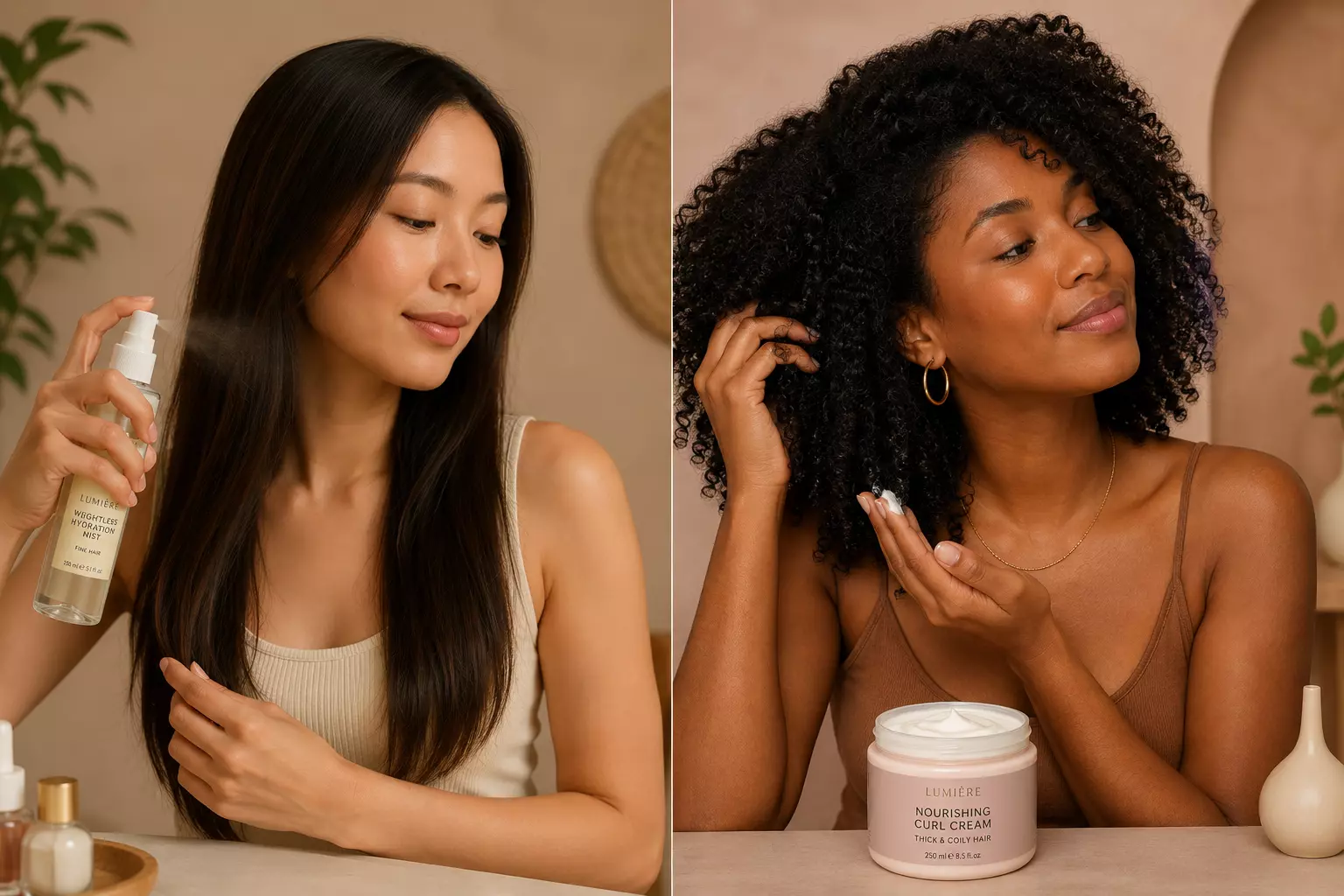
Step 3 — How to Build a Haircare Routine Based on Your Hair Type (By Category)
Now we get to the heart of it. Here’s how to build a haircare routine based on your hair type, broken down by each major category.
🌿 Routine for Straight Hair (Type 1)
Straight hair is the most prone to oiliness because sebum can travel directly from the scalp to the ends without any curl to slow it down [1].
Core Routine:
- Shampoo: Use a lightweight, volumizing, or clarifying shampoo 4–7 times per week
- Conditioner: Apply only from mid-lengths to ends — avoid the scalp
- Leave-in: Optional; use a lightweight spray, not a cream
- Styling: Heat protectant if using hot tools; light serum for shine
Key tips:
- Avoid heavy oils or butters — they’ll weigh your hair down fast
- Dry shampoo is your best friend between washes
- Focus conditioner on the ends, which are the driest part
🌊 Routine for Wavy Hair (Type 2)
Wavy hair sits in a sweet spot — it can get oily at the roots but dry and frizzy at the ends. The goal is balance [10].
Core Routine:
- Shampoo: Every 2–3 days with a sulfate-free formula
- Conditioner: Mid-lengths to ends; a lightweight moisturizing formula
- Leave-in conditioner: Light cream or spray to define waves
- Styling: Curl-enhancing gel or mousse, scrunched in while hair is wet
Key tips:
- Scrunch — don’t rub — your hair with a microfiber towel
- Avoid brushing when dry; use a wide-tooth comb on wet hair
- Try “plopping” (wrapping hair in a t-shirt) to enhance wave definition
🌀 Routine for Curly Hair (Type 3)
Curly hair needs moisture above almost everything else. Frizz is usually a sign of dehydration, not a hair “problem” to be fixed with more product [6].
Core Routine:
- Shampoo: 1–2 times per week; sulfate-free is strongly recommended
- Conditioner: A rich, moisturizing conditioner — leave it on for 3–5 minutes
- Deep conditioning mask: Once a week
- Leave-in conditioner: Apply to soaking wet hair
- Styling: Curl cream + gel for hold and definition
Key tips:
- Apply all styling products to soaking wet hair for best results
- Use the “LOC method” (Liquid, Oil, Cream) to lock in moisture
- Silk or satin pillowcase prevents overnight frizz and breakage
🌸 Routine for Coily/Kinky Hair (Type 4)
Coily hair is the most fragile and the driest of all hair types. The tight curl pattern makes it nearly impossible for scalp oils to travel down the hair shaft, which is why moisture retention is the top priority [3].
Core Routine:
- Co-wash or gentle shampoo: Once a week or less
- Conditioner: Rich, thick formula — detangle with a wide-tooth comb while conditioner is in
- Deep conditioning treatment: Every wash day, ideally under a heat cap
- Leave-in conditioner: Generously applied to wet hair
- Butter or oil sealant: To lock in moisture
- Protective styling: Braids, twists, or buns to minimize manipulation
Key tips:
- Detangle gently, starting from the ends and working up
- Avoid heat styling as much as possible
- Protective styles can significantly reduce breakage [7]
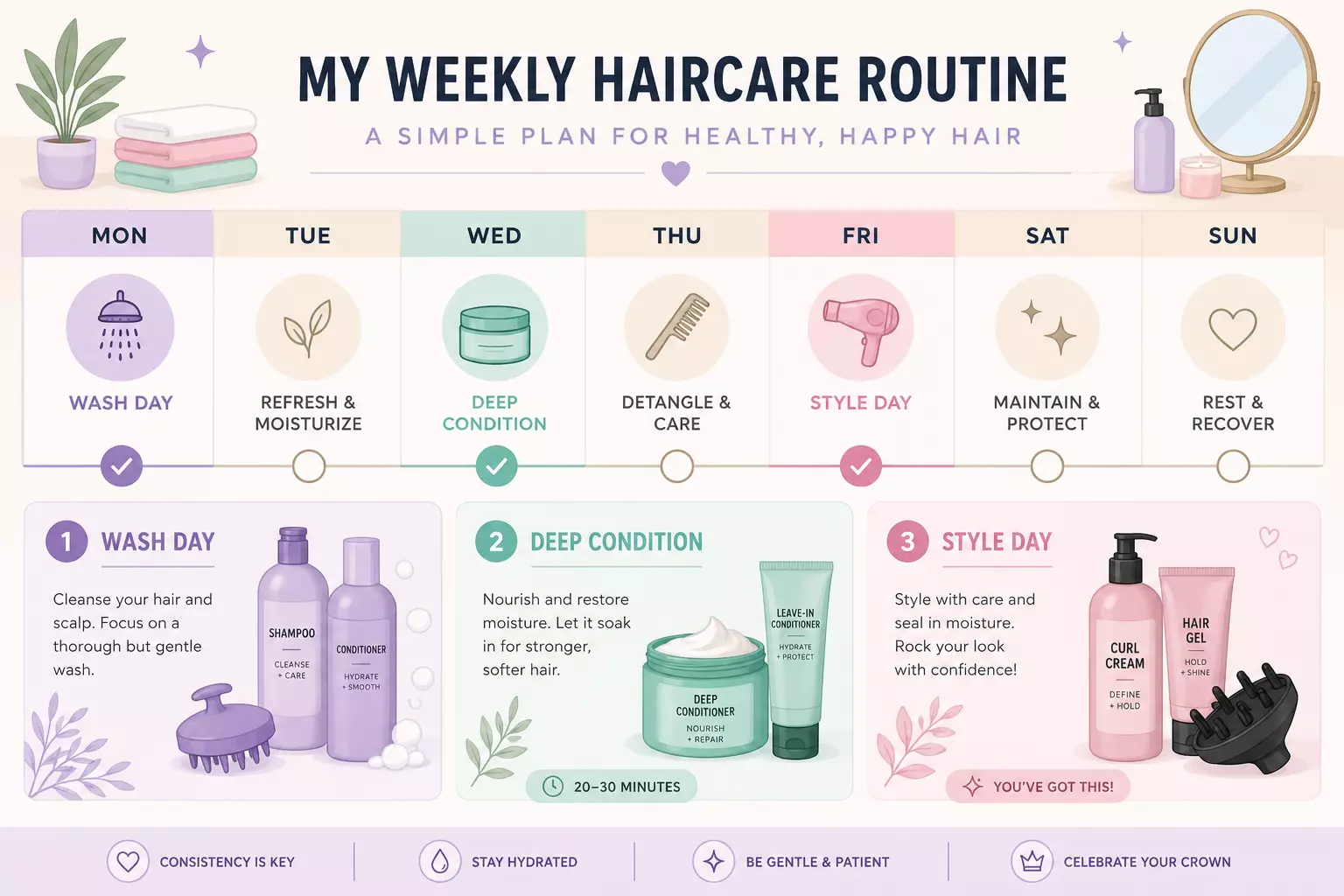
Step 4 — Build Your Weekly Haircare Schedule
A good routine isn’t just about what you do — it’s about when you do it. Here’s a sample weekly schedule framework you can adapt to your hair type:
Sample Weekly Schedule
| Day | Activity | Notes |
|---|---|---|
| Monday | Wash day (shampoo + condition) | Deep condition if Type 3–4 |
| Wednesday | Refresh or co-wash | Wavy/curly types; re-wet and scrunch |
| Friday | Scalp massage + oil treatment | Apply overnight if possible |
| Sunday | Protective style or prep for the week | Braids, twists, or blowout |
The Non-Negotiables 🔑
No matter your hair type, these steps belong in every routine:
- Heat protection — Always apply before any hot tool use [4]
- Trim regularly — Every 8–12 weeks to prevent split ends from traveling up the shaft
- Hydration from within — Drinking enough water genuinely affects hair health
- Gentle handling — Wet hair is 3x more elastic and prone to breakage
Step 5 — Choose the Right Products Without Overspending
Here’s something the beauty industry doesn’t want you to know: the most expensive product is rarely the most effective one for your specific hair type. What matters is the ingredient list, not the price tag [9].
Ingredients to Look For (By Need)
| Goal | Key Ingredients |
|---|---|
| Moisture | Hyaluronic acid, glycerin, aloe vera |
| Protein/Strength | Hydrolyzed keratin, silk proteins, biotin |
| Scalp health | Salicylic acid, tea tree oil, zinc pyrithione |
| Frizz control | Shea butter, argan oil, silicones (if rinsed) |
| Volume | Panthenol, rice protein, lightweight polymers |
Ingredients to Avoid
- Sulfates (for curly/coily hair) — strip natural oils aggressively
- Drying alcohols (alcohol denat., isopropyl alcohol) — cause brittleness
- Heavy mineral oil (for fine hair) — creates buildup and weighs hair down
💬 Pro Tip: Build your routine in layers — start with just a shampoo and conditioner for 2–3 weeks before adding serums, masks, or treatments. This helps you identify what’s actually working.
Step 6 — Adjust Your Routine Seasonally and as Your Hair Changes
One thing many people overlook when learning how to build a haircare routine based on your hair type is that hair is not static. It changes with [1][6]:
- Season: Hair tends to be drier in winter and oilier in summer
- Hormonal shifts: Pregnancy, menopause, and thyroid changes all affect hair texture
- Chemical treatments: Color, relaxers, and perms change porosity permanently
- Age: Hair naturally becomes finer and drier with age
Signs Your Routine Needs Updating
Watch for these red flags 🚩:
- Excessive shedding (more than 100–150 strands per day)
- Persistent dryness despite regular conditioning
- Scalp irritation or flaking that won’t resolve
- Hair that feels “product-resistant” or always looks dull
If you notice these signs, it may be time to do a clarifying wash (to remove buildup) and reassess your product lineup [4].
Common Mistakes That Undermine Any Haircare Routine
Even with the best products and intentions, certain habits can sabotage your results. Here are the most common pitfalls to avoid [1][10]:
❌ Using too many products at once — You won’t know what’s working or causing buildup.
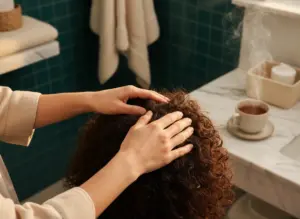
❌ Skipping the scalp — An unhealthy scalp leads to unhealthy hair growth. Scalp massages improve circulation and can support hair density [6].
❌ Using hot water — Hot water strips natural oils from both scalp and hair. Rinse with cool or lukewarm water.
❌ Towel-rubbing wet hair — This causes friction and breakage. Gently squeeze or blot instead.
❌ Ignoring protein-moisture balance — Too much moisture without protein leads to mushy, weak hair. Too much protein without moisture leads to brittleness.
❌ Changing your routine too frequently — Give any new routine at least 4–6 weeks before judging results. Hair grows and responds slowly.
Conclusion: Your Hair, Your Rules
Learning how to build a haircare routine based on your hair type is not a one-time event — it’s an ongoing relationship with your hair. The most effective routine is one that you’ll actually stick to, that addresses both your scalp’s needs and your hair shaft’s needs, and that adapts as your hair changes over time [4][7].
Here are your actionable next steps to take today:
- ✅ Identify your hair type using the quiz above or the porosity test
- ✅ Audit your current products — check ingredient lists against the guide above
- ✅ Set a wash schedule appropriate for your hair type and stick to it for 4 weeks
- ✅ Add one treatment (deep conditioner or scalp scrub) based on your biggest concern
- ✅ Track your results — take photos weekly to see real progress
Your hair is unique. It deserves a routine that’s just as unique. Start small, stay consistent, and adjust as you learn what your hair responds to best.
References
[1] The Best Hair Care Routine For Your Hair Type – https://xmondohair.com/blogs/thexclusive/the-best-hair-care-routine-for-your-hair-type
[3] The Ultimate Hair Care Guide Tailored Routines For Every Hair Type – https://www.blondefaithsalon.com/blog/the-ultimate-hair-care-guide-tailored-routines-for-every-hair-type
[4] Hair Care Routine – https://www.healthline.com/health/beauty-skin-care/hair-care-routine
[6] Hair Mag Ultimate Haircare Routine – https://www.lorealprofessionnel.com/hair-mag-ultimate-haircare-routine
[7] Hair Care Routine Hair Type – https://haircode.com/articles/hair-care-routine-hair-type/
[8] What Is Your Hair Type Hair Care Routine – https://www.reddit.com/r/AskWomen/comments/1phick1/what_is_your_hair_type_hair_care_routine/
[9] The Hair Routine 2025 – https://www.myhair.ai/blog/the-hair-routine-2025
[10] How To Build The Perfect Haircare Routine For Your Hair Type – https://evalectric.com/how-to-build-the-perfect-haircare-routine-for-your-hair-type/