The Ultimate Guide to Hair Porosity: How to Test and Treat Your Hair Type
Nearly 70% of people report using hair care products that simply don’t work for them — not because the products are bad, but because they’re mismatched to their hair’s actual needs. The single most overlooked reason? They’ve never tested their hair porosity.
This is exactly why I created The Ultimate Guide to Hair Porosity: How to Test and Treat Your Hair Type — a comprehensive resource that cuts through the noise and gives you a science-backed, actionable framework for understanding how your hair absorbs and retains moisture. Whether your strands repel every product you apply or soak up moisture only to lose it hours later, porosity is the key that unlocks your hair’s behavior.
Once I understood my own hair porosity, my entire routine changed — and so did my results.
Key Takeaways 📌
- Hair porosity refers to your hair’s ability to absorb and retain moisture, determined by the state of your cuticle layer.
- There are three porosity types: low, normal (medium), and high — each requiring a different care approach.
- You can test your porosity at home using the float test, slip-and-slide test, or spray test.
- Low porosity hair needs heat and lightweight products; high porosity hair needs protein treatments and heavy sealants.
- Matching your products to your porosity type can dramatically improve moisture retention, frizz control, and overall hair health.
What Is Hair Porosity? Understanding the Science
Before diving into testing methods and treatments, let’s get clear on what porosity actually means.
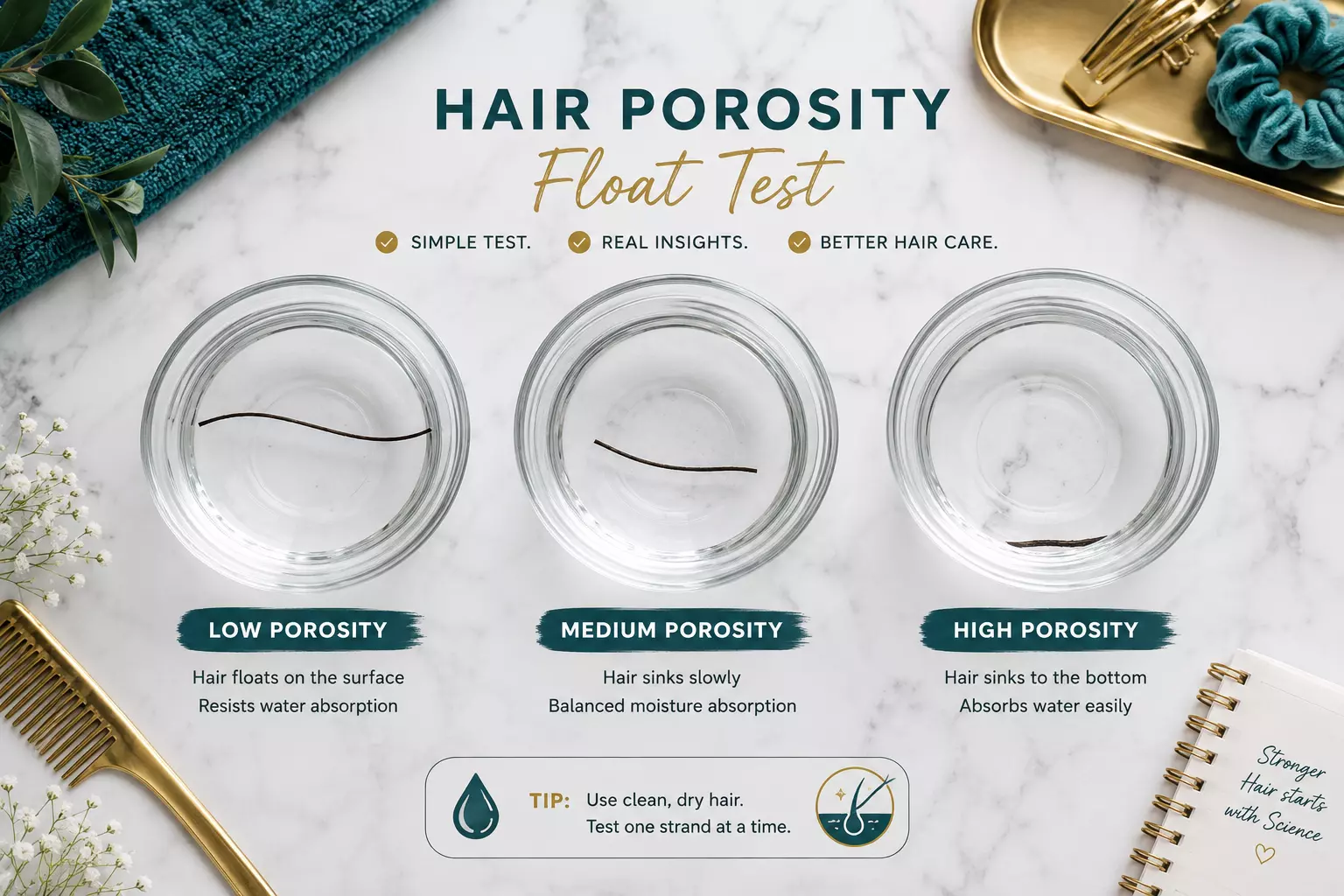
Hair porosity is your hair’s capacity to absorb and hold moisture. It’s determined by the condition of your hair’s cuticle — the outermost protective layer made up of overlapping, scale-like cells that surround the hair shaft.
Think of the cuticle like roof shingles:
- When the shingles lie flat and tight, water has a hard time getting in (or out).
- When the shingles are slightly raised, water flows in and out at a healthy rate.
- When the shingles are cracked, chipped, or missing, water floods in but escapes just as fast.
Disclosure: This post contains affiliate links. As an Amazon Associate, we earn from qualifying purchases, and at no extra cost to you.
What Determines Your Hair Porosity?
Porosity is influenced by both genetics and damage:
| Factor | Effect on Porosity |
|---|---|
| Genetics | Sets your baseline porosity level |
| Chemical treatments (color, relaxers) | Raises porosity |
| Heat styling | Raises porosity over time |
| UV exposure | Raises porosity |
| Mechanical damage (brushing, friction) | Raises porosity |
| Healthy hair care habits | Can help maintain or lower porosity |
💡 Pull Quote: “Porosity isn’t a flaw — it’s a characteristic. Understanding yours is the first step to a hair care routine that actually works.”
It’s worth noting that porosity can vary across different sections of your hair. Your ends, which are the oldest and most processed part of the strand, often have higher porosity than your roots.
How to Test Your Hair Porosity at Home
This section of The Ultimate Guide to Hair Porosity: How to Test and Treat Your Hair Type covers the three most reliable at-home testing methods. Each has its strengths, and I recommend trying at least two for the most accurate result.
🧪 Test 1: The Float Test
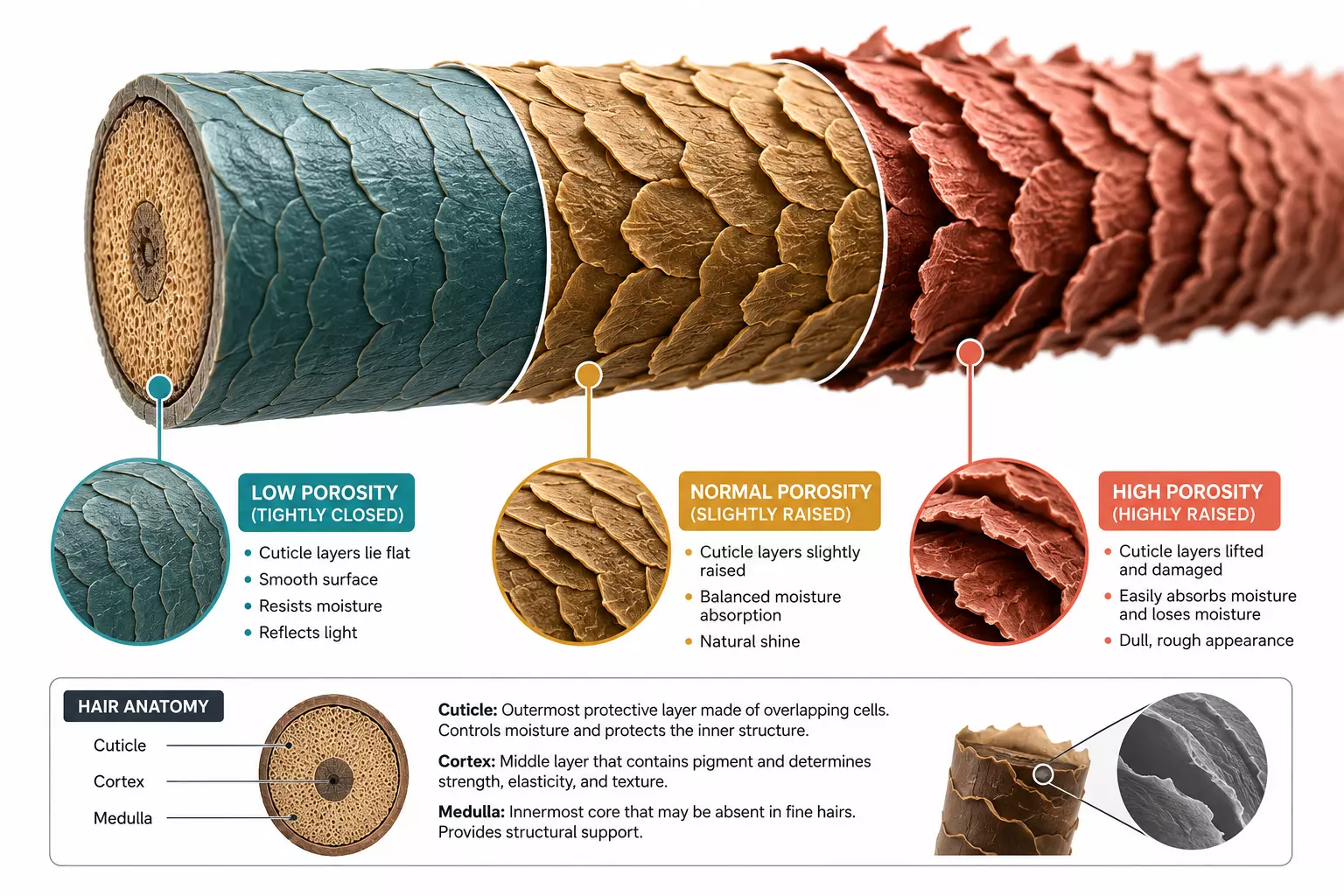
What you need: A clear glass of room-temperature water and a few clean, product-free strands of hair.
How to do it:
- Wash your hair and let it air dry completely (no products).
- Drop 2–3 strands into the glass of water.
- Wait 4 minutes and observe.
What the results mean:
| Result | Porosity Type |
|---|---|
| Hair floats at the top | Low porosity |
| Hair floats in the middle | Normal/medium porosity |
| Hair sinks to the bottom | High porosity |
⚠️ Important caveat: Product buildup can skew this test. Always use clean, clarified hair for accurate results.
🖐️ Test 2: The Slip-and-Slide Test
How to do it:
- Take a single strand of hair between your thumb and index finger.
- Slide your fingers from the tip up toward the root.
- Pay attention to what you feel.
Interpreting the results:
- Smooth, no bumps → Low porosity (cuticles are tightly closed)
- Slight texture, small bumps → Normal porosity
- Very rough, catches on fingers → High porosity (raised or damaged cuticles)
💧 Test 3: The Spray Bottle Test
How to do it:
- Take a small section of dry, clean hair.
- Mist it lightly with water.
- Watch how the water behaves.
Results:
- Water beads up and sits on the hair → Low porosity
- Water absorbs within a few seconds → Normal porosity
- Water absorbs almost instantly → High porosity
The Three Porosity Types: Characteristics and Challenges
Now that you’ve tested your hair, let’s explore what each porosity type means for your daily hair care experience.
🔒 Low Porosity Hair
Characteristics:
- Cuticles are tightly closed and overlapping
- Products tend to sit on top of the hair rather than absorbing
- Hair takes a long time to get fully wet
- Dries slowly
- Prone to product buildup
Common struggles: You’ve probably tried every deep conditioner on the market and wondered why your hair still feels dry. The issue isn’t the product — it’s that your cuticles won’t let it in.
The low porosity truth: Your hair is actually very healthy structurally. The challenge is getting moisture past those tight cuticles.
⚖️ Normal (Medium) Porosity Hair
Characteristics:
- Cuticles are slightly raised, allowing balanced moisture exchange
- Absorbs and retains moisture well
- Holds styles effectively
- Responds well to most treatments
- Requires the least maintenance
If you have normal porosity hair — congratulations! 🎉 Your hair is in a great place. Your main job is maintaining this balance and avoiding damage that could raise your porosity over time.
🔓 High Porosity Hair
Characteristics:
- Cuticles are raised, damaged, or have gaps
- Absorbs moisture quickly but loses it just as fast
- Prone to frizz, especially in humidity
- Feels dry and rough frequently
- Tangles easily
- Can be a result of chemical or heat damage, or genetics (common in naturally curly/coily hair)
The high porosity reality: Your hair is thirsty — but it’s also leaky. The goal is to fill in those cuticle gaps and seal moisture in effectively.
How to Treat Each Hair Porosity Type: Your Complete Routine Guide
This is the heart of The Ultimate Guide to Hair Porosity: How to Test and Treat Your Hair Type — the actionable treatment strategies tailored to each porosity level.
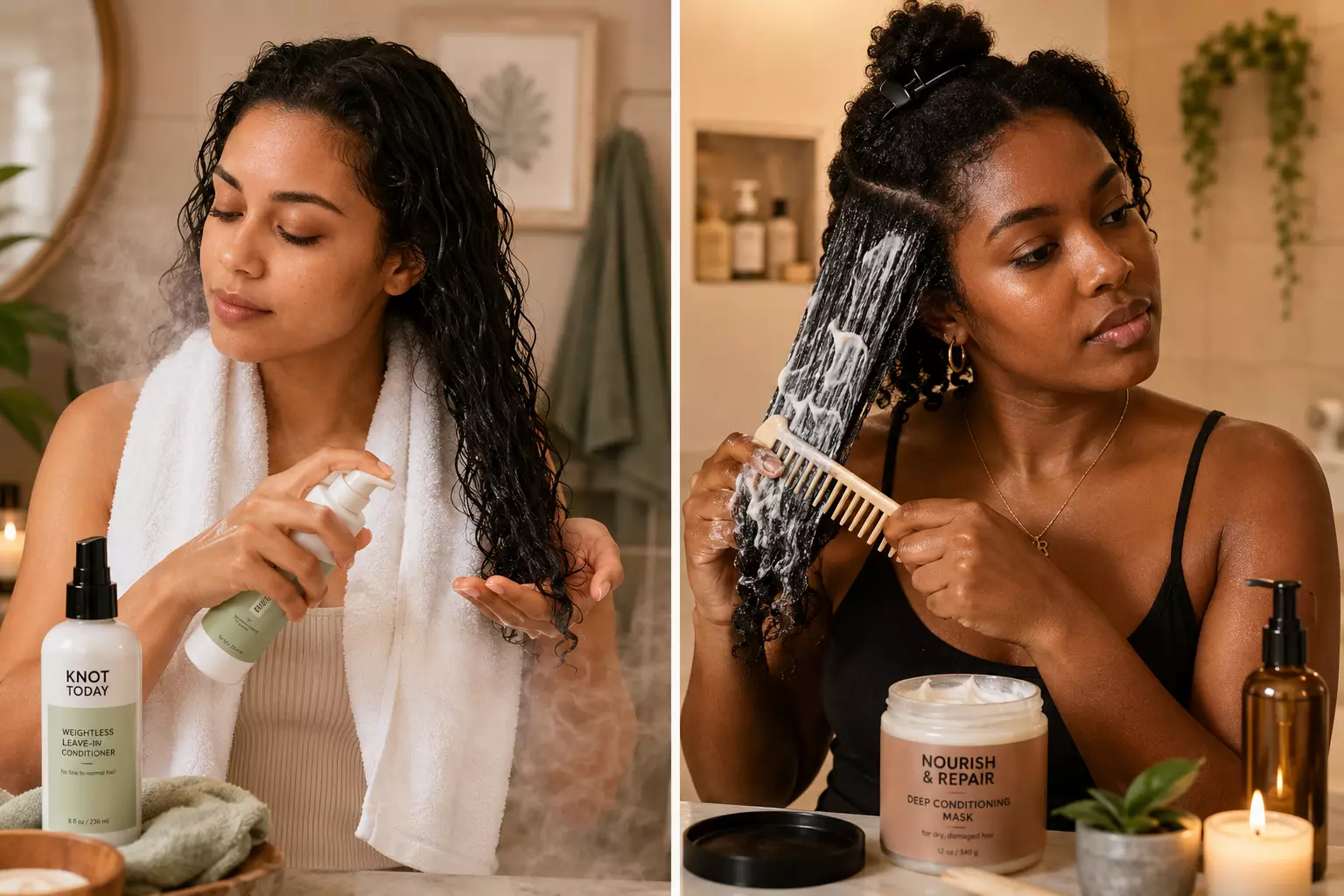
🔒 Treating Low Porosity Hair
The strategy: Open the cuticle to let moisture in, then seal it.
Best practices:
✅ Use heat during conditioning — Apply your deep conditioner and sit under a hooded dryer or use a heated cap for 20–30 minutes. Heat gently lifts the cuticle, allowing moisture to penetrate.
✅ Clarify regularly — Low porosity hair is prone to product buildup. Use a clarifying shampoo every 2–4 weeks to remove residue.
✅ Choose lightweight, liquid-based products — Heavy butters and oils will just sit on top of your hair. Look for water-based leave-ins, aloe vera, and lightweight serums.
✅ Try the “greenhouse effect” — Lightly mist hair with water, apply a light leave-in, and cover with a plastic cap for 20–30 minutes to trap warmth and encourage absorption.
Ingredients to look for:
- Aloe vera
- Glycerin (in moderate humidity)
- Hydrolyzed proteins (in small amounts)
- Honey
Ingredients to avoid:
- Heavy butters (shea, mango) as primary moisturizers
- Thick, occlusive oils as leave-ins
⚖️ Treating Normal Porosity Hair
The strategy: Maintain the balance and protect what you have.
Best practices:
✅ Deep condition regularly — Every 1–2 weeks with a balanced moisturizing conditioner keeps your hair in optimal condition.
✅ Rotate protein and moisture treatments — Your hair responds well to both. Alternate between protein treatments (every 4–6 weeks) and moisturizing masks.
✅ Protect from damage — Minimize heat styling, use heat protectant when you do, and sleep on a silk or satin pillowcase.
✅ Most products work for you — You have the luxury of experimenting. Focus on ingredients that support your other hair characteristics (curl pattern, density, thickness).
🔓 Treating High Porosity Hair
The strategy: Fill in cuticle gaps, load up on moisture, and seal it in.
Best practices:
✅ Use protein treatments regularly — Protein fills in the gaps in your cuticle layer. Try a protein treatment every 2–4 weeks (but watch for protein overload — if hair feels stiff and brittle, back off).
✅ Follow the LOC or LCO method:
| Method | Order | Best For |
|---|---|---|
| LOC | Liquid → Oil → Cream | Most high porosity hair types |
| LCO | Liquid → Cream → Oil | Finer high porosity hair |
✅ Use cold water rinses — After conditioning, rinse with cool water to help close the cuticle and seal in moisture.
✅ Layer heavy sealants — Castor oil, shea butter, and other heavy oils and butters are your friends. They help seal moisture into the hair shaft.
✅ Avoid high-heat styling — Your cuticles are already compromised. Excessive heat makes the situation worse.
Ingredients to look for:
- Hydrolyzed keratin or wheat protein
- Castor oil
- Shea butter
- Avocado oil
- Marshmallow root
💡 Pull Quote: “High porosity hair isn’t broken — it just needs a more intentional routine. With the right products and techniques, it can be some of the most luscious hair you’ve ever had.”
Building Your Hair Porosity-Based Routine: Tips for 2026
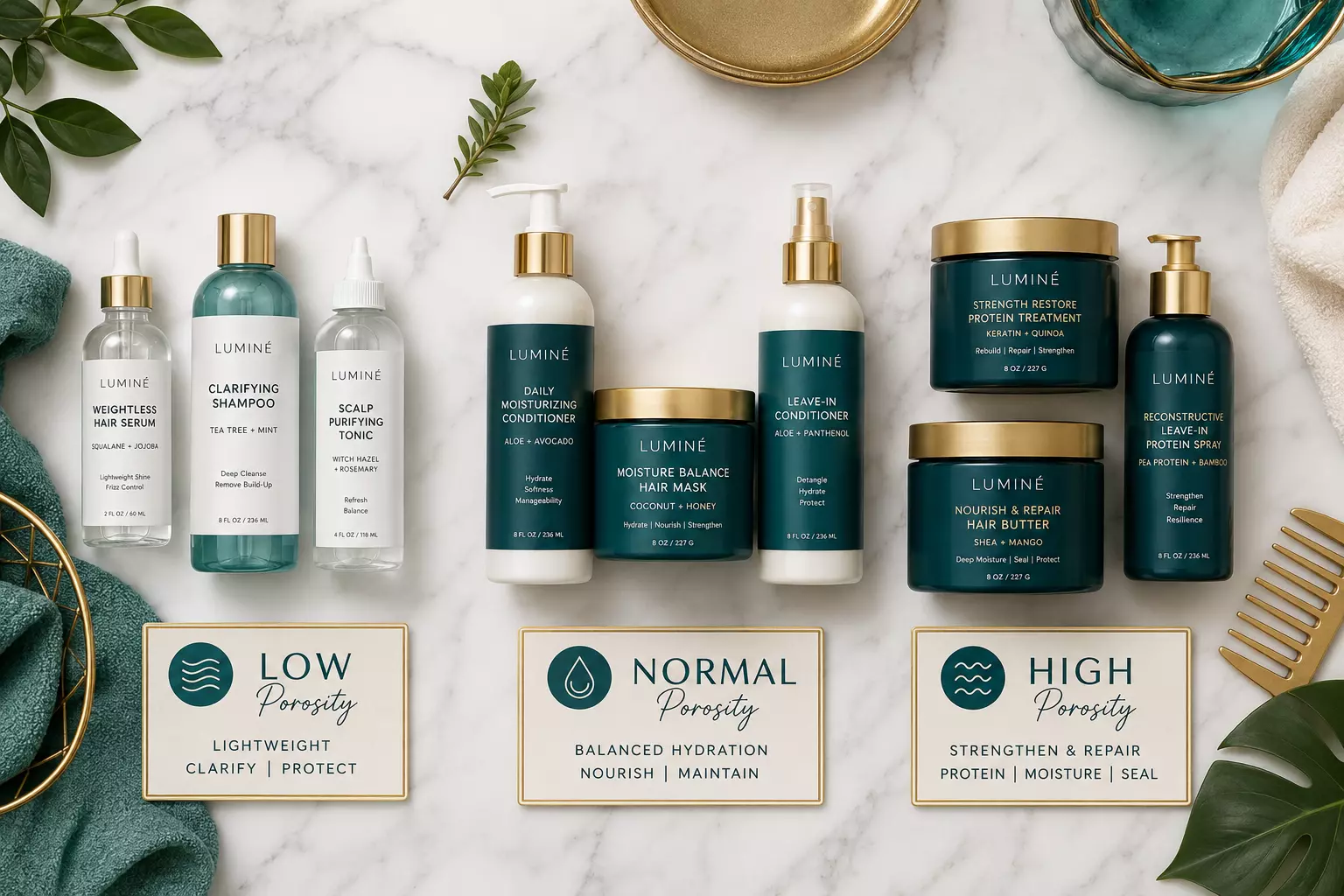
Understanding your porosity type is only half the battle. The real transformation happens when you build a consistent routine around it. Here’s how to structure your week based on porosity.
📅 Sample Weekly Routines by Porosity Type
Low Porosity Weekly Routine:
- Pre-poo (optional): Light oil massage to protect strands
- Clarifying wash (every 2–4 weeks): Remove buildup
- Moisturizing shampoo: Gentle, sulfate-free
- Heated deep condition: 20–30 minutes with heat
- Lightweight leave-in: Apply to damp hair
- Light oil or gel: Seal and style
Normal Porosity Weekly Routine:
- Pre-poo (optional): Protective oil treatment
- Moisturizing shampoo: Weekly or bi-weekly
- Standard deep condition: 15–20 minutes (no heat needed)
- Balanced leave-in: Medium weight
- Oil or cream sealant: Seal and style
- Protein treatment: Every 4–6 weeks
High Porosity Weekly Routine:
- Pre-poo: Heavy oil or butter treatment to minimize moisture loss during washing
- Gentle moisturizing shampoo: Avoid harsh sulfates
- Protein conditioner: Every 2–4 weeks; moisturizing conditioner otherwise
- Cold water rinse: Seal the cuticle post-conditioning
- LOC/LCO method: Layer moisture and seal
- Heavy sealant: Castor oil, shea butter
🛒 Product Shopping Tips for 2026
When shopping for products in 2026, look beyond marketing claims and go straight to the ingredient list:
- First 5 ingredients matter most — they make up the bulk of the formula
- Look for water (aqua) as the first ingredient in moisturizers
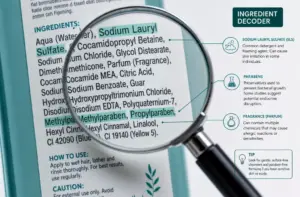
- Avoid products with high alcohol content (ethanol, isopropyl alcohol) as primary ingredients for dry or high porosity hair
- Silicones (ending in -cone, -xane) can be useful for high porosity hair as sealants but may cause buildup on low porosity hair
Common Mistakes to Avoid ❌
| Mistake | Why It’s a Problem | Fix |
|---|---|---|
| Using heavy products on low porosity hair | Causes buildup, weighs hair down | Switch to lightweight, water-based products |
| Skipping protein on high porosity hair | Cuticle gaps worsen, moisture loss increases | Add a protein treatment every 2–4 weeks |
| Conditioning without heat (low porosity) | Conditioner doesn’t penetrate | Use a heat cap or hooded dryer |
| Over-proteining normal/high porosity hair | Hair becomes brittle and snaps | Balance with moisturizing treatments |
| Testing porosity with dirty hair | Inaccurate results | Always clarify before testing |
Frequently Asked Questions About Hair Porosity
Q: Can my hair porosity change over time?
Yes! While your genetic baseline stays the same, porosity can increase due to chemical treatments, heat damage, and environmental factors. Conversely, consistent healthy hair care habits can help maintain or improve porosity over time.
Q: Can I have different porosity levels on the same head of hair?
Absolutely. It’s very common to have low porosity roots and high porosity ends, especially if you’ve had any chemical processing or heat damage. Test multiple sections of your hair for the most accurate picture.
Q: Is high porosity hair always damaged hair?
Not necessarily. Many people — particularly those with naturally curly or coily hair types — have naturally high porosity due to the shape of the hair shaft, not damage. Genetics play a significant role.
Q: How often should I test my hair porosity?
I recommend testing every 6–12 months, or after any significant chemical treatment (color, relaxer, keratin treatment), to see if your porosity has shifted.
Q: Does hair porosity affect how long hair takes to grow?
Porosity doesn’t directly affect growth rate (which happens at the scalp). However, it significantly affects length retention — high porosity hair that breaks easily won’t appear to grow, even if it’s growing at a normal rate.
Conclusion: Your Hair Porosity Journey Starts Now
The Ultimate Guide to Hair Porosity: How to Test and Treat Your Hair Type exists because too many people are spending time and money on hair care that simply doesn’t match their hair’s biology. Understanding your porosity isn’t a luxury — it’s the foundation of every effective hair care decision you’ll make.
Here’s your action plan:
- ✅ Test your porosity today using the float test and slip-and-slide test on clean, product-free hair.
- ✅ Audit your current products — check ingredient lists and see if they align with your porosity type’s needs.
- ✅ Restructure your routine based on the guidelines in this guide — prioritize heat for low porosity, protein for high porosity, and balance for normal porosity.
- ✅ Track your results over 4–6 weeks. Hair transformation takes time, but with the right approach, you’ll see a noticeable difference in moisture retention, manageability, and shine.
- ✅ Retest every 6–12 months — your hair changes, and your routine should evolve with it.
Your hair isn’t difficult. It’s just been misunderstood. Now you have the knowledge to change that. 💪
References
- Davis-Sivasothy, A. (2011). The Science of Black Hair: A Comprehensive Guide to Textured Hair Care. Saja Publishing Company.
- Robbins, C. R. (2012). Chemical and Physical Behavior of Human Hair (5th ed.). Springer.
- Franbourg, A., Hallegot, P., Baltenneck, F., Toutain, C., & Leroy, F. (2003). Current research on ethnic hair. Journal of the American Academy of Dermatology, 48(6), S115–S119.
- Dias, M. F. R. G. (2015). Hair cosmetics: An overview. International Journal of Trichology, 7(1), 2–15.
- Bhushan, B., & Chen, N. (2006). AFM studies of environmental effects on nanomechanical properties and cellular structure of human hair. Ultramicroscopy, 106(8–9), 755–764.
- McMullen, R. L., & Jachowicz, J. (1998). Optical properties of hair: Effect of treatments on luster as quantified by image analysis. Journal of the Society of Cosmetic Chemists, 49(4), 223–244.