The Ultimate Guide to Choosing the Right Hair Brush for Your Hair Type
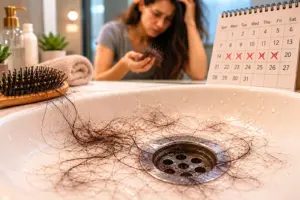
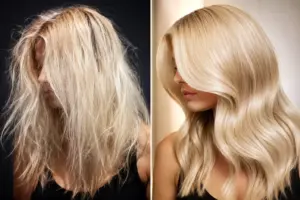
Most people own the wrong hair brush. In fact, using the wrong brush is one of the leading causes of preventable hair breakage, frizz, and scalp irritation — yet the average person grabs whatever brush is on sale without a second thought. If your hair feels perpetually frizzy, limp, or damaged despite a solid hair care routine, the culprit might be sitting right on your bathroom shelf.
This is The Ultimate Guide to Choosing the Right Hair Brush for Your Hair Type — a complete, no-fluff resource designed to help you match the right tool to your specific hair needs. Whether you have fine, straight strands or thick, coily curls, the right brush can transform your daily routine from a frustrating chore into a confidence-boosting ritual.
Key Takeaways 🗝️
- Not all brushes are created equal — the wrong brush can cause breakage, frizz, and scalp damage.
- Hair texture, thickness, and condition are the three most important factors when choosing a brush.
- Bristle material matters as much as brush shape — boar bristle, nylon, and mixed bristles each serve different purposes.
- Wet hair requires special tools — standard brushes on wet hair can cause significant damage.
- One brush is rarely enough — most hair types benefit from having two or three brushes for different styling needs.
- Try our Free Interactive app: Find Your Perfect Hair Brush & Say Goodbye to Frizz and Breakage
Why Your Hair Brush Choice Matters More Than You Think
I used to think a brush was just a brush. Years ago, I grabbed a cheap paddle brush from a drugstore and used it on everything — wet hair, dry hair, blowouts, you name it. My hair was constantly breaking, and I blamed my shampoo, the weather, even genetics. It wasn’t until a stylist friend watched me brush my hair and visibly winced that I realized the problem.
“The brush you use is like the foundation of your entire hair care routine. Get it wrong, and nothing else you do will fully work.” — Common wisdom among professional hairstylists
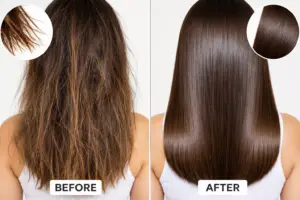
The science behind this is straightforward. Hair is made of keratin protein, and the outer layer — called the cuticle — is made up of tiny overlapping scales. When you drag the wrong brush through your hair, those scales lift, snag, and break. Over time, this leads to:
- 🔴 Split ends and breakage
- 🔴 Increased frizz and static
- 🔴 Scalp irritation and inflammation
- 🔴 Loss of natural shine and moisture
Choosing the right brush, on the other hand, smooths the cuticle, distributes natural oils from scalp to ends, and supports your hair’s natural pattern — whether that’s a sleek straight style or a defined curl.
Understanding Hair Types: The Foundation of The Ultimate Guide to Choosing the Right Hair Brush for Your Hair Type
Disclosure: This post contains affiliate links. As an Amazon Associate, we earn from qualifying purchases, and at no extra cost to you.
Before you can choose the right brush, you need to understand your hair. Most hair typing systems consider three core factors:
1. Hair Texture (Pattern)
| Hair Type | Description | Common Characteristics |
|---|---|---|
| Type 1 | Straight | No natural curl, tends to get oily |
| Type 2 | Wavy | S-shaped waves, prone to frizz |
| Type 3 | Curly | Defined spiral curls, needs moisture |
| Type 4 | Coily/Kinky | Tight coils or zig-zag pattern, very fragile |
2. Hair Thickness (Strand Diameter)
- Fine hair: Each strand is thin; hair can look limp and gets weighed down easily
- Medium hair: The most common type; versatile and relatively easy to manage
- Coarse hair: Each strand is thick; strong but can be resistant to styling
3. Hair Density (Volume on Your Head)
- Low density: Fewer strands overall; scalp is more visible
- Medium density: Average amount of hair
- High density: Many strands; hair appears very full and thick
Pro tip: Your hair type is a combination of all three. For example, you might have Type 3 curly hair that is fine in thickness but high in density. Understanding this combination is the key to finding your perfect brush.
Hair Condition Also Matters
Beyond pattern and thickness, consider your hair’s current condition:
- Chemically treated or color-damaged hair needs gentler bristles
- Dry or brittle hair benefits from natural bristles that distribute oils
- Oily hair may need more frequent brushing with a clean brush
- Transitioning or natural hair needs wide-tooth tools and flexible bristles
A Complete Breakdown of Hair Brush Types
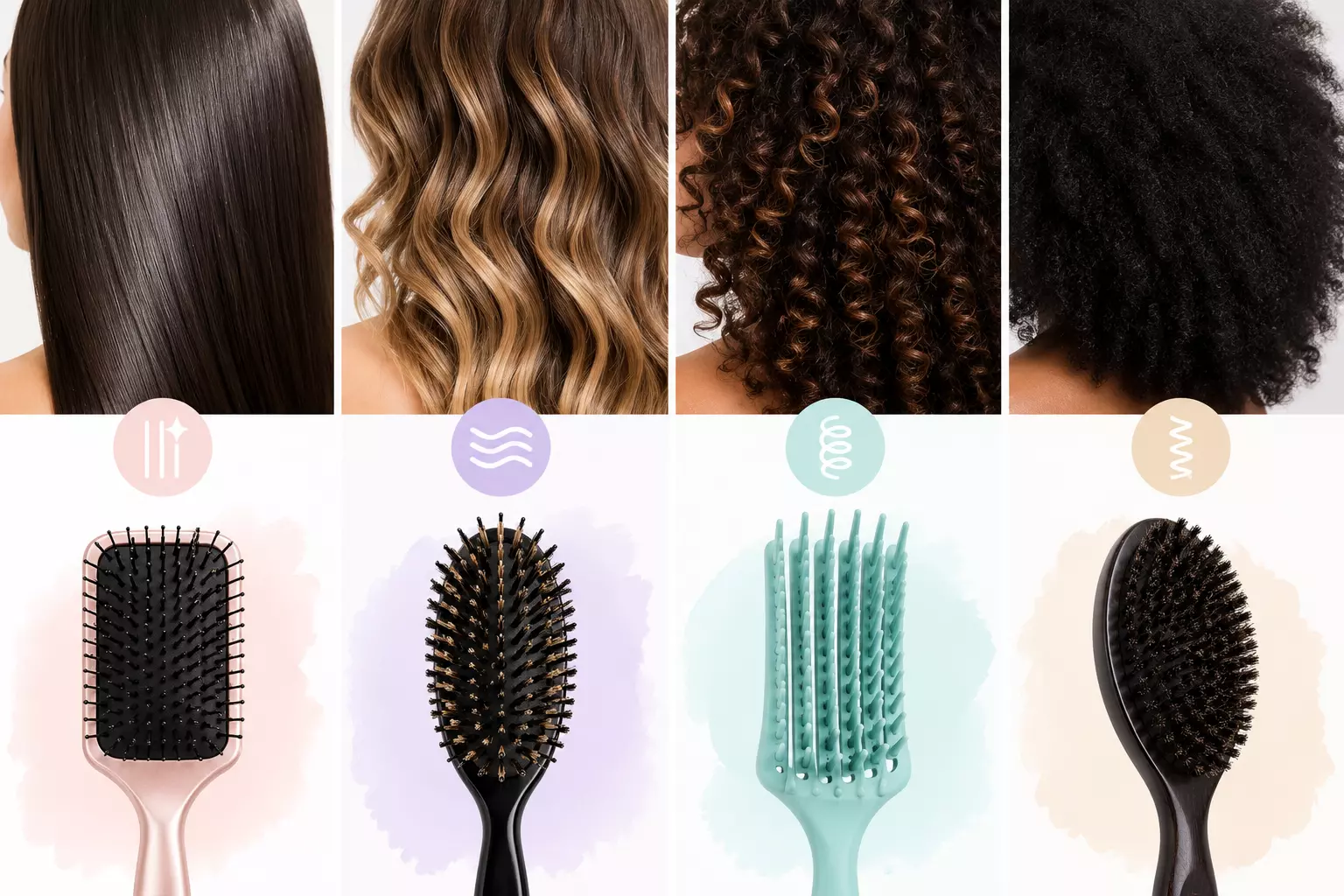
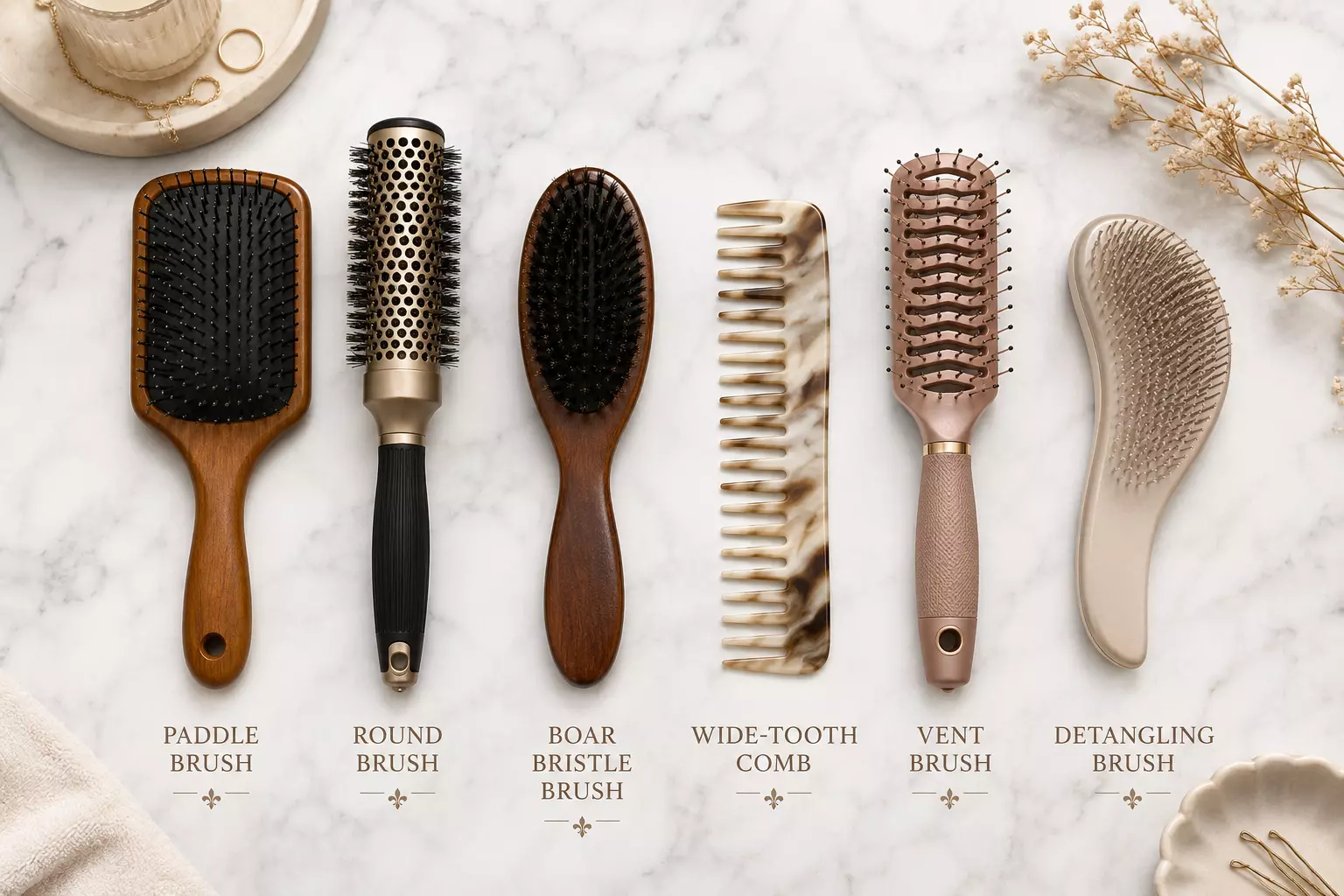
Now that you know your hair type, let’s explore the brushes available — and which ones are built for which jobs.
Paddle Brushes
Best for: Straight to slightly wavy hair, detangling, smoothing
Paddle brushes have a wide, flat base with a cushioned pad. The cushion absorbs pressure, making them gentler on the scalp. They’re excellent for:
- Detangling long, straight hair
- Smoothing hair before a blowout
- Everyday brushing for fine to medium hair
⚠️ Avoid if: You have tight curls or coils — paddle brushes can disrupt your curl pattern.
Round Brushes
Best for: Adding volume, creating blowout curls, smoothing
Round brushes come in various barrel sizes:
| Barrel Size | Best Use |
|---|---|
| Small (1 inch or less) | Tight curls, short hair styling |
| Medium (1.5–2 inches) | Waves, mid-length hair |
| Large (2.5–3+ inches) | Volume, long hair blowouts |
The larger the barrel, the more volume and less curl you’ll get. Round brushes with boar bristles are especially effective for adding shine during a blowout.
Boar Bristle Brushes
Best for: Fine hair, adding shine, distributing natural oils
Boar bristle brushes are made from the hair of wild boars, which has a texture remarkably similar to human hair. They:
- Gently smooth the hair cuticle
- Distribute scalp oils from root to tip
- Add incredible shine without product
- Are very gentle on fragile or fine hair
💡 Pull Quote: “A boar bristle brush is the closest thing to a natural conditioner you can find — it moves your scalp’s oils down the entire hair shaft.”
Limitation: Pure boar bristle brushes struggle to penetrate thick or coarse hair. For thicker hair, look for a mixed bristle brush that combines boar bristles with nylon pins.
Detangling Brushes
Best for: Wet hair, curly hair, coily hair, children’s hair
Detangling brushes (like the popular flexible-bristle designs) have widely spaced, flexible bristles that bend rather than snap when they hit a knot. They:
- Work safely on wet hair
- Preserve curl pattern
- Minimize breakage during detangling
- Are ideal for Type 3 and Type 4 hair
Vent Brushes
Best for: Blow-drying, adding volume at the roots
Vent brushes have openings (vents) in the base that allow airflow from a blow dryer to pass through. They speed up drying time and add lift at the roots. Great for:
- Medium to thick hair that takes a long time to dry
- Creating root volume
- Quick everyday styling
Wide-Tooth Combs
Best for: Wet curly and coily hair, distributing conditioner
Technically a comb, not a brush — but worth including here. Wide-tooth combs are often the safest tool for wet Type 3 and Type 4 hair. They detangle without disrupting the curl clump and are essential for applying and distributing deep conditioners.
Matching the Right Brush to Your Specific Hair Type
This section is the heart of The Ultimate Guide to Choosing the Right Hair Brush for Your Hair Type. Let’s break it down by hair type with specific, actionable recommendations.
🌿 Straight Hair (Type 1)
Characteristics: Tends to get oily, lies flat, can look limp
Best brushes:
- Boar bristle brush for daily brushing and shine
- Paddle brush for detangling and smoothing
- Round brush for blowout volume
What to avoid: Stiff nylon bristles that create static; wide-tooth combs that don’t smooth the cuticle
🌊 Wavy Hair (Type 2)
Characteristics: S-shaped waves, prone to frizz, needs balance between definition and smoothness
Best brushes:
- Mixed bristle paddle brush for gentle detangling
- Diffuser attachment (not a brush, but critical for drying)
- Detangling brush on wet hair only
- Boar bristle brush sparingly for shine without disrupting waves
What to avoid: Brushing dry wavy hair — this causes frizz. Always brush when wet or use a wide-tooth comb.
🌀 Curly Hair (Type 3)
Characteristics: Defined spirals, prone to dryness and frizz, fragile when wet
Best brushes:
- Wide-tooth comb for wet detangling
- Detangling brush with flexible bristles for wet styling
- Denman-style brush for defining curl clumps
What to avoid: Paddle brushes and boar bristle brushes on dry curly hair — they separate curls and cause frizz
✨ Coily/Kinky Hair (Type 4)
Characteristics: Tightest curl pattern, most fragile, highest shrinkage, needs maximum moisture retention
Best brushes:
- Wide-tooth comb for detangling with conditioner
- Soft detangling brush on wet, conditioner-coated hair
- Boar bristle brush for scalp stimulation only (not length)
- Afro pick for volume and shaping
What to avoid: Fine-tooth combs, stiff nylon bristles, brushing dry Type 4 hair without any product
💪 Thick/Coarse Hair (Any Pattern)
Best brushes:
- Mixed bristle brush (boar + nylon) for penetrating density
- Paddle brush with firm cushion for detangling
- Large round brush for blowouts
🌸 Fine Hair (Any Pattern)
Best brushes:
- Soft boar bristle brush — gentle enough not to break fragile strands
- Flexible detangling brush for wet hair
- Small round brush for volume without weight
What to avoid: Heavy brushes with stiff bristles that can snap fine strands
How to Use Your Hair Brush Correctly
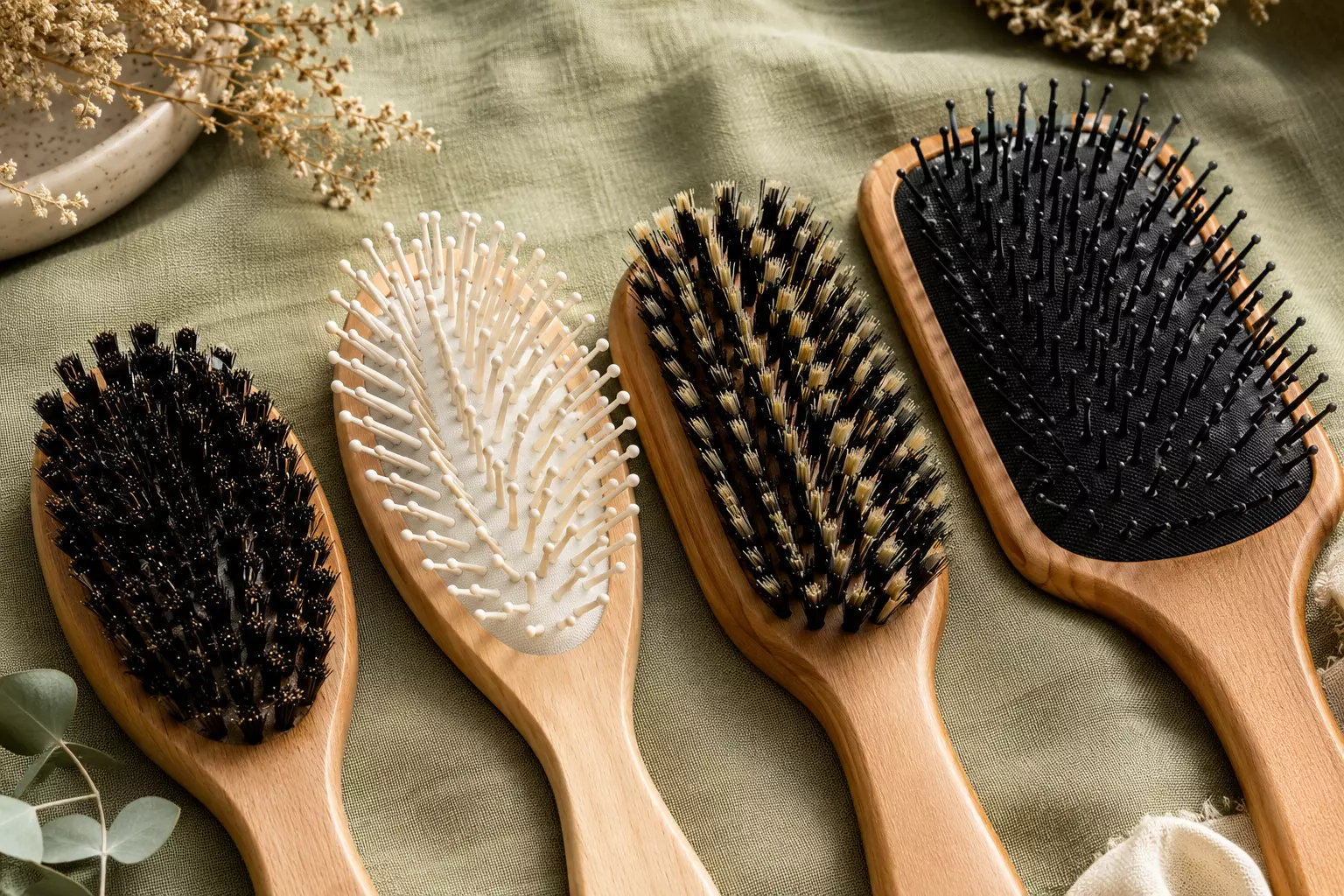
Even the perfect brush can cause damage if used incorrectly. Here are the most important technique tips:
The Golden Rule: Start From the Ends
Never start brushing from the root. Always begin at the ends of your hair and work your way up in sections. This prevents knots from compacting and causing breakage.
Wet Hair Rules
- Wet hair is up to 3x weaker than dry hair
- Only use brushes designed for wet hair (detangling brushes, wide-tooth combs)
- Apply a leave-in conditioner or detangling spray before brushing wet hair
- Use light, gentle strokes — never yank
How Often Should You Brush?
| Hair Type | Recommended Frequency |
|---|---|
| Straight | Once or twice daily |
| Wavy | Only when wet, before styling |
| Curly | Only when wet with product |
| Coily | Only when wet with conditioner |
Brush Maintenance Matters 🧹
A dirty brush deposits old oils, product buildup, and bacteria back onto your clean hair. Clean your brush:
- Remove hair after every use
- Deep clean with warm water and a few drops of shampoo once a week
- Replace your brush every 6–12 months, or when bristles become bent or splayed
Common Hair Brush Mistakes to Avoid
Even with the best brush in hand, these common errors can undermine your results:
- Brushing curly or coily hair when dry — disrupts curl pattern and causes massive frizz
- Using the same brush for wet and dry styling — wet brushing requires flexible bristles; dry styling often needs firmer ones
- Pressing too hard on the scalp — can cause scalp irritation and even hair loss over time
- Ignoring bristle quality — cheap plastic bristles often have rough, unpolished tips that scratch the scalp
- Never cleaning your brush — buildup transfers directly to your hair
- Using a brush that’s too small for your hair density — you’ll spend twice as long and cause more friction
Building Your Ideal Brush Collection
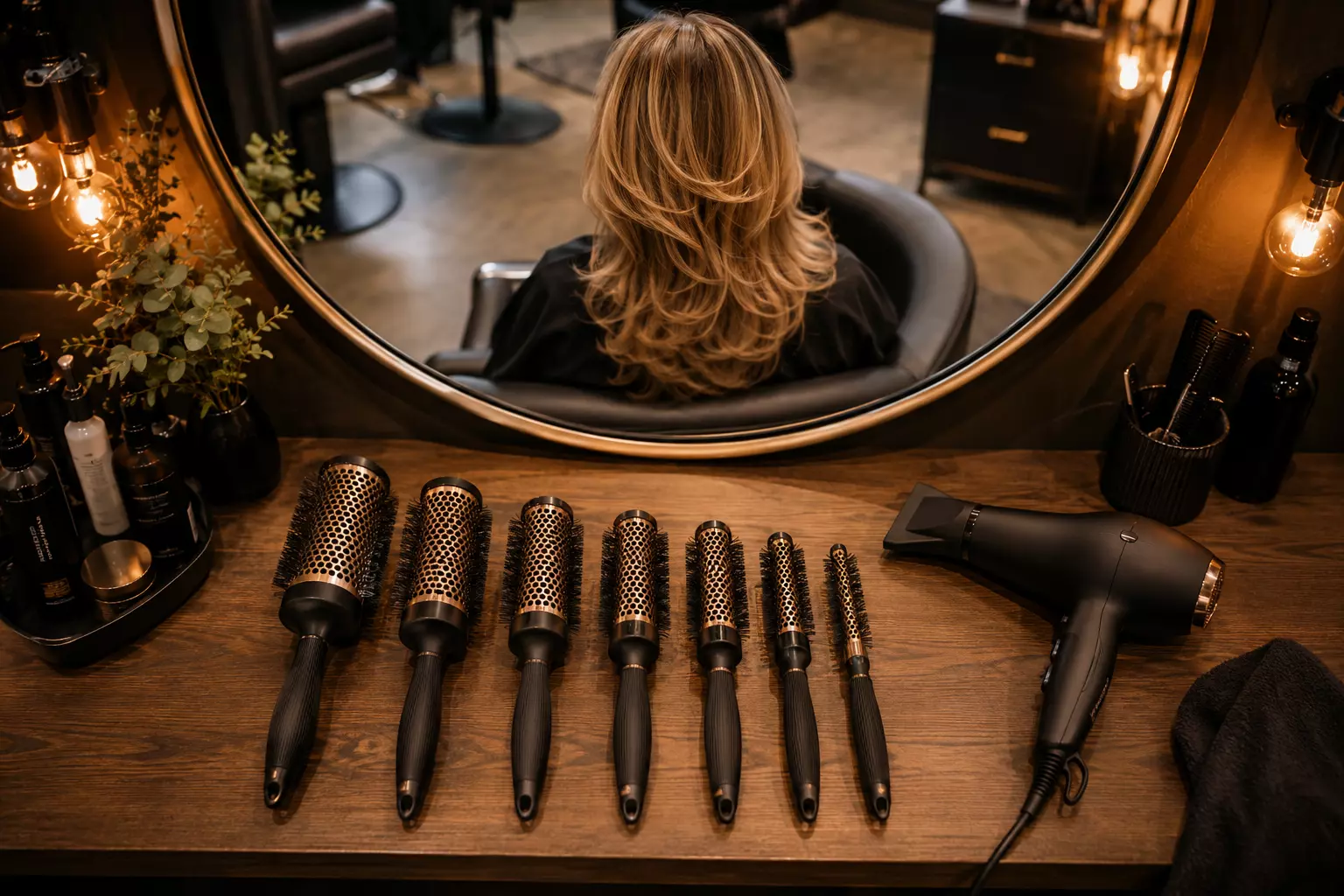
Here’s a practical framework for building a brush kit based on your hair type. As part of The Ultimate Guide to Choosing the Right Hair Brush for Your Hair Type, I recommend thinking of your brush collection in three tiers:
Tier 1: The Essential (Every Hair Type Needs This)
- A quality detangling brush or wide-tooth comb for wet hair
Tier 2: The Daily Driver
- Straight/Wavy: Boar bristle paddle brush
- Curly: Flexible detangling brush
- Coily: Wide-tooth comb + soft detangling brush
Tier 3: The Styler
- Straight/Wavy: Round brush for blowouts
- Curly: Denman or curl-defining brush
- Coily: Afro pick or styling brush
What to Spend
You don’t need to break the bank, but quality matters:
| Brush Type | Budget Range (USD) |
|---|---|
| Basic detangling brush | $8–$20 |
| Quality boar bristle brush | $20–$60 |
| Professional round brush | $15–$50 |
| Mixed bristle paddle brush | $15–$40 |
Investing in one or two quality brushes will outperform a drawer full of cheap ones every single time.
Conclusion: Your Next Steps Toward Healthier Hair
Choosing the right hair brush isn’t glamorous, but it is genuinely transformative. After years of using the wrong tools, switching to brushes matched to my hair type was one of the single biggest improvements I made to my hair health — more impactful than most products I’ve tried.
Here’s your action plan:
- ✅ Identify your hair type using the texture, thickness, and density framework above
- ✅ Audit your current brush — does it match your hair’s needs?
- ✅ Start with one upgrade — if you only do one thing, invest in a quality detangling brush for wet hair
- ✅ Learn the technique — start from ends, work up, and never force through knots
- ✅ Clean your brushes weekly — this alone will improve your hair’s appearance noticeably
The right brush, used correctly, supports everything else you do for your hair. It’s the foundation. And now that you have The Ultimate Guide to Choosing the Right Hair Brush for Your Hair Type in your toolkit, you have everything you need to make a smart, informed choice.
Your hair will thank you. 💆♀️