Scalp Care 101: Why a Healthy Scalp Is the Secret to Healthy Hair
Nearly 50% of people worldwide will experience some form of scalp disorder in their lifetime — yet most of us spend 90% of our hair care budget on the strands themselves and almost nothing on the skin beneath them. That disconnect is exactly why so many people cycle through expensive shampoos and serums without ever seeing real results. Scalp Care 101: Why a Healthy Scalp Is the Secret to Healthy Hair isn’t just a catchy phrase — it’s a fundamental truth that dermatologists and trichologists have been trying to communicate for years. Your scalp is living skin. Your hair strands are not. Every decision you make about scalp health directly determines the quality, thickness, and growth of the hair that follows.
This guide breaks down everything you need to know — from the biology of your scalp to practical daily habits — so you can stop chasing quick fixes and start building a foundation that actually works.
Key Takeaways 🗝️
- Your scalp is skin first. It has unique needs — oil production, pH balance, and microbiome health — that directly control hair quality.
- Neglect leads to real consequences. Dandruff, hair thinning, excess oiliness, and slow growth are often scalp problems, not hair problems.
- A consistent routine beats expensive products. Simple, targeted habits outperform trendy treatments every time.
- Diet, stress, and lifestyle are just as important as the products you use on your scalp.
- Different scalp types need different care. One-size-fits-all advice is one of the biggest reasons people stay stuck.
- Try our Free Interactive app: Discover Your Perfect Scalp Care Routine with Our Personalized Builder
Disclosure: This post contains affiliate links. As an Amazon Associate, we earn from qualifying purchases, and at no extra cost to you.
Understanding Your Scalp: The Biology Behind Scalp Care 101
Before we can talk about routines and products, we need to talk about what the scalp actually is — because most people genuinely don’t know.
The Scalp Is Unique Skin
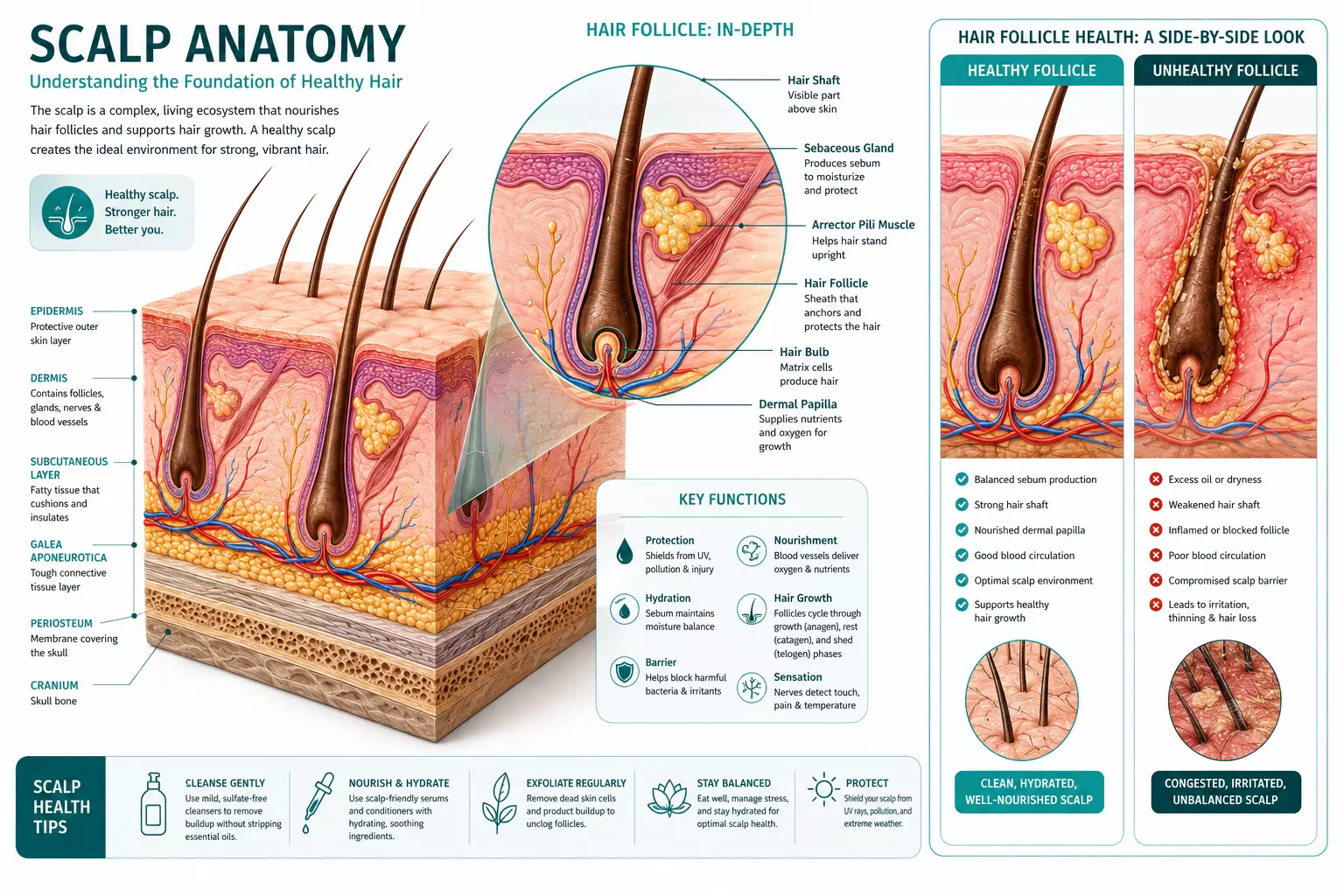
Your scalp has more sebaceous (oil) glands per square centimeter than almost any other area of your body. It also hosts a complex microbiome — a community of bacteria and fungi that, when balanced, keeps your skin calm, moisturized, and resilient. When that balance is disrupted, you get inflammation, flaking, and weakened hair follicles.
The scalp also has a slightly acidic pH of around 4.5 to 5.5. Many conventional shampoos are alkaline, which can strip this protective acid mantle and leave the scalp vulnerable.
The Hair Follicle: Where It All Begins
Each hair strand grows from a follicle embedded in the scalp’s dermis layer. The health of that follicle determines:
- Hair thickness (diameter of each strand)
- Growth rate (typically 0.5 to 1.7 cm per month)
- Hair cycle length (how long hair stays in the growth phase before shedding)
💬 “You cannot grow healthy hair from an unhealthy scalp — any more than you can grow healthy crops in depleted soil.”
When follicles are clogged with product buildup, starved of blood flow, or inflamed from scalp conditions, the hair they produce is thinner, weaker, and shorter-lived. This is the core lesson of Scalp Care 101: Why a Healthy Scalp Is the Secret to Healthy Hair.
The Hair Growth Cycle
| Phase | Name | Duration | What Happens |
|---|---|---|---|
| 1 | Anagen (Growth) | 2–7 years | Active hair production |
| 2 | Catagen (Transition) | 2–3 weeks | Follicle shrinks |
| 3 | Telogen (Rest) | 3 months | Hair rests before shedding |
| 4 | Exogen (Shedding) | Ongoing | Old hair falls, new begins |
A healthy scalp keeps more follicles in the Anagen phase longer. Chronic scalp inflammation or nutritional deficiency can push follicles prematurely into Telogen — a condition called Telogen Effluvium, which causes noticeable shedding.
Common Scalp Problems and What They’re Really Telling You
I remember a client — let’s call her Mara — who spent two years trying every anti-frizz serum on the market. Her hair was dry, brittle, and breaking at the ends constantly. When she finally saw a trichologist, the diagnosis wasn’t about her hair at all. She had a chronically dry, mildly inflamed scalp that was producing insufficient sebum to coat her strands. The fix? A scalp-focused routine. Within three months, her hair transformed.
That story is more common than you’d think. Most “hair problems” are actually scalp problems in disguise.
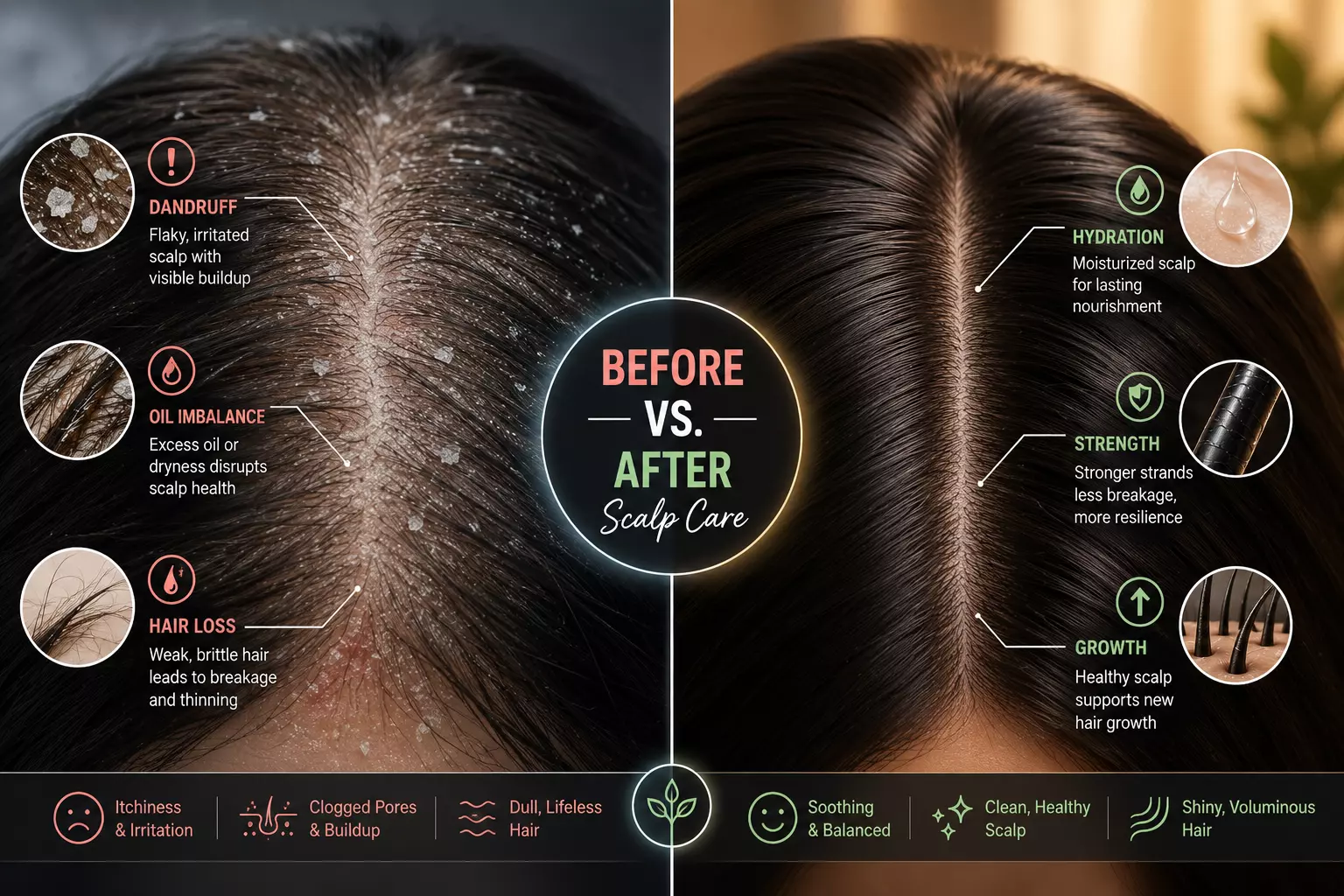
🔍 The Most Common Scalp Issues
1. Dandruff (Seborrheic Dermatitis)
- Caused by an overgrowth of Malassezia yeast on the scalp
- Triggers: stress, hormonal shifts, harsh products, cold weather
- Signs: white or yellowish flakes, itching, redness
2. Dry Scalp
- Caused by insufficient sebum production or moisture loss
- Triggers: over-washing, hard water, low humidity, harsh shampoos
- Signs: small white flakes (smaller than dandruff), tightness, itching
3. Oily Scalp
- Caused by overactive sebaceous glands
- Triggers: hormonal imbalance, over-washing (which strips oil and triggers rebound production), diet high in refined carbs
- Signs: greasy roots within hours of washing, limp hair
4. Scalp Psoriasis
- An autoimmune condition causing rapid skin cell turnover
- Signs: thick silvery scales, redness, and can extend beyond the hairline
- Requires medical management
5. Folliculitis
- Bacterial or fungal infection of hair follicles
- Signs: small pimple-like bumps on the scalp, tenderness
- Often triggered by tight hairstyles, sweat, or product buildup
6. Traction Alopecia
- Hair loss caused by repeated tension on follicles
- Common in people who wear tight braids, ponytails, or extensions regularly
⚠️ Important: Persistent scalp issues — especially those involving significant hair loss, pain, or severe inflammation — should be evaluated by a dermatologist or trichologist. This guide is informational, not medical advice.
Building Your Scalp Care Routine: Practical Steps That Actually Work
This is where Scalp Care 101 gets actionable. The good news? A healthy scalp routine doesn’t require a medicine cabinet full of products. It requires consistency, the right ingredients, and an understanding of your scalp type.
Step 1: Know Your Scalp Type
Before buying a single product, assess your scalp:
- Wash your hair, then wait 24 hours without applying anything.
- Check the scalp at the roots: Is it tight and flaky? → Dry scalp. Is it shiny and greasy? → Oily scalp. Does it feel balanced? → Normal scalp.
- Note any itching, redness, or unusual odor.
Step 2: Choose the Right Shampoo
Your shampoo is the most important scalp product you own. Key principles:
| Scalp Type | What to Look For | What to Avoid |
|---|---|---|
| Dry | Hydrating, sulfate-free formulas | Clarifying shampoos used frequently |
| Oily | Balancing, gentle cleansers | Heavy conditioners applied to roots |
| Dandruff | Zinc pyrithione, ketoconazole, selenium sulfide | Skipping treatment shampoos |
| Sensitive | Fragrance-free, minimal ingredients | Alcohol-heavy products |
Step 3: Wash at the Right Frequency
One of the most common mistakes people make is washing too often or not often enough.
- Oily scalp: Every 1–2 days
- Normal scalp: Every 2–3 days
- Dry or sensitive scalp: Every 3–4 days
- Coily/natural hair: Once a week or as needed
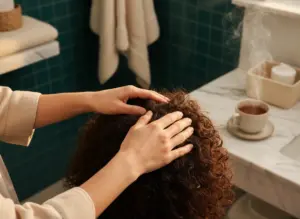
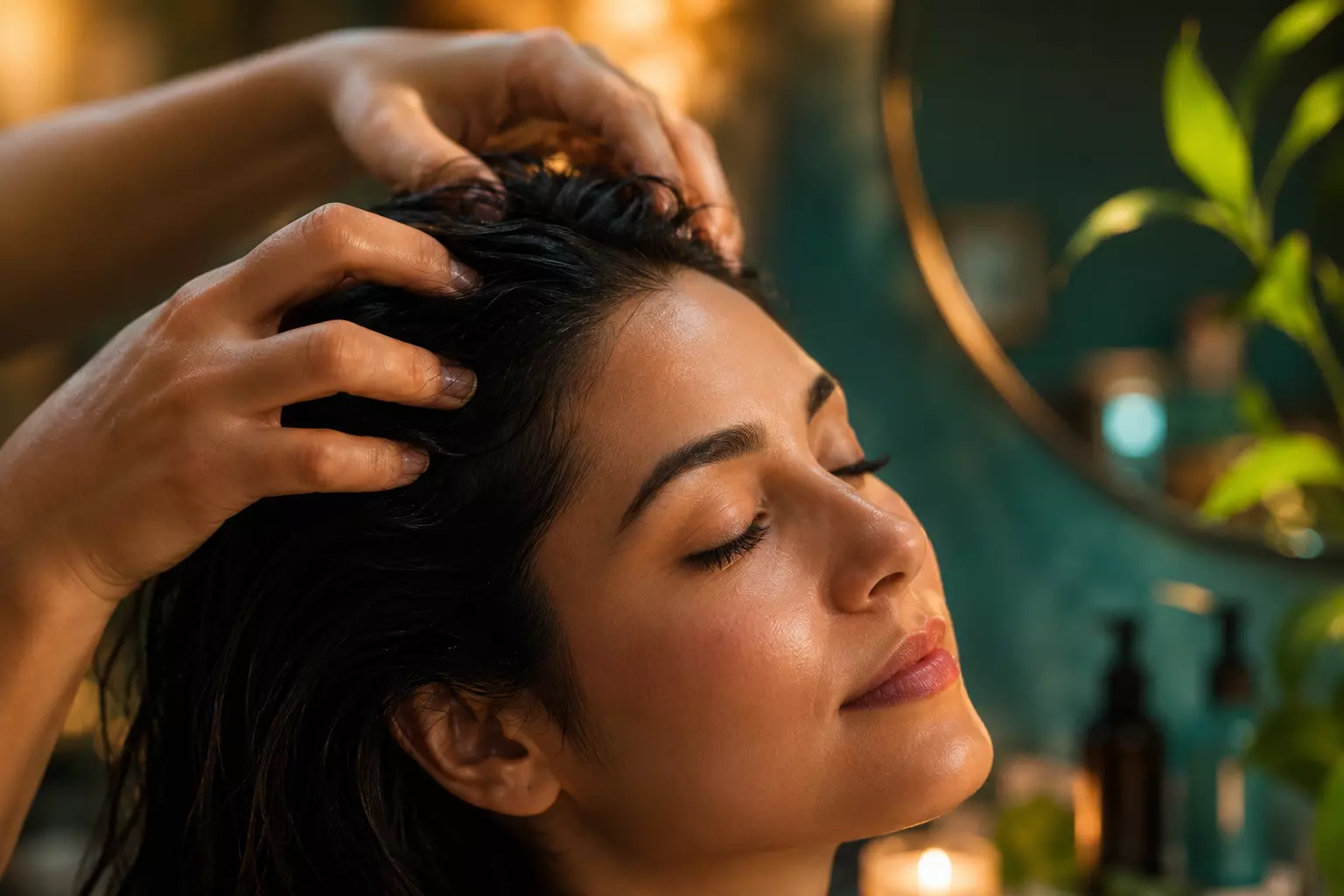
Step 4: Scalp Massage 🙌
This is the most underrated step in any scalp care routine. Regular scalp massage increases blood circulation to the follicles, delivering more oxygen and nutrients to support hair growth. A 2016 study published in ePlasty found that daily 4-minute scalp massages over 24 weeks led to measurably increased hair thickness.
How to do it:
- Use your fingertips (not nails) in small circular motions
- Work from the hairline toward the crown
- Do this for 4–5 minutes during shampooing or with a dry scalp oil
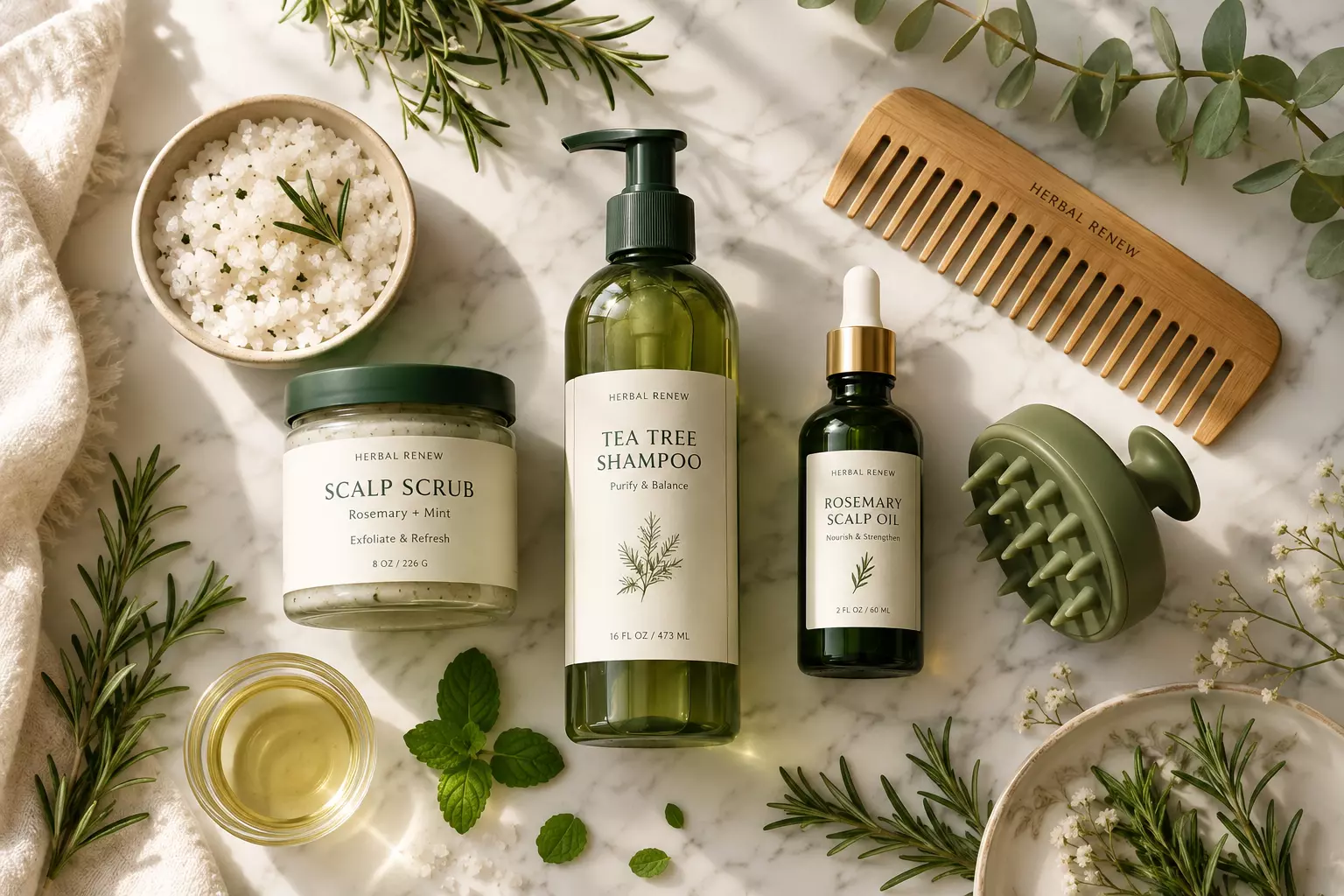
- Consider a silicone scalp massager tool for added stimulation
Step 5: Exfoliate the Scalp (Weekly or Biweekly)
Just like facial skin, the scalp accumulates dead skin cells and product buildup. A scalp scrub or exfoliating treatment removes this buildup, unclogs follicles, and improves product absorption.
Options:
- Physical scrubs: Sugar or salt-based scrubs with soothing oils
- Chemical exfoliants: Salicylic acid scalp treatments (great for dandruff and buildup)
- DIY option: Mix brown sugar with a few drops of tea tree oil and coconut oil
💡 Pro tip: Exfoliate before shampooing. Apply to a dry or damp scalp, massage gently for 2–3 minutes, then shampoo as normal.
Step 6: Scalp Serums and Oils
After washing, targeted scalp treatments can address specific concerns:
- Rosemary oil: Research suggests it may be as effective as minoxidil for hair growth stimulation with fewer side effects
- Peppermint oil: Increases circulation; always dilute before applying
- Tea tree oil: Antifungal and antibacterial; excellent for dandruff
- Niacinamide: Reduces inflammation, supports the skin barrier
- Hyaluronic acid: Hydrates dry scalps without greasiness
The Role of Diet, Stress, and Lifestyle in Scalp Health
Here’s something the beauty industry doesn’t love to talk about: no topical product can fully compensate for poor internal health. Your scalp reflects what’s happening inside your body — and understanding this connection is a critical part of Scalp Care 101: Why a Healthy Scalp Is the Secret to Healthy Hair.
Nutrition for a Healthy Scalp
Your hair follicles are among the most metabolically active cells in the body. They need a steady supply of nutrients to function optimally.
Key nutrients for scalp and hair health:
| Nutrient | Role | Food Sources |
|---|---|---|
| Biotin (B7) | Supports keratin production | Eggs, almonds, sweet potato |
| Iron | Carries oxygen to follicles | Spinach, lentils, red meat |
| Zinc | Regulates oil glands, supports repair | Pumpkin seeds, chickpeas, oysters |
| Omega-3 Fatty Acids | Reduces scalp inflammation | Salmon, flaxseed, walnuts |
| Vitamin D | Activates hair follicle cycling | Sunlight, fortified foods, fatty fish |
| Protein | Hair is made of keratin (a protein) | Chicken, legumes, Greek yogurt |
Deficiencies in iron, zinc, or vitamin D are among the most common nutritional causes of hair loss and scalp issues — and they’re frequently overlooked.
Stress and the Scalp: A Real Connection
Chronic stress elevates cortisol levels, which can:
- Disrupt the hair growth cycle (pushing follicles into Telogen)
- Increase scalp inflammation
- Trigger or worsen conditions like seborrheic dermatitis and psoriasis
Stress-related hair shedding (Telogen Effluvium) typically appears 2–3 months after a stressful event, which is why people often don’t connect the two. Managing stress through sleep, movement, and mindfulness isn’t just good for your mental health — it’s a legitimate scalp care strategy.
Lifestyle Factors That Affect Scalp Health
- 🚿 Hard water: High mineral content can disrupt scalp pH and cause buildup. Consider a shower filter.
- 🔥 Heat styling: Frequent heat application close to the scalp can cause inflammation and dryness.
- 🧢 Hats and helmets: Worn frequently without washing can trap sweat and bacteria.
- 💧 Hydration: Dehydration affects skin moisture levels, including the scalp.
- 🌿 Smoking: Reduces blood circulation to the scalp and follicles.
Scalp Care for Different Hair Types and Textures
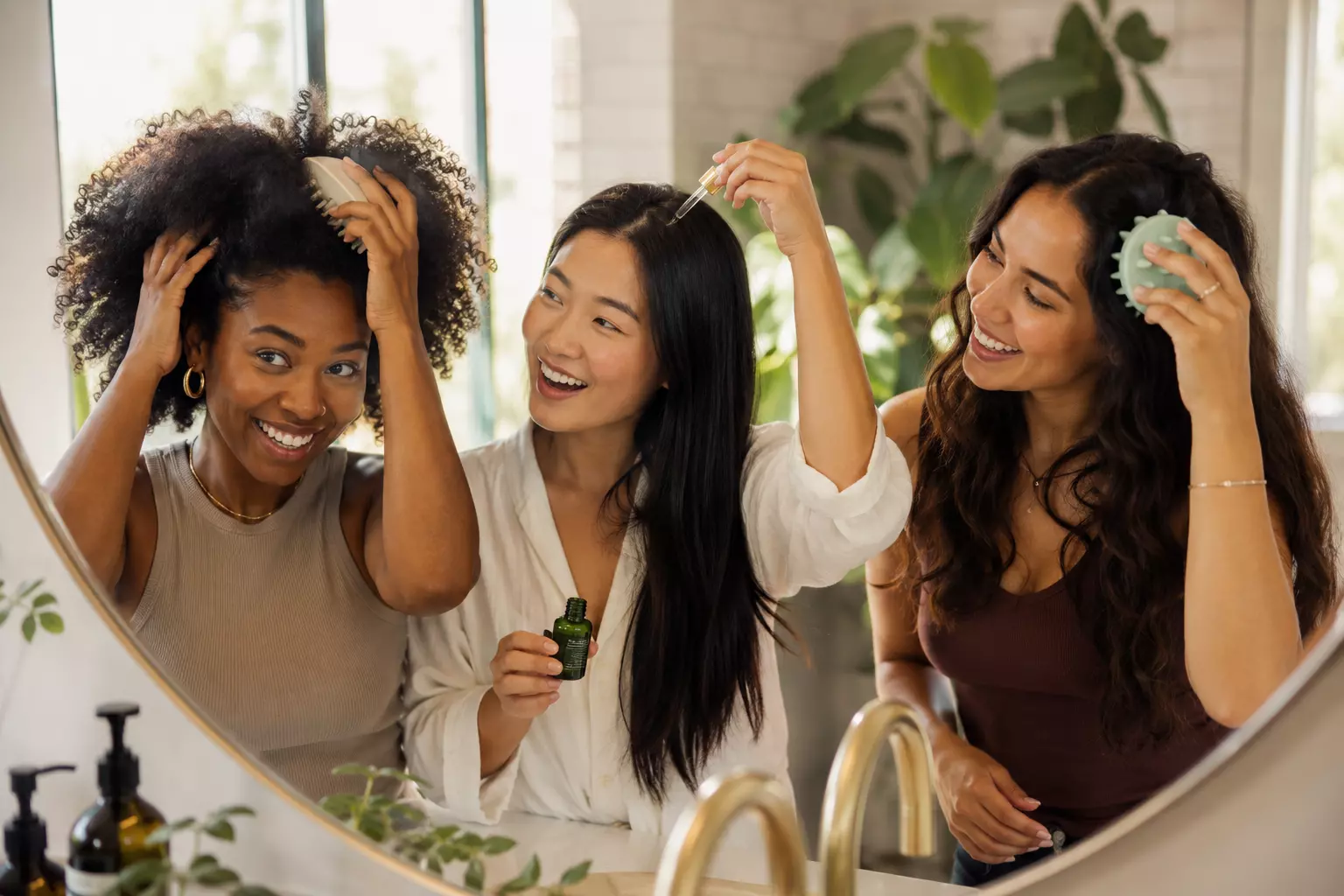
One of the biggest gaps in mainstream scalp care advice is the assumption that all scalps are the same. They aren’t. Scalp Care 101: Why a Healthy Scalp Is the Secret to Healthy Hair must account for the full spectrum of hair types — because the scalp needs beneath a type 4C coily hair pattern are genuinely different from those beneath fine, straight hair.
Fine or Straight Hair
- Scalp tends to appear oilier faster (sebum travels down the strand more easily)
- Prone to product buildup and limp roots
- Key focus: Lightweight products, regular cleansing, volumizing scalp treatments
Wavy or Curly Hair
- Natural curl pattern can slow sebum distribution down the strand
- Scalp may be oily while ends are dry
- Key focus: Balance — cleanse scalp thoroughly without stripping moisture from the lengths; use scalp-specific products rather than applying conditioner to roots
Coily or Natural Hair (Type 4)
- Sebum has the most difficulty traveling down tightly coiled strands
- Scalp can become dry and flaky even when producing adequate oil
- Key focus: Regular scalp oiling, gentle low-poo or co-washing methods, protective styles that don’t create excessive tension
- Watch for: Traction alopecia from tight styles; central centrifugal cicatricial alopecia (CCCA), which is more common in Black women and requires early medical attention
Color-Treated or Chemically Processed Hair
- Chemical treatments can disrupt scalp pH and damage the skin barrier
- Scalp may become sensitized, reactive, or prone to dryness
- Key focus: Gentle, pH-balanced cleansers; barrier-supporting ingredients like ceramides and panthenol; avoid exfoliating immediately before or after chemical services
Aging Scalps
- Sebum production decreases with age, leading to drier scalps
- Hair follicles naturally miniaturize over time (especially with androgenetic alopecia)
- Key focus: Hydrating scalp treatments, scalp massage to support circulation, and early consultation with a dermatologist if significant thinning occurs
Ingredients Worth Knowing (and Some to Avoid)
✅ Scalp-Friendly Ingredients
- Salicylic acid — Exfoliates, unclogs follicles, reduces dandruff
- Zinc pyrithione — Antifungal, anti-dandruff
- Ketoconazole — Prescription-strength antifungal for stubborn dandruff
- Rosemary extract — Circulation-boosting, hair growth support
- Niacinamide — Anti-inflammatory, barrier-supporting
- Caffeine — Stimulates follicles, may slow DHT-related hair loss
- Panthenol (Vitamin B5) — Moisturizing, soothing
❌ Ingredients That Can Harm Scalp Health
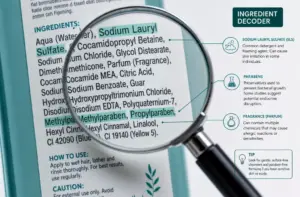
- Sodium lauryl sulfate (SLS) — Harsh surfactant that strips the acid mantle (in high concentrations)
- Synthetic fragrances — Common irritant and allergen
- Alcohol (denatured/SD alcohol) — Drying and irritating for sensitive scalps
- Heavy silicones — Can build up on the scalp and clog follicles over time
- Formaldehyde-releasing preservatives — Sensitizing and potentially harmful with long-term use
Conclusion: Start at the Root — Literally
The most important shift you can make in your hair care journey in 2026 is to stop treating your hair and start caring for your scalp. Everything we’ve covered in this guide — from follicle biology to nutrition to scalp-type-specific routines — points to the same truth at the heart of Scalp Care 101: Why a Healthy Scalp Is the Secret to Healthy Hair: the hair you see is a reflection of the scalp you can’t.
Your Actionable Next Steps 🚀
- Assess your scalp type this week using the 24-hour test described above.
- Audit your current shampoo — check for SLS, synthetic fragrance, and pH compatibility with your scalp type.
- Add a 4-minute scalp massage to every wash day, starting today.
- Introduce one targeted treatment — a scalp serum, oil, or exfoliant — based on your specific concern.
- Review your diet for iron, zinc, and vitamin D adequacy; consider bloodwork if you’re experiencing significant shedding.
- Be patient. The hair growth cycle means visible improvements typically take 3–6 months of consistent care.
Your scalp has been waiting for this attention. Give it what it needs, and your hair will follow.