8 Perfect Hairstyles for Wavy Curly Hair (The In-Between Texture)
Nearly 65% of people worldwide have some form of wavy or curly hair — yet most mainstream haircut advice still caters to straight or fully coiled textures, leaving millions of people with in-between hair completely underserved. If your hair refuses to be pin-straight but also isn’t a defined ringlet curl, you already know the struggle. That “in-between” zone — sitting somewhere between a gentle wave and a bouncy curl — is one of the most common hair types on the planet, and it deserves its own dedicated playbook.
This guide on 8 Perfect Hairstyles for Wavy Curly Hair (The In-Between Texture) is built specifically for you. Whether your strands fall into the 2A–2C wavy range or drift into the 3A–3C curly zone, these hairstyles are designed to work with your natural texture, not against it. I’ve pulled together expert-backed styles, practical tips, and honest styling advice so you can finally feel confident in your hair.
Key Takeaways
- 🌊 In-between hair (wavy-curly, 2A–3C) needs cuts that enhance texture rather than fight it.
- ✂️ Layered cuts — like the wolf cut, shaggy layers, and textured lob — are the gold standard for this hair type.
- 💧 Product and technique matter as much as the cut itself; curl cream and diffusing on low heat are your best friends.
- 🧴 Low-maintenance styles like beachy waves and the long bob require minimal daily effort when paired with the right products.
- 🪞 Face shape plays a role in choosing the best cut, but most styles on this list are adaptable for multiple face shapes.
Understanding Your In-Between Texture Before Choosing a Style
Before diving into the 8 Perfect Hairstyles for Wavy Curly Hair (The In-Between Texture), it helps to understand what makes this hair type unique — and why standard haircut advice often misses the mark.
What Is “In-Between” Hair?
In-between hair typically falls into the Type 2 (wavy) or Type 3 (curly) categories on the hair typing chart. Here’s a quick breakdown:
| Hair Type | Pattern | Characteristics |
|---|---|---|
| 2A | Loose, flat wave | Fine, easy to weigh down |
| 2B | Defined S-wave | Moderate volume, some frizz |
| 2C | Strong wave/soft curl | Thicker, more frizz-prone |
| 3A | Loose ringlet | Springy, well-defined |
| 3B | Tight ringlet | Dense, more shrinkage |
| 3C | Corkscrew curl | Very dense, high shrinkage |
💡 Pull Quote: “The biggest mistake people with wavy-curly hair make is choosing a haircut designed for straight or fully coiled hair. Your texture needs its own rules.” — Hair Social [4]
The key insight from styling experts is that curl pattern matters enormously when choosing a cut. Wavy hair (2A–2C) benefits most from layered cuts like beachy waves or textured bobs, while curly hair (3A–3C) thrives with shaggy layers or rounded bobs that enhance definition [3].
Why Standard Haircut Advice Fails This Hair Type
Most salon consultations default to either “smoothing” techniques for frizz or heavy-handed layering that disrupts curl pattern. In-between hair needs a middle path: strategic layering that removes weight without destroying curl formation, plus styling techniques that work with the hair’s natural drying behavior.
With that foundation in place, let’s get into the styles.
The 8 Perfect Hairstyles for Wavy Curly Hair (The In-Between Texture)
1. Shaggy Layers
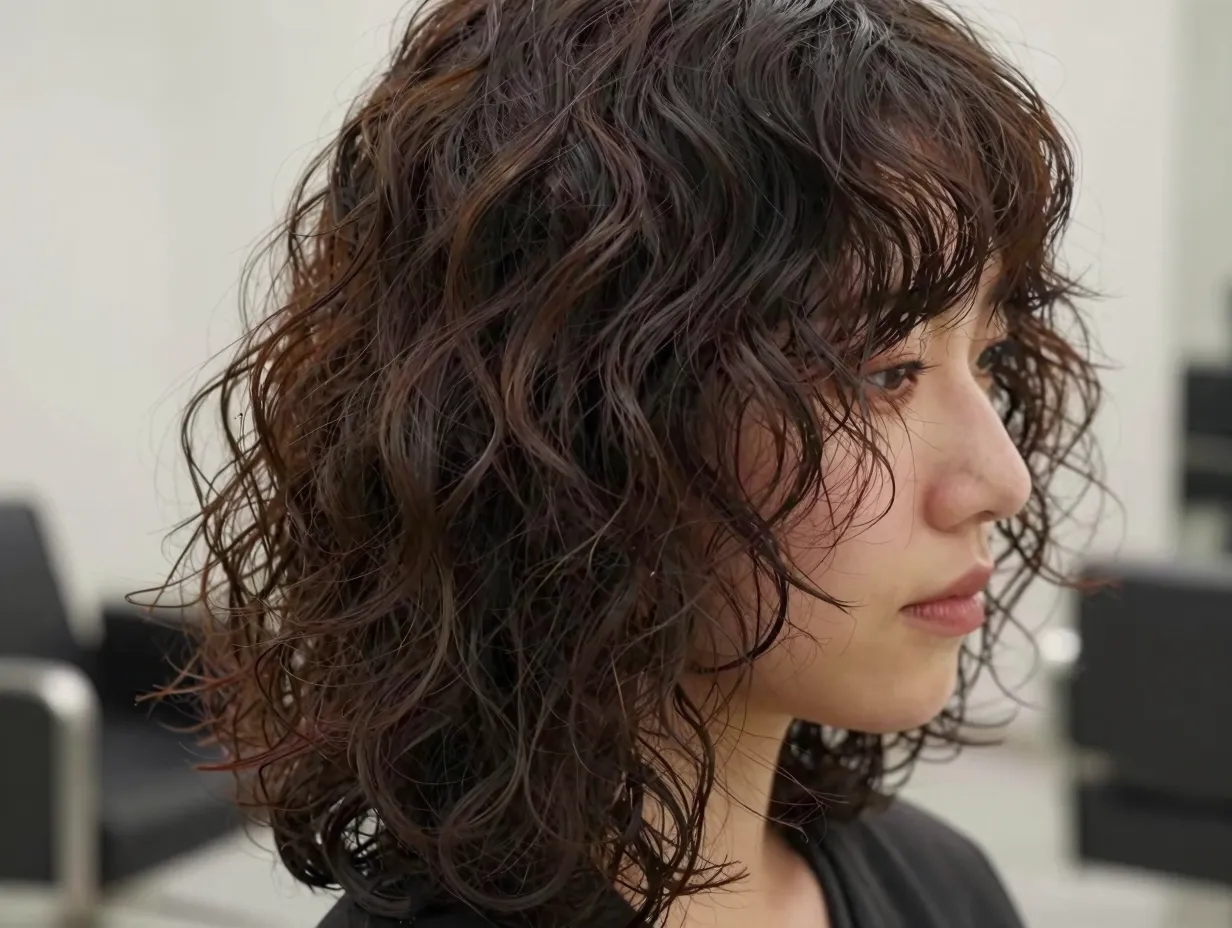
Best for: Medium to long hair, oval or square face shapes, 2C–3B curl patterns
Shaggy layers are arguably the most universally flattering cut for in-between textured hair. This style works across a wide range of lengths — from shoulder-grazing medium hair all the way to long, flowing locks — and it suits everything from loose waves to tight curls [3].
The magic of shaggy layers lies in weight removal. By cutting layers at varying lengths throughout the hair, your stylist eliminates the bulk that drags curls down while simultaneously adding texture and volume. The result? Curls and waves that spring up rather than fall flat.
How to style it:
- Apply curl cream to damp hair, scrunching from ends upward
- Diffuse on low heat, tilting your head to one side to encourage volume
- Finish with a light-hold gel if you want extra definition
Pro tip: Ask your stylist for “curtain bangs” alongside shaggy layers — they frame the face beautifully without disrupting your curl pattern.
2. The Wolf Cut
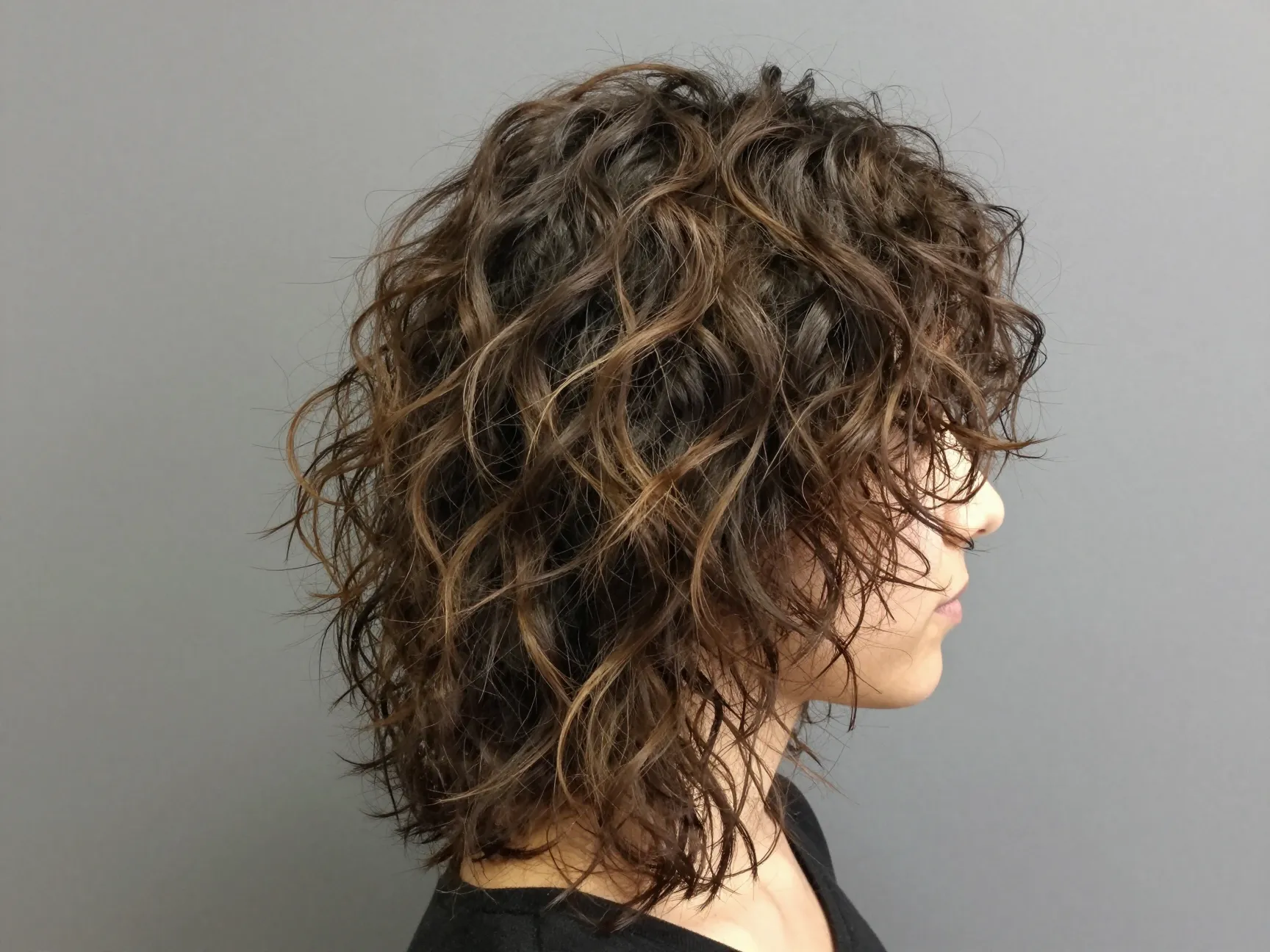
Best for: Thick, wavy-curly hair; all face shapes; 2B–3A curl patterns
The wolf cut has dominated hair trends for good reason — it’s essentially a modern evolution of the shag, combining the volume of a mullet-inspired silhouette with the texture of heavy layering. For thick, wavy, and frizzy hair, it’s one of the top recommended low-maintenance cuts available [2].
What sets the wolf cut apart is its intentional dishevelment. The layers are cut to create a deliberately tousled, lived-in look that actually improves as your hair dries naturally. This is a huge win for in-between textures that tend to look messy anyway during the drying process.
Key benefits:
- Removes significant weight from thick hair
- Creates natural-looking volume at the crown
- Works beautifully with air drying — no heat tools required
- Grows out gracefully, meaning fewer salon visits
Face shape note: The wolf cut’s volume at the crown and length at the ends makes it especially flattering for round and heart-shaped faces, though it adapts well to most face shapes.
3. Beachy Waves with Long Layers

Best for: Long hair, 2A–2C wave patterns, low-maintenance seekers
If you have long wavy hair and want the ultimate low-effort style, beachy waves with long layers is your answer. This is widely considered the gold standard of low-maintenance hairstyling for long wavy hair [2].
The concept is simple: long, face-framing layers are cut to remove weight at the ends while preserving length. When you let damp hair air dry with a curl cream worked through it, the layers naturally fall into soft, effortless waves that look like you just stepped off a beach.
Styling routine (takes under 5 minutes):
- Wash hair and gently squeeze out excess water with a microfiber towel
- Apply a generous amount of curl cream or curl-enhancing mousse throughout damp hair [4]
- Scrunch upward gently to encourage wave formation
- Air dry completely — resist the urge to touch it while drying
- Once dry, scrunch out any crunchiness with a small amount of oil
🌊 The secret: The less you manipulate this style, the better it looks. Trust the process.
4. The Textured Lob (Long Bob)
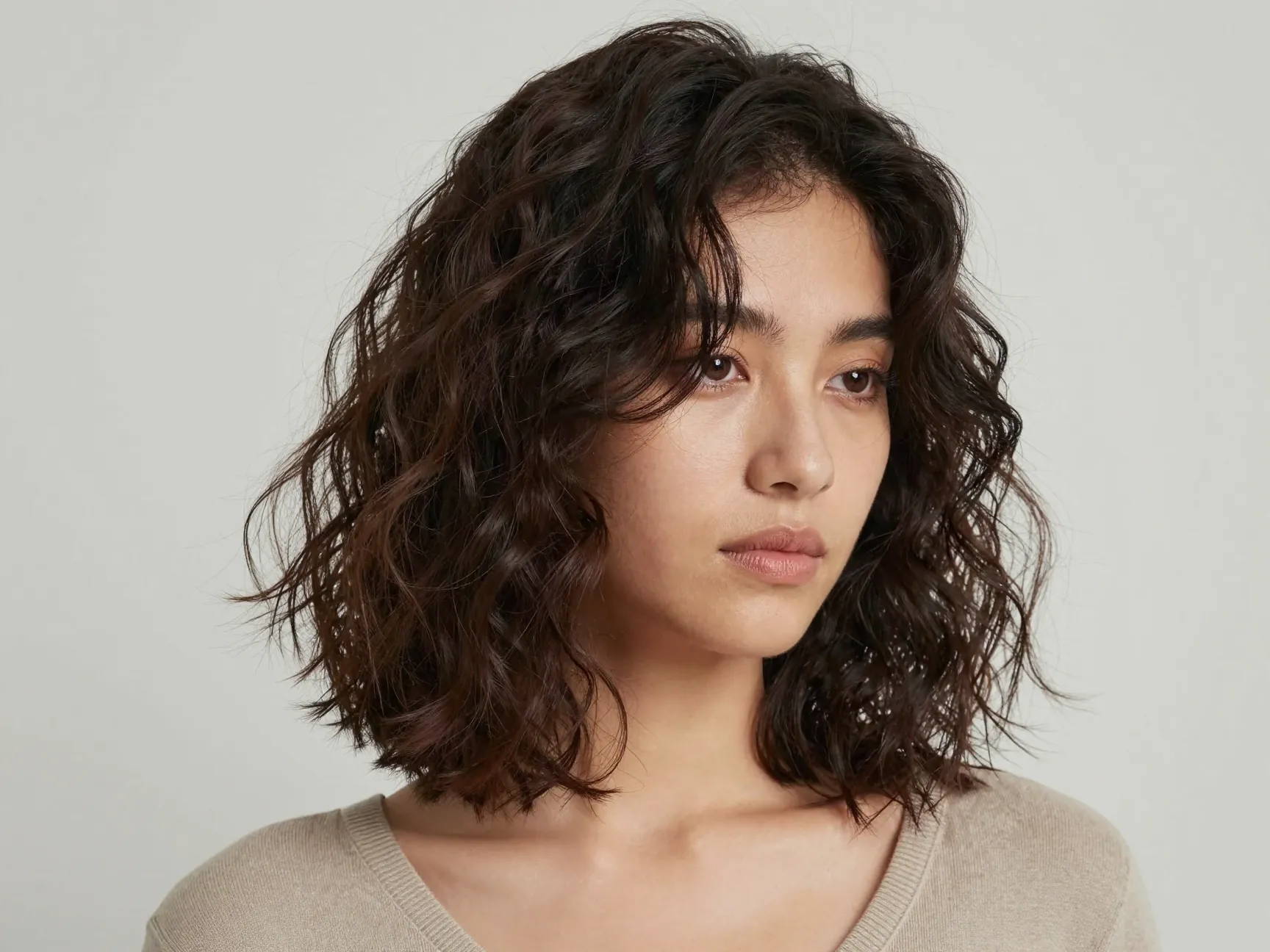
Best for: All curl types 2A–3B, collarbone-length hair, versatile styling
The textured lob — a long bob that grazes the collarbone — is one of the most versatile cuts for in-between textured hair. Unlike a blunt bob that can look heavy on wavy-curly hair, the textured lob uses subtle internal layers to prevent flatness and add dimension throughout the cut [4].
This style gives wavy hair a fresh, chic shape without requiring heavy daily styling. It’s the kind of cut that looks polished whether you let it air dry naturally or spend five minutes with a diffuser.
Styling options for the textured lob:
| Method | Result | Time Required |
|---|---|---|
| Air dry with curl cream | Soft, natural waves | 0 minutes active |
| Diffuse on low heat | More volume and definition | 10–15 minutes |
| Sea salt spray + scrunch | Beachy, textured finish | 5 minutes |
| Diffuse + round brush | Smoother, polished wave | 15–20 minutes |
The lob also adds bounce and texture without heavy styling, making it a practical choice for busy mornings [2]. Because the ends sit at the collarbone, the natural weight of the hair helps enhance wave definition without dragging curls down.
5. Short Choppy Layers
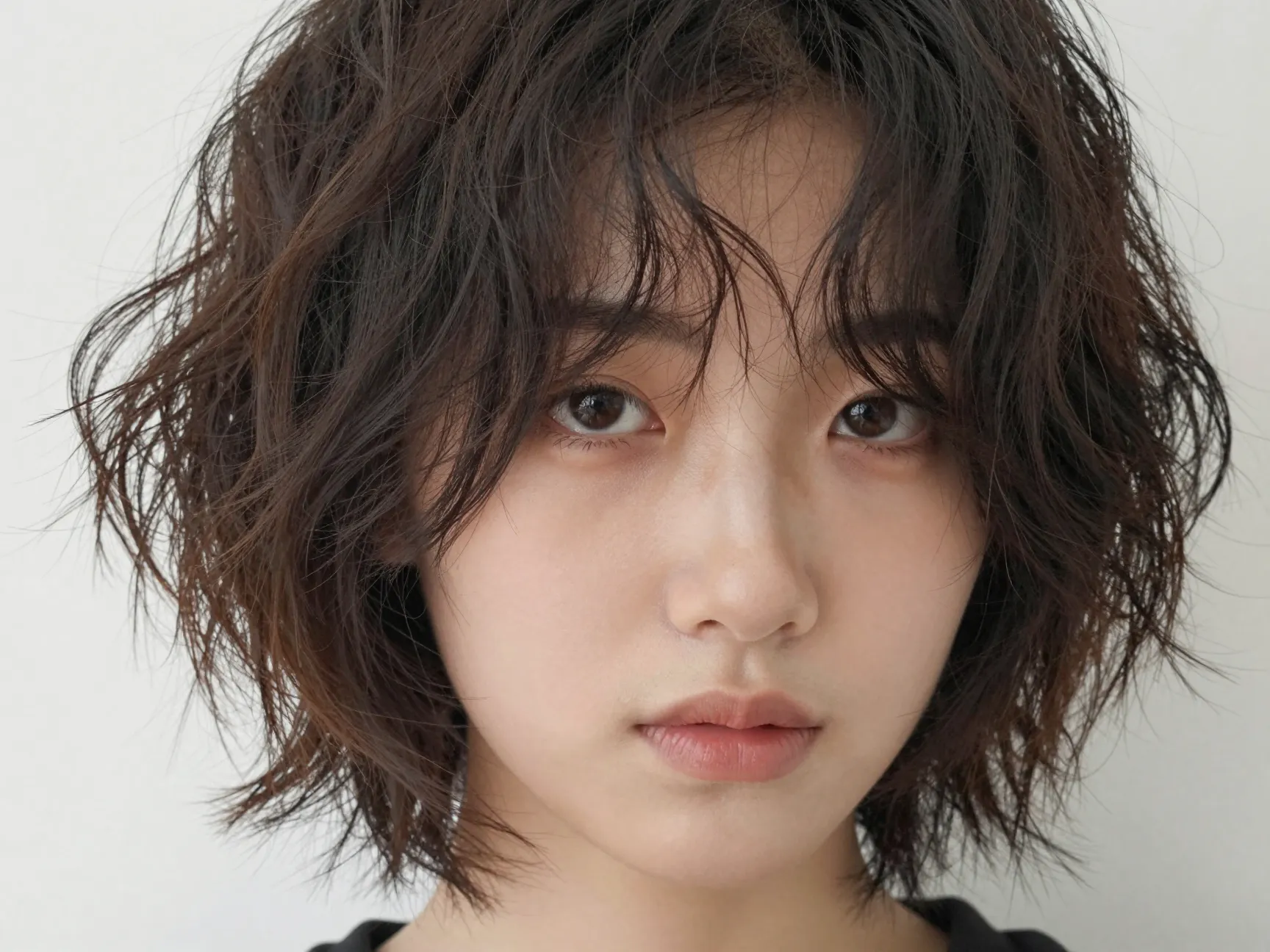
Best for: Short to medium hair, 2A–2C wavy hair, both fine and thick textures
Don’t let the word “short” intimidate you — short choppy layers can work at various lengths, from a chin-length bob to a medium-length cut. The key is the choppy, point-cut technique that creates instant texture and volume in wavy hair [2].
This approach works particularly well for people with fine wavy hair who struggle to get volume. The choppy layers create a tousled, lived-in effect that gives the illusion of thicker, fuller hair without adding any product weight.
What makes choppy layers different from regular layers:
- Cut with point-cutting scissors rather than straight across
- Creates irregular, textured ends rather than blunt lines
- Encourages natural wave formation at each layer break
- Adds visual movement even when hair is dry
Best products for this style:
- 🧴 Lightweight curl mousse (avoids weighing down fine waves)
- 🌊 Sea salt spray for added texture
- ✨ Light-hold defining cream for frizz control
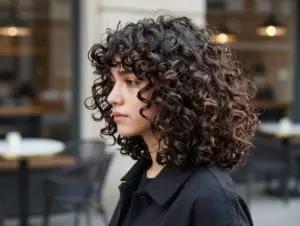
6. The Rounded Curly Bob
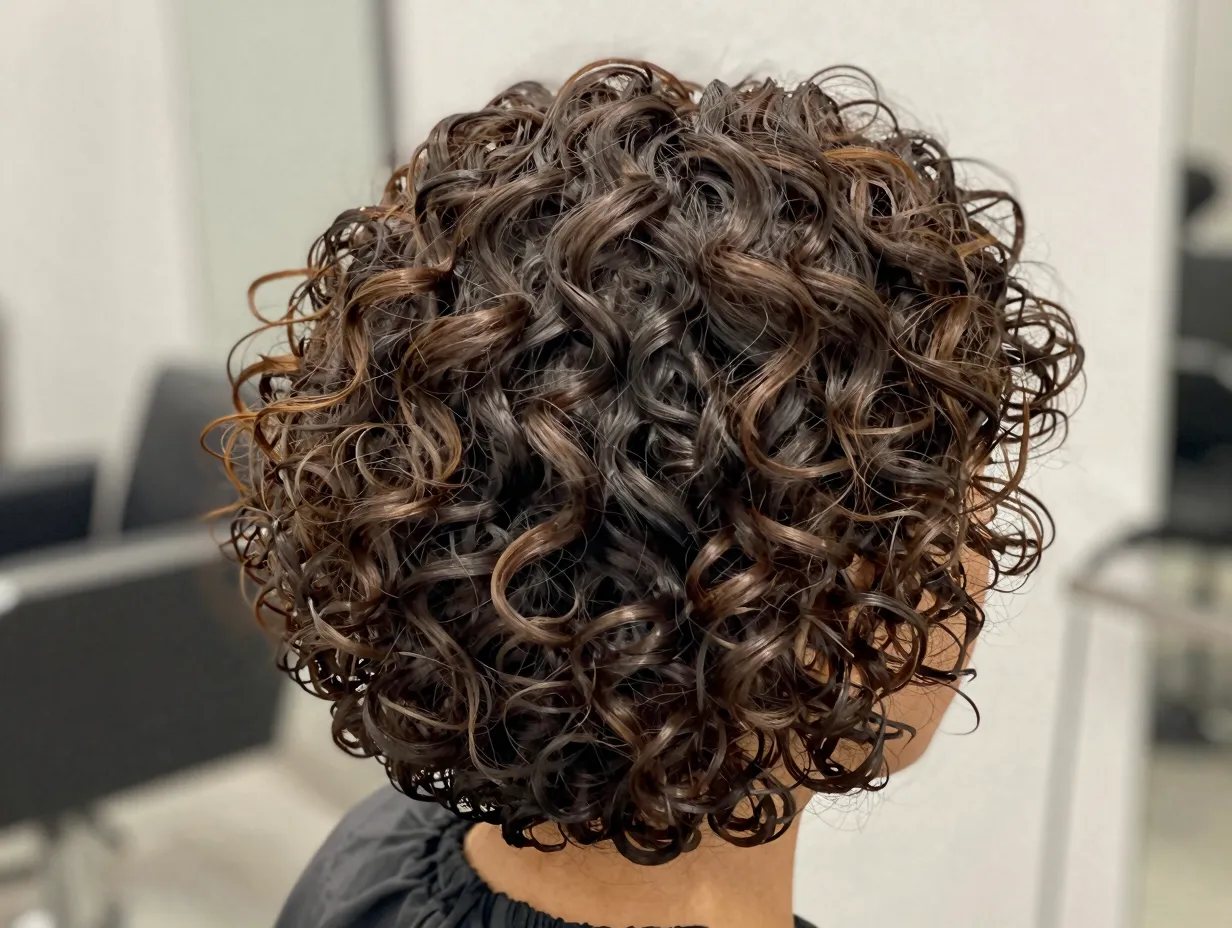
Best for: 3A–3C curl patterns, medium-length hair, defined curl lovers
As we move into the curlier end of the in-between spectrum, the rounded curly bob becomes a standout option. This cut is specifically designed to enhance definition in curly hair (3A–3C) by using a rounded shape that allows curls to spring up and outward evenly [3].
Unlike straight-cut bobs that can look flat or pyramid-shaped on curly hair, the rounded bob is cut with the curl’s natural shrinkage in mind. Your stylist will cut the hair while it’s dry (a technique called “dry cutting”) to ensure the final shape accounts for how your curls actually behave.
Why dry cutting matters for this style:
Curly hair can shrink anywhere from 20% to 50% when it dries. A stylist who cuts your hair wet may leave it much shorter than intended once it dries. Dry cutting eliminates this guesswork and produces a much more accurate result.
Styling tip: Use curl cream on damp hair, then diffuse using the “hover” method — hold the diffuser close to your scalp without touching the curls to maximize volume and minimize frizz [4].
7. The Messy Bob
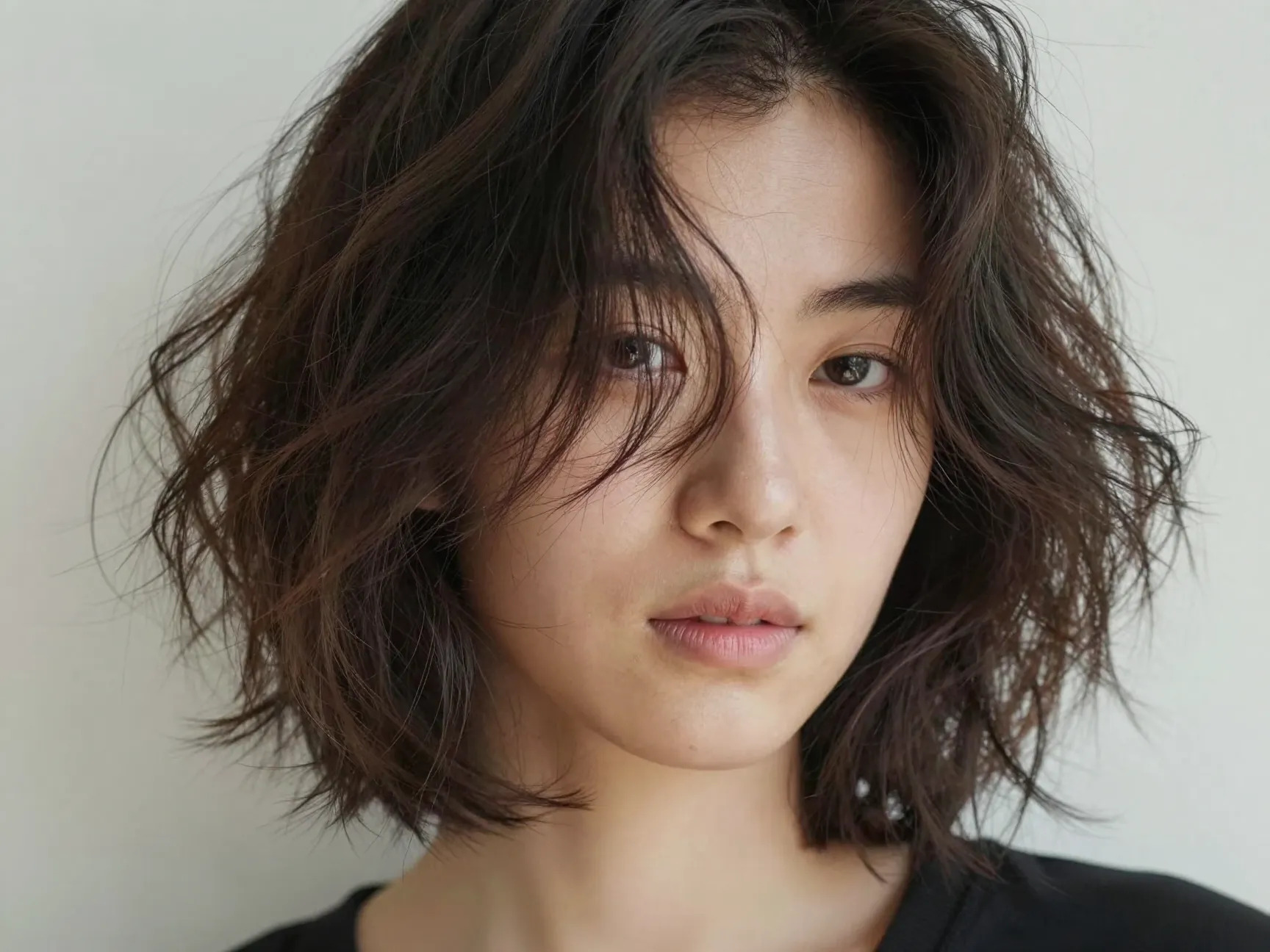
Best for: 2B–2C wavy hair, relaxed styling preferences, low-maintenance lifestyles
The messy bob is exactly what it sounds like — a bob cut that embraces a relaxed, undone aesthetic rather than a polished finish. For wavy-curly hair, this is actually a strategic choice, not a lazy one [2].
In-between textured hair has a natural tendency toward what many people call “frizz” — but reframed, that texture is actually beautiful, lived-in movement. The messy bob leans into this quality rather than fighting it. The cut is typically chin to jaw length, with soft layers that allow the hair to move freely.
The messy bob works because:
- It requires zero heat styling to look intentional
- Natural frizz and wave variation add to the aesthetic
- Minimal product is needed — a small amount of curl cream or a spritz of sea salt spray is enough
- It grows out beautifully into a lob, giving you two styles for the price of one
Styling in 3 steps:
- Apply a small amount of curl cream to damp hair
- Scrunch and let air dry completely
- Shake out at the roots for added volume — done ✅
8. The Layered Shag
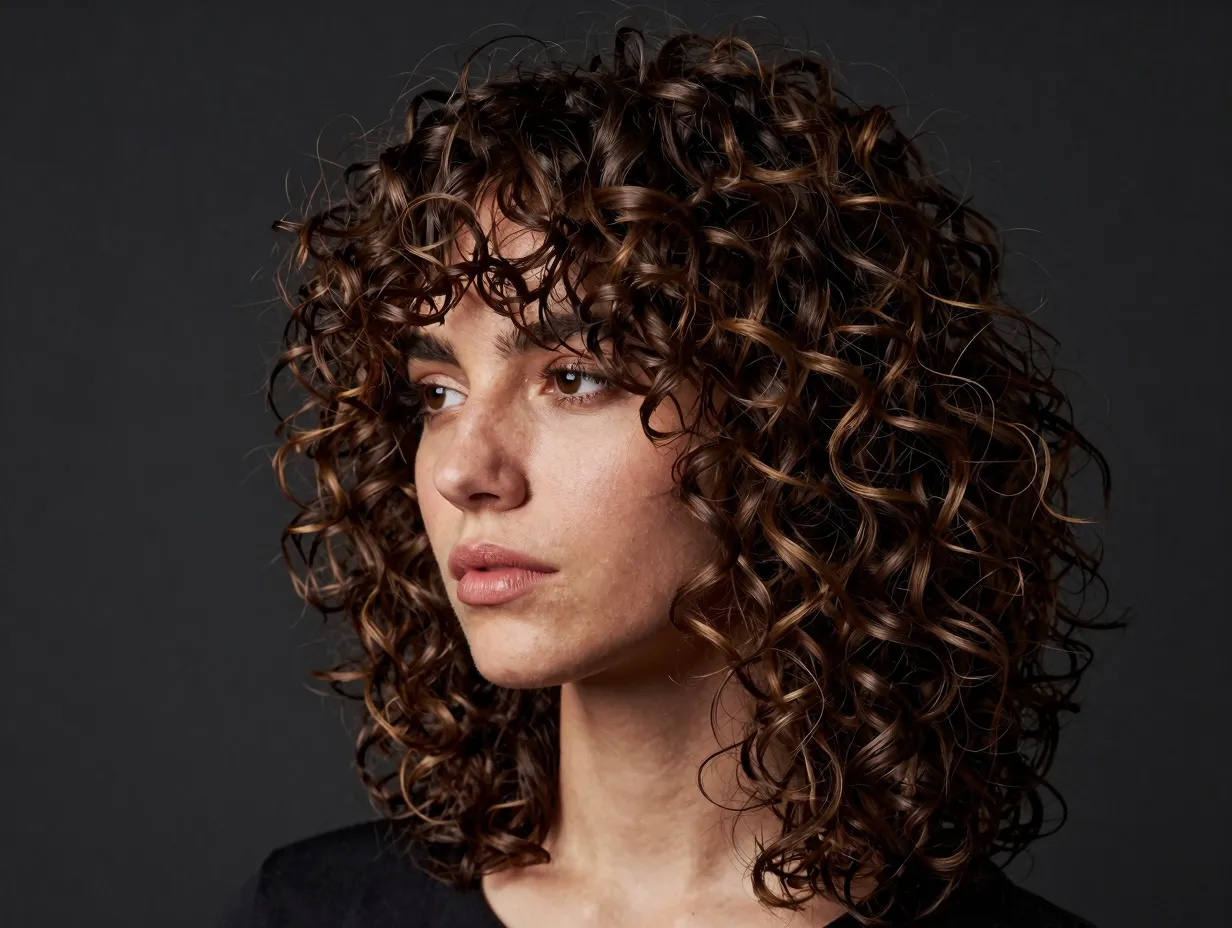
Best for: All lengths, 2C–3B curl patterns, high-volume hair goals
The layered shag is the final — and perhaps most impactful — style in our list of 8 Perfect Hairstyles for Wavy Curly Hair (The In-Between Texture). Think of it as the shaggy layer cut’s more dramatic cousin: more layers, more movement, more personality.
The layered shag features heavy layering throughout the entire length of the hair, often paired with curtain bangs or face-framing pieces. It’s a particularly strong choice for anyone with thick, wavy-curly hair who feels weighed down by their natural texture.
Layered shag vs. wolf cut — what’s the difference?
| Feature | Layered Shag | Wolf Cut |
|---|---|---|
| Layer distribution | Even throughout | Heavier at crown |
| Silhouette | More uniform | Mullet-inspired |
| Best for | All thicknesses | Thick hair |
| Styling effort | Low-medium | Very low |
| Frizz management | Excellent | Excellent |
Both styles are recommended as top choices for thick wavy and frizzy hair [2], but the layered shag offers slightly more versatility across different hair thicknesses.
Styling the layered shag:
- Use curl-enhancing mousse on damp hair, working it through section by section
- Diffuse on low heat using a bowl diffuser for maximum volume [4]
- Finish with a small amount of serum on the ends to define layers and reduce frizz
Essential Styling Tips for All 8 Hairstyles
No matter which of these styles you choose, a few universal principles will help you get the most out of your in-between texture.
The Non-Negotiable Product Rules
1. Always apply products to damp hair. Curl cream and mousse work by coating the hair shaft while it’s still wet, creating a cast that holds wave and curl formation as the hair dries [4]. Applying to dry hair rarely produces the same result.
2. Use a microfiber towel or cotton T-shirt to dry. Regular terrycloth towels create friction that disrupts curl pattern and increases frizz. Microfiber or cotton absorbs water gently without roughing up the cuticle.
3. Diffuse on low heat. High heat disrupts curl formation and causes frizz. Low heat with a diffuser attachment maintains shape while adding volume [4]. Patience here pays off.
4. Scrunch out the crunch. Many curl creams and gels create a slight crunchy feel when dry. Once your hair is completely dry, scrunch gently with a small amount of oil to soften the cast while keeping the definition.
Choosing the Right Cut for Your Face Shape
| Face Shape | Best Styles from This List |
|---|---|
| Oval | Any — most styles work |
| Round | Wolf cut, shaggy layers, layered shag |
| Square | Shaggy layers, textured lob, messy bob |
| Heart | Rounded curly bob, textured lob |
| Long/Oblong | Messy bob, short choppy layers, rounded bob |
How Often Should You Trim?
For in-between textured hair, trims every 8–12 weeks are ideal to maintain shape and prevent split ends from traveling up the hair shaft and disrupting curl formation. If you’re growing your hair out, you can stretch to 12–16 weeks, but ask your stylist for a “dusting” (removing just the damaged ends) rather than a full trim.
Common Mistakes to Avoid
Even with the perfect cut, a few common habits can undermine your results:
❌ Brushing dry curly-wavy hair — this separates curl clumps and creates frizz. Use a wide-tooth comb or your fingers on wet, product-coated hair only.
❌ Skipping the curl cream — in-between textures need moisture and hold to maintain their pattern. Skipping product almost always results in undefined, frizzy hair.
❌ Choosing a cut based on straight-hair inspiration — always look for inspo photos featuring your specific curl type. What looks great on straight hair can completely change shape on wavy-curly hair.
❌ Washing hair every day — daily washing strips natural oils that help define and moisturize curls. Most in-between textures thrive on a 2–3 day washing schedule.
❌ Using too much heat — occasional heat styling is fine, but frequent use degrades curl pattern over time. When you do use heat, always apply a heat protectant first.
Conclusion: Your In-Between Hair Is a Feature, Not a Bug
The 8 Perfect Hairstyles for Wavy Curly Hair (The In-Between Texture) covered in this guide — from shaggy layers and the wolf cut to the textured lob and rounded curly bob — all share one core philosophy: work with your texture, not against it.
In-between hair is not a problem to be solved. It’s a unique, beautiful texture that, with the right cut and a few key products, can look effortlessly stunning every single day.
Your actionable next steps:
- ✅ Identify your curl type using the 2A–3C chart above — this will help you narrow down the best styles for your specific pattern.
- ✅ Book a consultation with a curl-specialist stylist and bring photos of the styles that resonate with you from this list.
- ✅ Invest in two key products: a curl cream and a quality diffuser. These two tools will transform your daily routine.
- ✅ Commit to the air-dry process at least a few times a week — your natural texture will thank you.
- ✅ Schedule regular trims every 8–12 weeks to keep your chosen style looking its best.
Your hair has always had potential. Now you have the roadmap to unlock it. 🌊✨
References
[1] Curly Hairstyles – https://curlsmith.com/blogs/style-hub/curly-hairstyles
[2] 7 Low Maintenance Haircuts For Wavy Hair And Wavy Hair Care Tips – https://blissy.com/blogs/the-blissy-blog/7-low-maintenance-haircuts-for-wavy-hair-and-wavy-hair-care-tips
[3] Curly Hairstyles Embracing Texture With Confidence – https://kenneths.com/services/hair/haircutsandstyles/curly-hairstyles-embracing-texture-with-confidence
[4] Curly Wavy Coily Hair Styles – https://hairsocial.com/blog/curly-wavy-coily-hair-styles/
[5] Curly Hairstyles – https://www.whowhatwear.com/beauty/hair/curly-hairstyles